
Trending
The old timers on the dock used to measure a day by the weight in the cooler. A limit of walleye or a bucket of yellow perch meant success, supper, supermarket savings, and bragging rights.
Today, the measuring stick feels different. Increasing advisories from the New York State Department of Environmental Conservation and ongoing health studies about contaminants in fish have quietly inserted a new question into every cast: should we still eat what we catch? It is startling, a bit frightening, and downright intimidating for many.
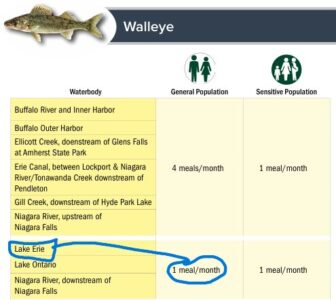
At the moment, eating one fish per month is being recommended if it comes from Lake Erie waters.
For generations, fishing and eating fish were inseparable traditions. The ritual was complete only when the skillet crackled at the end of the day. Walleye cheeks in butter. Golden perch fillets are the highlight of a family cookout. Those meals carried more than flavor -- they carried identity, family history, and connection to the water.
Today, modern science has a way of forcing reflection. Consumption advisories tied to mercury, PFAS, and PCBs, Mirex, and much more, are not easy topics to dismiss, especially for anglers who spend their lives considering that lakes and rivers are a healthy resource. Nobody wants to imagine that the fish thriving beneath a beautiful sunset might also carry invisible baggage from decades of industrial runoff and environmental neglect.
So here we are, us modern anglers stand in an unusual emotional current, tugged between two forms of health. Physical health says caution matters. Read the advisories. Limit consumption. Think long-term. A fish dinner that once symbolized wholesome living now comes with footnotes and serving recommendations.
Flip the coin, there are other benefits. Emotional health tells another story entirely. There is undeniable therapy in fishing. The early-morning stillness. The rhythmic casting or throb of a trolled lure. The pulse-jump when a walleye thumps the line in deep water. Fishing slows the noise of modern life. It lowers our stress levels. Clears minds. Reconnects people to weather, water, patience and nature. For many anglers, the catch itself has become enough. Tarpon fishing down south is an example where possession is not allowed, but catching one is considered a bucket list item for millions of anglers, and releasing it is a moment remembered for all time.
In fact, catch-and-release fishing may represent an evolution rather than a loss. The satisfaction no longer depends on possession. It comes from the deception -- convincing a wild creature that a painted lure, soft plastic, or twitching jig was real prey. For a few thrilling seconds, human instinct and fish instinct collide in a game older than memory. Then comes the release, watching the fish disappear back into the dark water, unharmed and still part of the ecosystem.
That moment carries its own reward. Maybe even a deeper one. There is also something quietly hopeful in teaching younger anglers that success does not always require harvest. A photograph can preserve a memory. A released fish can create another opportunity, another story, and another connection for someone else tomorrow.
None of this means fish fries are finished. Many anglers will continue enjoying occasional meals within health guidelines, and traditions deserve respect. But perhaps the definition of fishing success is expanding. Maybe the real prize was never only the fillet.
Maybe it was the sunrise launch, birds yodeling in the distance, the jokes, bantering and laughter in the boat. The drag screaming against a strong fish. The peaceful exhaustion at the end of the day. The fish, in the end, perhaps, may not need to be eaten to nourish us. We are going to talk much more about this through the next few weeks.