
Fredonia Board Affirms Water Decision
Trending
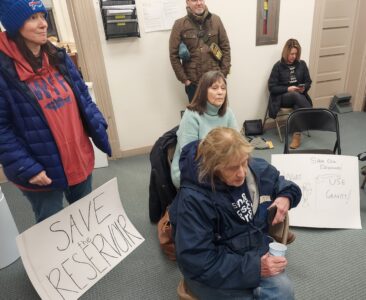
Fredonia Trustee Michelle Twichell stood alone Monday against the water infrastructure plan voted in last month.
Twichell motioned to overturn a resolution to decommission the water plant, draw down the reservoir and buy water from Dunkirk. All four trustees, including new ones Ben Brauchler and Paul Wandel, stayed silent. That meant her motion died for lack of a second, and was not voted on.
It was the climax of another Fredonia Board of Trustees meeting that featured more meandering mutterings about what to do with the village's long-standing water problems.
At least 15 people paraded to the podium to pontificate, during the public comment portion of Monday's meeting. They included old standbys like Rob Clark and Sam Drayo, who again cautioned the village to not give up its water source and treatment system. Clark called the Dec. 26 vote "reprehensible," "sad" and "clumsy."
Andrew Ludwig again called for the decision to go to a public referendum. "It's much too important a decision to put on five people," he said. "Let's hear from the public."
James Lynden - who voted against the resolution but is no longer a trustee - also called for a different direction, calling the decision to acquire water from Dunkirk "not responsible."
Former Mayor Douglas Essek, and county Legislator representing Fredonia Susan Parker, called on trustees to stay the course with the Dec. 26 resolution.
Marie Sedota passionately pleaded to save the reservoir, nearly breaking into tears at the end. Gus Potkovick - infamous in Village Hall for his ongoing hot dog cart feud with the Fredonia Farmers Market - blasted trustees for their December water decision.
Ray Dai, a teen who said he was a reporter for the Spectator, the Fredonia High School newspaper, put down his camera and dropped any pretense of journalistic detachment to weigh in.
"In today's day and age, conflicts are becoming increasingly widespread," he said. "It's incredibly disheartening to see that even here, in our small town of Fredonia, an issue as important as a vital piece of public infrastructure, water, could be such a polarizing issue.
"Building consensus... is crucial during this time," Dai added.
The final speaker, directly after Dai, was apparently the most influential one: Water specialist Natalie Whiteman of the Chautauqua County Health Department.
"I just want to make it clear... we are tasked with enforcing Part 5 of the New York State Sanitary code. That sanitary code requires that within 120 days of being notified of significant deficiencies, the water system either have them all addressed and rectified, or have an action plan in place," she said.
"The clock started ticking on July 11. We are well past that. Realizing that the village already engaged LaBella to do a report, we agreed to allow that can to be kicked down the road an extra six weeks, so that you did have time to digest the report."
Whiteman soon said, "Regardless of what happens, we still need some kind of corrective action plan going forward. We're not done here. We didn't satisfy everything by taking a vote a couple weeks ago. And if that vote is rescinded, then technically, you're in violation."