
The Rise And Fall Of Coal
Trending
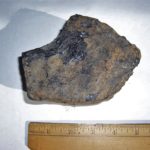
The artifact for today's Hometown History could perhaps be an advertisement for a Christmas gift for some in our community -- a lump of coal. This is a lump of coal that you might not mind getting in your stocking, however. It was taken from the last load from the last run of the last steamboat from the old Chautauqua Lake fleet, the City of Jamestown, in September 1963.
The history of heating and fuel comes to our minds here at the Fenton History Center especially now, when we are experiencing problems with our furnace boiler. Natural gas heats the mansion now and has for longer than the museum has been in the building, but it was first heated with coal fireplaces in nearly every room. Very likely there was a coal furnace through the second quarter of the 20th century. We still have remnants of the coal bin and coal chute. The furnace provided "steam heat" as the gas still does. Steam heat was a treasured comfort and a great selling point for hotels or any building in the late 19th century.
The 19th century was unquestionably the glory age for coal and steam. 18th century steam engines were huge, feeble, slow, breathtakingly inefficient, and rarely found far from coal mines. At the end of the Revolutionary War there were only six in the U.S. One powered the pumps of New York City's water system. When the British Army departed and the Americans came in, our soldiers marveled at it and wondered what made it run. A few of our local early settlers had, or claimed to have, been present when the Clermont, Robert Fulton's first successful steamboat on the Hudson, made its maiden run. That was deemed a considerable distinction.
Our first look locally at a steam engine was the Lake Erie boat, Walk In The Water, which docked at Dunkirk in 1818. The first steamboat on Chautauqua Lake was launched in 1828 and the first stationary industrial steam engine in Jamestown was put in use in 1835. In those early days people were amazed by these great engines with many times the strength of a horse, which ran ceaselessly and never tired. They marveled at the perfect motion of "the balance wheel," comparing them to a watch. They often remarked how they "panted like a great beast."
The steam engine itself gave birth to the railroad, and the railroad made possible the abundant supply of coal to Jamestown. The early steam engines had been wood burners but coal has a considerably higher heat content and burning temperature and is ideal for steam boilers. Steam railroads made mass production and mass marketing possible. Raw materials could be brought in huge quantities from almost any distance and the market for finished products expanded exponentially. Industrial firms could now operate and compete on a national scale. Productivity and material abundance reached levels never imagined in the previous century and they kept on rising.
Coal supplied not only industry, but was the universal urban home heating and cooking fuel in the 19th century. But coal was also dirty. At your next opportunity, take time to view the videos of steam locomotives speeding and laboring under a load in the glory days. They constantly exhausted enormous quantities of both white steam and intensely back smoke, the one sweet and pure, the other foul and poisonous. Coal dirtied buildings and clothes that were hung out to dry. It poisoned people's lungs. For the most part, however, people were inured to it. Most men smoked cigars everywhere. If coal stoves were toxic, dirty, and foul smelling, they were vastly superior to the fireplaces they replaced. Most people took their city's belching smoke stacks as a point of pride, a symbol of progress. Large plumes showed prominently on many a lithograph, illustration, and city seal.
But all things come to an end. The last home coal delivery in Jamestown occurred at 8:30 a.m. on March 15, 1991. The costly, sophisticated steam equipment that was the pride of Jamestown's Carlson Generating Plant as recently as the late 20th century has now been dismantled. Jamestown even expunged the smoke plumes from the city seal, 45 years ago next month.
Not so many years ago, I stopped at the rail overpass on Big Tree Road one day and walked back to take pictures of the train passing below. There were coal cars stretched as far as I could see in both directions. No more. Coal now is forever banished also from the Dunkirk generating plant. If today's naughty children were ever to receive a lump of coal in their stocking, they would have no idea what it was, let alone what messages it once carried.