
City Proposes Spending More CDBG Money On Business Development, Marketing
Trending
City Council members have a better idea of how exactly the Development Department will spend its 2026 Community Development Block Grant and HOME program funding.
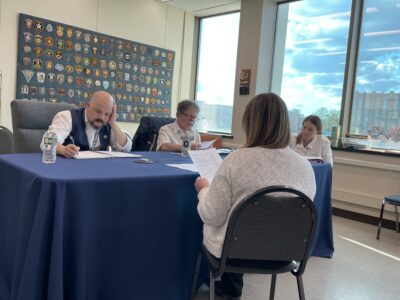
At the Housing Committee meeting, City Development Director Crystal Surdyk took the time to outline each section, the amount of Community Development Block Grant or HOME funding it would receive, and what it entails.
"You have before you our proposed list of program activities and dollar allocations," Surdyk said. "80% of our proposed activities go towards low to moderate benefit activities as a national HUD objective, and then 20% of funds go to address slum and blight activities."
The low to moderate benefit activities include sections such as strategic code enforcement, which is proposed to receive $57,517. This is the maximum the city is allowed to allocate towards that particular activity, and Surdyk said it will help offset some of the cost for one of the code enforcement officers, not helping with everything but helping with some things like salary.
The next section, small business development and technical assistance has a proposed allocation of $162,666.
"We have bumped up this category for a few reasons," Surdyk said. "$162,666 is proposed. Under this category we have things like business consulting, which is something that we are going to be adding as a program under this category. That might be providing a consultant for a business to do, let's say marketing, helping with marketing efforts, some additional training."
For the last three years, Surdyk said, they have been partnering with the Small Business Development Center and their fast track program, which she added is a nationally renowned entrepreneurship training program that lasts 10 weeks. The most recent cohort to go through the training graduated the day after the meeting. Each cohort has gotten a little bit bigger, with 13 graduating this year, Surdyk said. The program is also certified and has been tried and tested nationwide.
The funding in this section would also support the conferences and group meetings initiative that the DOD has been working on for about a year or so in partnership with the Gebbie Foundation, the county IDA, county visitor's bureau and a number of local attractors such as the Double Tree hotel and National Comedy Center. Studies have been done through this partnership, spearheaded by the Gebbie Foundation, by two organizations based in tourism in the conferences and group meetings realm of things, and the studies and organizations indicated that Jamestown is well suited for small conferences.
The owner occupied emergency repair program is one that Surdyk said continues to be popular, with $39,789 allocated to it.
"There are years where we are out of it within the first couple of months, and there are years where we don't spend it all," Surdyk said. "It really just depends, because it's an emergency sort of basis, it's not something we really can plan for. It's one of those that it's not a terrible thing if we don't use it, because that means there are fewer emergencies, but it is something we feel is still important."
The emergencies that would fall under this category must be something at an owner occupied residence and can be things like a hot water tank, furnace, sewer, or something that poses an emergency situation if not fixed immediately, with a cap of $8,000. The cap can be exceeded if deemed necessary.
For environmental assessment and remediation there is an allocation of $60,500. Surdyk said this might be down a little bit, but at the same time there never seems to be enough. The category itself is broad and can include testing, potentially for things like mold but more for environmental testing, and some remediation efforts.
The next category, community engagement and enhanced community safety has an allocation of $80,847, and has also been bumped up a bit this year.
"We do this in partnership with the police department," Surdyk said. "In years past it's helped to offset the salary of the community resource officer, which we no longer have. However, it does help us if we have circumstances where JPD wants to increase beat patrols downtown, or foot patrols, or are monitoring a particular neighborhood. We can offset some of the costs of overtime associated with that."
In the past it has also been used for DOD and JPD partnership community meetings, and can be used to support things like National Night Out or to reinvigorate Neighborhood Watches. The next category for the Neighborhood Target Area Infrastructure Improvement Program is allocated $101,463. This program is used in partnership with the Department of Public Works for streets projects, sidewalks, curb cuts, and tends to be coordinated with other planned projects the DOD already has, such as Fulton Street. Continued demolitions are planned there, but the hope is in the future to be able to redo some of the street, sidewalks, trees, curbs, and more.
The final low to moderate benefit activities category is for rehabilitation of publicly or privately owned commercial or industrial areas, for $210,00. Surdyk said this means any commercial building's essential systems are included, in order to make the business function as it should.
For slum and blight activities, the strategic blight initiative is allocated $68,196 and neighborhood target demolitions are allocated $110,000. These include clean up days like Hands On Neighborhoods, coming up this weekend, and amnesty days for big items, and hopeful strategically planned demolitions.
20% is also automatically taken in by the United States Department of Housing and Urban Development for CDBG Administration costs, totalling $222,744, meant to help pay for parts of the salaries of people in the DOD. Moving into HOME funding, Surdyk said that is technically a separate grant from CDBG, totalling $279,108. The total CDBG funding amount is $1,113,722.
$97,687 is allocated for HOME owner occupied rehabilitation, and 30% has been set aside for the Community Housing Development Organization, in the total of $83,733. The HOME Redevelopment program, which Surdyk said is new over the past few years, is allocated $69,778.
"The HOME Redevelopment program gives us a lot of flexibility because it can cover things like demolitions, but the requirement for that is if we demolish something it has to be replaced with a new housing unit or structure," Surdyk said.
That makes things a little bit trickier, but Surdyk gave an example of using some of this funding in the past for the Blooming Gardens project, being done through a partnership between CODE Inc and Southern Tier Environments For Living, on Spring Street. HOME Administration also automatically takes 10%, applied by HUD, for $27,910.
Next week a public hearing is scheduled for the Annual Action Plan, with a virtual public meeting that was held the day after the council meeting. Public comment goes until the end of the month, and the approval of the submission by council is set to be voted on at the next city council voting session. The Annual Action Plan will be submitted to HUD on June 1, and if any substantial changes need to be made following public suggestions, they will be put in before the submission.