
Trending
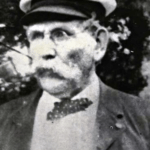
Gov. Andrew Cuomo has signed legislation (S.5570) sponsored by state Sen. Catharine Young, R-Olean, directing the New York State Office of General Services to install and maintain a plaque in the Capitol honoring Samuel J. Abbott, the night watchman who was the sole fatality of the 1911 Capitol fire.
"Samuel Abbott lost his life just a few steps from my office door in the Capitol building," Young said. "Last October, a tour group on the 'Ghost Tour' of the Capitol was gathered outside my office and the guide was pointing out the spot where Mr. Abbott had died. For decades, legend has had it that he still roams the halls of the Capitol keeping watch over the building. Staff people have sincerely claimed that they have heard keys jingling and have seen lights flickering while working late at night and on the weekends. But this man's valiant actions and bravery closing doors and keeping the fire from spreading shouldn't be reduced to a simple ghost story. Samuel Abbott was a Civil War hero and long-standing public servant. I thought he should be highly respected and remembered for the man he was which is why I introduced the bill to formally recognize his service and sacrifice for the people of New York. Now, a plaque will be installed right outside my office door to permanently memorialize the site of this remarkable man's death in the Capitol."
At 2:42 a.m. March 29, 1911, the Albany Fire Department became aware of a fire at the state Capitol. It originated in the third-floor Assembly Library, spreading quickly to the adjacent State Library, before spreading to the building's fourth and fifth floors.
According to the Albany Evening Journal, at 3 a.m., Samuel J. Abbott, a 78-year-old watchman in the building, "was seen by an orderly opening some windows. Mr. Abbott had worked at the Capitol since 1895 and his territory as watchman comprised three floors of the State Library." He was known to "leave home about 9 o'clock each night, go to the library, lock himself in and remain until 6 a.m. when he returned home."
Sadly, two days after the fire, on March 31, 1911, Abbott's body was found the fourth floor.
Documents at the time stated that the Capitol, known as "one of the most costly and celebrated buildings constructed in 19th-century America," had been burning for at least 30 minutes before firefighters arrived.
The damage was immense. The skylight above the Great Western Staircase collapsed, the stairway melted and priceless archaeological objects were lost. It is estimated the entire collection of the State Library, including more than 800,000 books and manuscripts, was destroyed.
Abbott was born in September 1833, one of at least five boys and four girls born to William B. and Lucretia A. Abbott. He worked at his father's stave and barrel factory. During the Civil War, he served in Company E of the 12th New York State Volunteer Infantry and was given the ranks of Ensign, Second Lieutenant (May 13, 1861-August 3, 1861), and First Lieutenant (August 2, 1861-September 19, 1861). He was later described in the Albany Evening Journal as having "an enviable war record."
After the war, from 1867 to 1870, Abbott served as postmaster at the Salina Post Office. He married Jane "Jennie" Utting, in 1867 and they had at least five children, three of whom survived. Abbott's funeral service was held at St. Peter's Church in Albany on April 1, 1911. According to the Times Union newspaper, it "was one of the most largely attended funerals ever held in this church." In August 1912, the Legislature allocated $280.16 to Samuel's son, George "for funeral and burial expenses, and other expenses incidental to the finding of the body."
The death of Samuel Abbott, and the lives lost in the Triangle Shirtwaist Coat Factory fire, which occurred within a week of the Capitol fire, together spurred a wave of labor rights and workplace safety legislation in New York state and across the nation, including the Sullivan-Hoey Fire Prevention Law.
"Not honoring Samuel J. Abbott for his selfless act of duty and dedication has been a long-time oversight," Young said. "He was never formally recognized in the Capitol for paying the ultimate price while rescuing countless Capitol employees and helping them to escape the burning building. He was someone who was a Civil War hero, an officer and leader, and the kind of person who gave his life in the line of public service.
The incredible strength and bravery he showed that fateful morning ultimately prevented this tragedy in New York State's history from becoming even worse. With this official marker, the state and nation will remember Samuel Abbott's heroic actions and his sacrifice, and we and future generations will all have a deeper appreciation for this extraordinary person who gave everything he had for others."