
Crappie Are King In The Spring
For those us who remember when crappie — or as I grew up with calico bass — fishing in the spring was a sure sign that the dog days of summer were just around the corner. The bucket filled with these tasty fish was a spring time tradition. Then we would catch as many as we could than freeze them to be enjoyed at a later date.
Calico fishing on Chautauqua Lake has gone the way of the cassette deck, but that doesn’t mean that aren’t calico in the lake. It does mean that they aren’t as plentiful as they used to be. For those who go after them and know how to find them, the fishing can be just as exciting as days gone by.
Some would say that Crappiethons of old took all the calico out of the lake, but I prefer to think it was the explosion of the walleye, muskie and white perch population that brought the calico back in check.
Chautauqua Lake offers different crappie — the black crappie (Promoxis nigro-maculatus) and the white crappie. The most important thing you’ve got to understand is the mind of a crappie. You’ve got to know why he does what he does, and when he’s going to do it. Listen, crappie are predators that hold to schools and can cover large areas of water, while chasing large schools of baitfish.
Baitfish is the key word here. Crappie eat other fish, almost exclusively. Nightcrawlers and other baits aren’t going to work well.
There are two major species of crappie. The black crappie, and the white crappie (Promoxis annularis). The black crappie is the darker of the two species. It also has seven or eight dorsal spines, as well as pronounced spotting in its sides.
The black crappie prefers larger, more acidic, lakes and are more predominant in the northern states, and up into Canada. However, they do cohabitate with white crappie often, because they prefer similar areas, as one might expect.
It is rare for white crappie and black crappie to inter-breed, but it does occur. The black crappie is found mostly in deeper water. Hence, on Chautauqua Lake, that would be the northern basin. This is not to say that they don’t hang out in the southern basin, but they are primarily found in the northern basin on Chautauqua.
The white crappie are lighter and have only six dorsal spines. It also has eight or nine dark-colored bands on its sides, and are generally found in shallow fisheries in warmer regions of the country, but they are found in the southern basin of Chautauqua Lake.
This species can usually be found in slow-flowing rivers, but they also inhabit larger bodies of water. They can also handle rougher waters than their black crappie kin. Both species of crappie can grow to more than five pounds, though the average size is slightly under one pound.
Over the years I have discovered that like most wildlife/fish, crappie can be broken down into four major phases throughout the year. Like all things to do with critters that roam the land and water on this great planet of ours, there are always two things in common — eating and breeding.
The pre-spawn conditions usually occur when the water temperatures reach 60 degrees. In northern states this happens in the spring. In southern states, this happens as early as February. Before that, the pre-spawn crappie have been in their winter habitat, but will now move towards the shallows (8-10 feet) following lines of cover and/or vegetation.
The males will move up first. They will congregate in these areas before moving into shallower waters (2-3 feet) to build nests near the cover. The females will follow shortly after and pick a partner to breed with.
During the pre-spawn it is easy to catch crappie by sight-fishing the shallow areas. Traditionally this can be done by again using colored jigs tipped with a minnow. Once the females have a mate, they move into the nest, lay eggs, and the eggs are fertilized.
When this is complete, females move out to deeper waters, while the males guard the nests. The “fry” will hatch when the water temperature gets to between 60-65 degrees.
During this phase, males will attack whatever approaches the nest. This makes catching them easier. Of course, this brings up the dilemma of whether this is the right thing to do. If you catch the male and release him, then all should be OK, but if you plan on keeping him, the eggs/fry chances of making it could be in jeopardy.
Once the fry has hatched, the males and females school along the cover in deeper water to recover. They can be frustrating to catch in this phase because they often times suspend at a certain depth, away from cover, and will not move to take bait more than a few inches away from them. During this time, the crappie will usually not cooperate with you. This is really one of the most difficult times to catch crappie throughout the year.
When the water warms up, they’ll kick into the summer phase of migrating to favorable temperatures, and areas where there are baitfish. You’ll find them near structure. This generally holds true near the thermocline, and around large schools of baitfish, especially minnows. Typically, they’ll be deeper during the day, and at night they’ll rise up to the shallows. The bad news is they are going to be tougher to find. The good news is hat when you do find them, they’ll actively feed.
Once things start cooling off, and the water temperature drops to the low 60s, crappie will migrate to deeper water and suspend over structure. They’ll hold at this depth all winter, until pre-spawn comes around again. They will still feed, but smaller baits work best and move them slowly. Stick to small jigs, small minnow and you’ve got to get your baits right in front of their noses.
You can find some great crappie fishing action during the winter, mostly because there is far less fishing pressure, and the crappie move around less.
Crappie fishing can be super exciting and easy in the early spring, but they also can be caught throughout the year with a little more effort and work.
In the next couple weeks on Chautauqua Lake, the crappie run as we used to call it will in full swing. If you really want to get a new angler hooked on fishing, this is a great time to do it because the fishing is easy and generally comfortable.
Local Sports
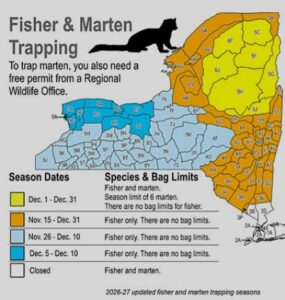
State responds to growing fisher numbers
Icons and Instigators

USA advances to round of 16
Golf leagues
MAYVILLE — Marsha Gastol had a gross 41, including birdies on No. 2 and No. 4, to lead Class A; Diane Paterniti ...
Jamestown rally falls short in Batavia
BATAVIA — A five-run sixth inning gave the Tarp Skunks life, but it was not enough to get ahead of Batavia in an ...
Evan Steffen qualifies for NYS Amateur
Last month, 579 of the best amateur golfers in the Empire State entered the qualification process for the 103rd New ...