Dewittville Solar Project Gets Special Use Permit
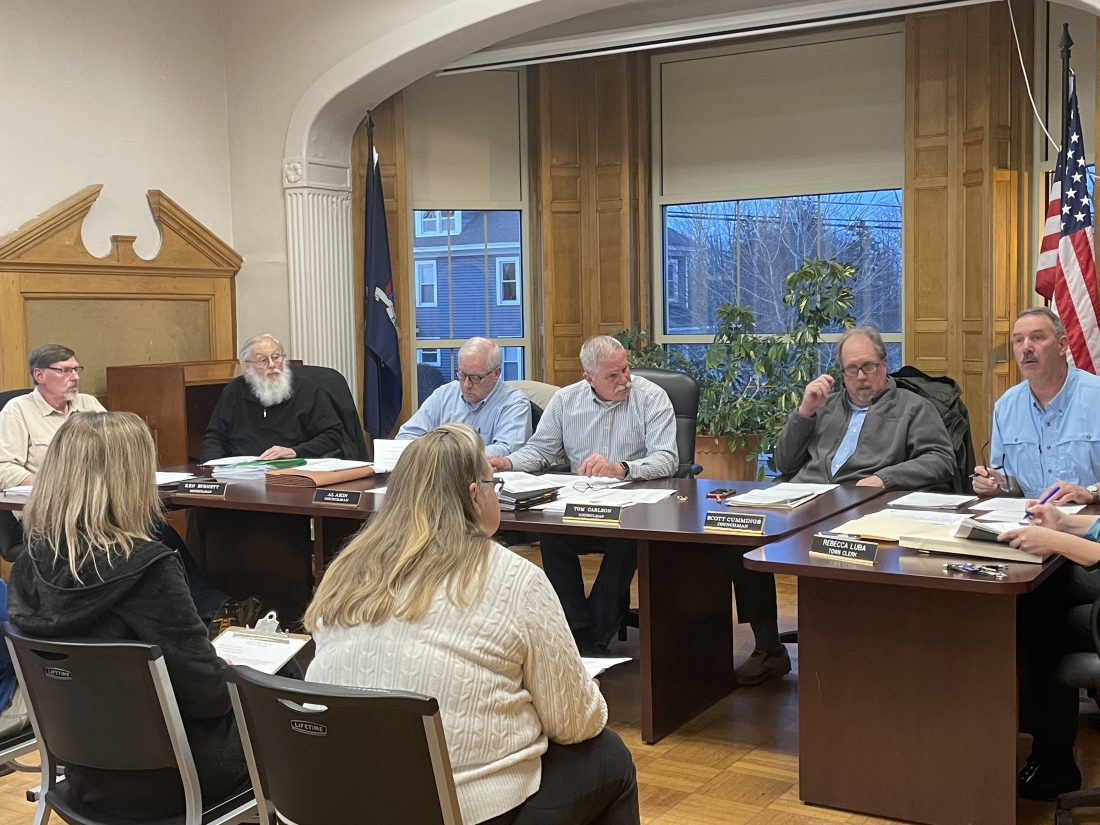
The Chautauqua Town Board approved a special use permit for a solar project to be constructed on Hartfield-Stockton Road and a Community Benefit Agreement with the developer. Photo by Gregory Bacon
It took nine months, but the Chautauqua Town Board has taken steps for a solar project to be constructed in Dewittville.
Board members on Monday voted unanimously to approve a special use permit for a 5-megwatt solar project to be built at 6036 Hartfield-Stockton Road, across the street from an Amish family.
Although the town board has approved the special use permit, Omni Solar Dewittville, LLC, which is constructing the solar project, must meet certain requirements before a building permit can be issued, including a strong decommissioning plan.
Andrew Reilly with Wendel was hired by the solar company to work on behalf of the town of Chautauqua. He helped draft a decommissioning plan that will run between $250,000 to $300,000. He said the bond will be reviewed every three to five years to see if that amount needs to be raised.
Another requirement for the building permit is the construction company must submit proof that no PFNAS are permitted in the solar panels. Per- and Polyfluoroalkyl Substances have been found to be harmful to drinking water and officials want to make sure wells are not impacted.
The town board also approved a Community Benefit Agreement with Omni Solar Dewittville LLC. The company is going to the county Industrial Development Agency to get a Payment In Lieu Of Taxes agreement. Should they get the PILOT the Community Benefit Agreement requires the company to make direct payments to the town.
According to the Community Benefit Agreement, the town will receive $13,750 annually starting in January 2022 through 2032.
In 2033, those annual payments will increase to $17,200. That will continue until 2043, when the annual payments will be increased to $21,500.
The town board opened the public hearing for the solar project in June, 2021. At that time a number of residents opposed the project. The town required the developer to issue a check so it could hire its own engineer for its own studies. Each month the town board heard public comments on the project, but this was the first time any votes took place.
Top stories

JPS Readies Innovation Center For Student Use

Sean Thomas To Serve 20 Years In Prison In Child’s 2024 Death; Nuttall Sentencing Postponed
City Explains Cleanup Holdups

‘Voice’ Finalist Lucas West To Hold Senior Recital Locally

Council Discusses Business Notification As Second Street Project Begins