Local Group Helps Shine Spotlight On Missing Persons
-
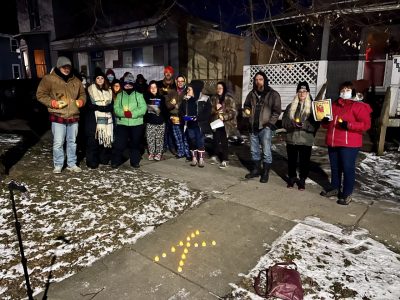
- Merry Williams, founder of WNY Missing and Unidentified Persons, is pictured during a candlelight vigil in Jamestown last month. Williams’ group helps raise awareness on missing persons locally and across Western New York. P-J file photo
-
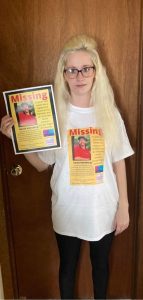
- Williams has been outspoken regarding the disappearance of Jamestown resident Kevin Hornburg. Submitted photo
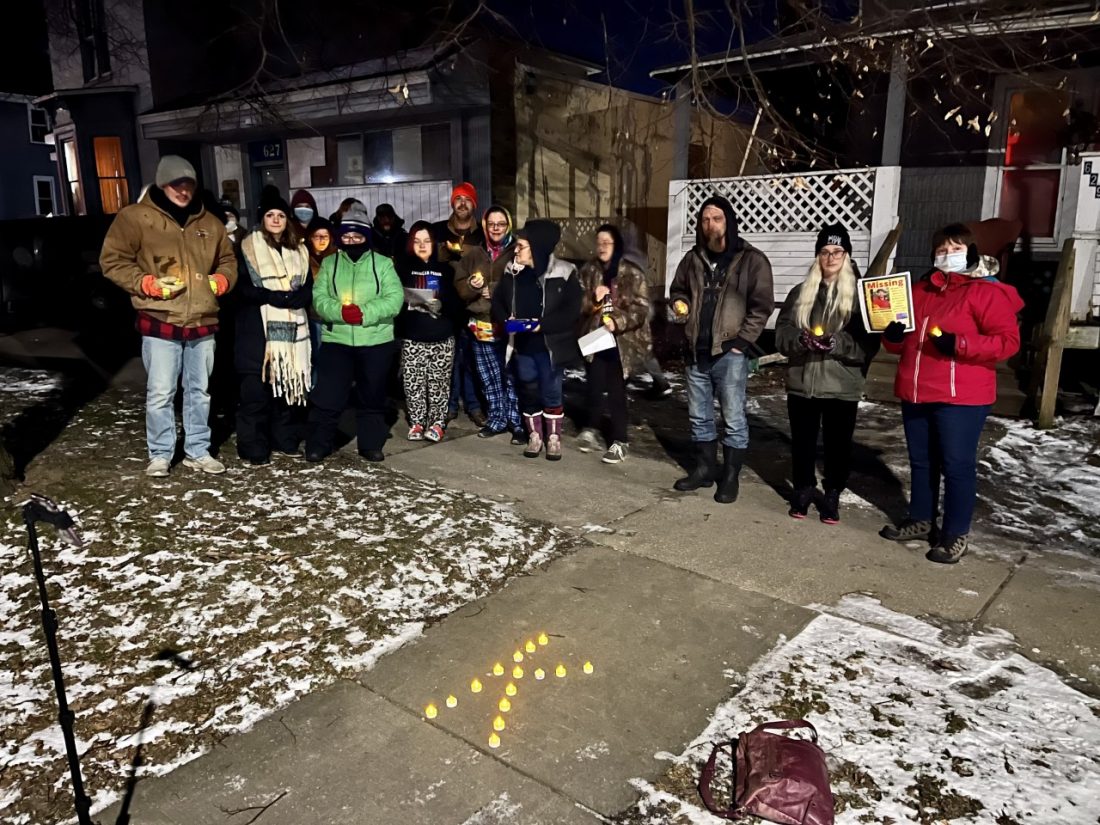
Merry Williams, founder of WNY Missing and Unidentified Persons, is pictured during a candlelight vigil in Jamestown last month. Williams’ group helps raise awareness on missing persons locally and across Western New York. P-J file photo
Merry Williams didn’t start out advocating for those who are missing and their families — it just sort of happened.
Williams, founder of WNY Missing and Unidentified Persons, said she has followed many of the missing persons cases over the years, but became more interested in them the past few years. Between knowledge of those cases, dealing with missing persons cases personally and the ability to organize awareness and people on social media, the local group was born.
“Being a lifelong Jamestown resident, I always heard of cases such as Yolanda Bindics, Lori Bova and when I was a little bit older, Corrie Anderson, and I think that’s when things kind of started clicking that there was a problem here locally,” she said. “Every case that I had ever heard open throughout childhood was never really closed and didn’t have much resolve. At this point, it’s very difficult to help those families look because, at that point, you’re looking for skeletal remains, which are much harder to find. As a woman living in Jamestown, it kind of made me realize how vulnerable we all are.”
“I got to know quite a bit … but last February is when I really got into it and that’s when this group was founded,” Williams added. “That was after two years of some personal struggles within my own family and having (had to) chase down my own siblings and sometimes there were times they could not be found. I noticed that sometimes, the precedence wasn’t there when you’re calling in a welfare check, if someone is into the drug scene or that kind of lifestyle, sometimes it’s not as expedient as I would have hoped as a family going through it at that time. I remember we were waiting for a police officer to call us back sometimes for hours … so we’re wondering if our family member is alive and well or not. With me experiencing that firsthand, you realize how many people aren’t there for you at a time like that. The police officers do what they absolutely have to, but if they can’t locate somebody, they can’t do a wellness check. They’re not going to sit there and spend 15 hours to find out where your loved one is. … One of our major goals is to represent the underrepresented cases, especially here in Western New York.”
Williams said initially, she shared content on Facebook and social media to help spread awareness regarding missing people. She had quite a following on social media, which led to other community members asking her to share the information for other missing and unidentified people. At that time, Williams started the WNY Missing and Unidentified Persons group.
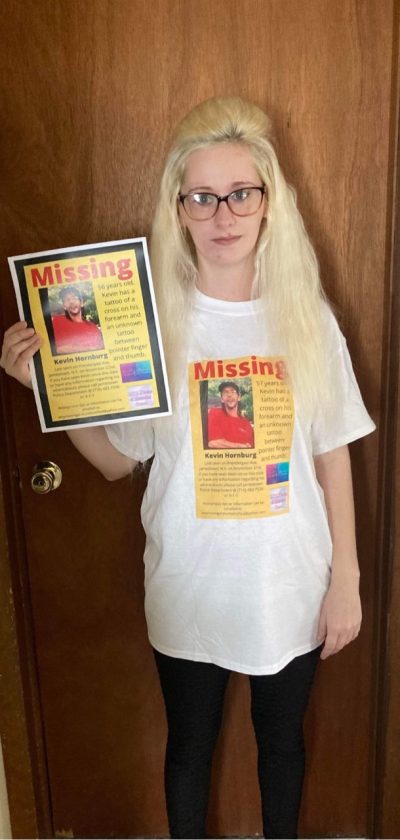
Williams has been outspoken regarding the disappearance of Jamestown resident Kevin Hornburg. Submitted photo
The group has branches in Buffalo, Rochester and other areas. Each branch or team has about 25 volunteer members who help search, create flyers and contribute in other ways, Williams said.
“Nobody’s certified,” she said. “We are not a trained search and rescue team. We are just trying to be something extra.”
Williams said while searches are an important facet of the organization, raising awareness is another large part of what they do. Likewise, the group can act as a spokesperson for the missing person’s family or loved ones.
“Obviously, having these working relationships with both media, social media, law enforcement — all of these things matter,” Williams said. “We also do try to promote the positive relationships between those places, whether it’s law enforcement or the media. Some people get so frustrated that they kind of turn down police help and want to take things into their own hands. We want to remind people that as much as it feels like sometimes you aren’t getting all of the resources that another case might, knowledge is power. We are just here to kind of guide families; we are whatever they need us to be at the time, whether it is reaching out to the media or kind of relaying things between them and law enforcement. Not everyone has a positive relationship, especially with our local police or even a lot of confidence at this point.”
Williams said it can also be difficult during missing persons cases as Jamestown does not have as many resources in these situations as other cities might. She said it can also be discouraging when local cold cases don’t get as much attention. She said there are a few well-known cases locally, but there are others that span decades that don’t pick up as much attention.
“Those were about the only ones I really knew by name until I started researching this and then you realize that every community has quite a high number of unsolved cases — but here in Western New York, our unsolved homicide rate especially in Buffalo is through the roof,” she said. “Even for being a small community here in Chautauqua County, comparatively to our surrounding counties, we have many more unsolved missing people that have never gotten some of the attention that certain ones get. There’s no rhyme or reason to it.”
On the whole, Williams said throughout the past year with her organization, she has discovered that there can be a disparity regarding services that are put into motion between different cases. Williams said a national database for missing people, NamUs, underrepresents the missing and unidentified cases of Black and indigenous people.
“The percentage of what is in the system compared to what is actually missing doesn’t do it justice,” she said. “Basically, NamUs makes it sound like only 4 percent of the women missing are African American. When we look at the statistics, we just know that’s not accurate. We don’t know where the ball stops — families not reporting these people missing in a timely manner or law enforcement not getting them submitted into the database. We realized along the way that some law enforcement aren’t aware of exactly what should be going on when somebody is missing long term.”
Top stories
Chautauqua ZBA Rejects Golf Course Appeal
Molitor Cosponsors Offender Registry Bill
Attack On Teen Worries City Mother
Fenton History Center Hires New Coordinator To Bring More Students Into Museum
Wendel Shares County Highlights With Business Leaders