
More Water Chestnut Found In Lake, Chadakoin
-
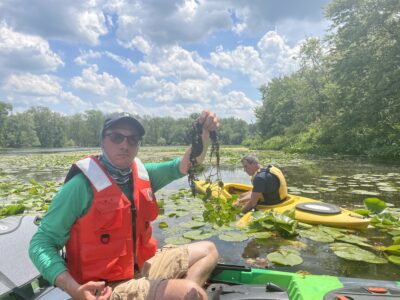
- Taylor West, Chautauqua Lake and Watershed Management Alliance project manager, holds up a water chestnut plant pulled from the Chadakoin River. Submitted photos
-
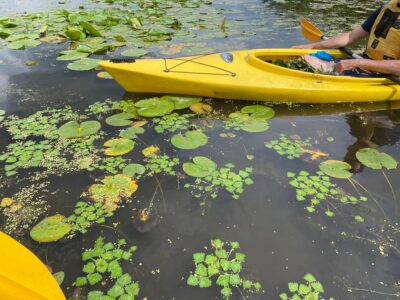
- Several water chestnut plants are seen growing amongst water lilies in the Chadakoin River.
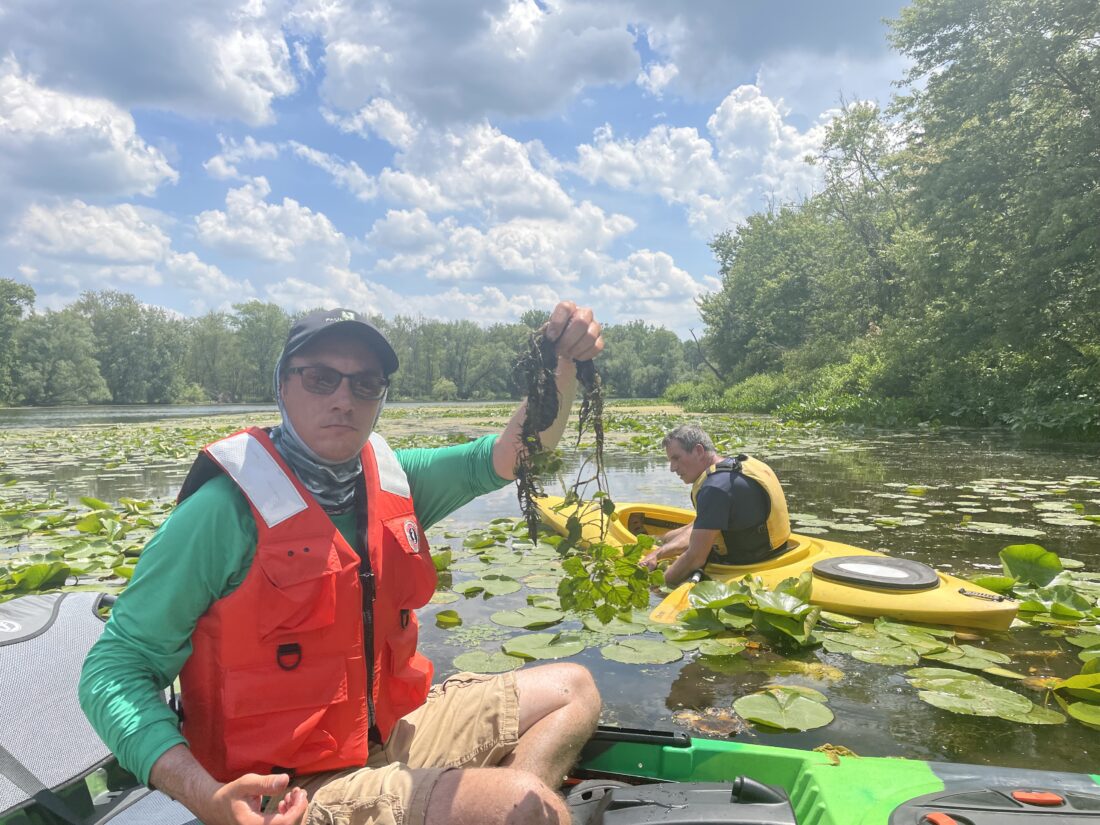
Taylor West, Chautauqua Lake and Watershed Management Alliance project manager, holds up a water chestnut plant pulled from the Chadakoin River. Submitted photos
The presence of the water chestnut is growing on Chautauqua Lake and the Chadakoin River.
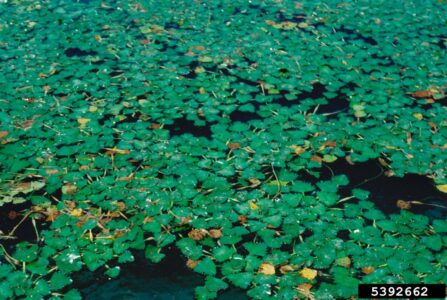
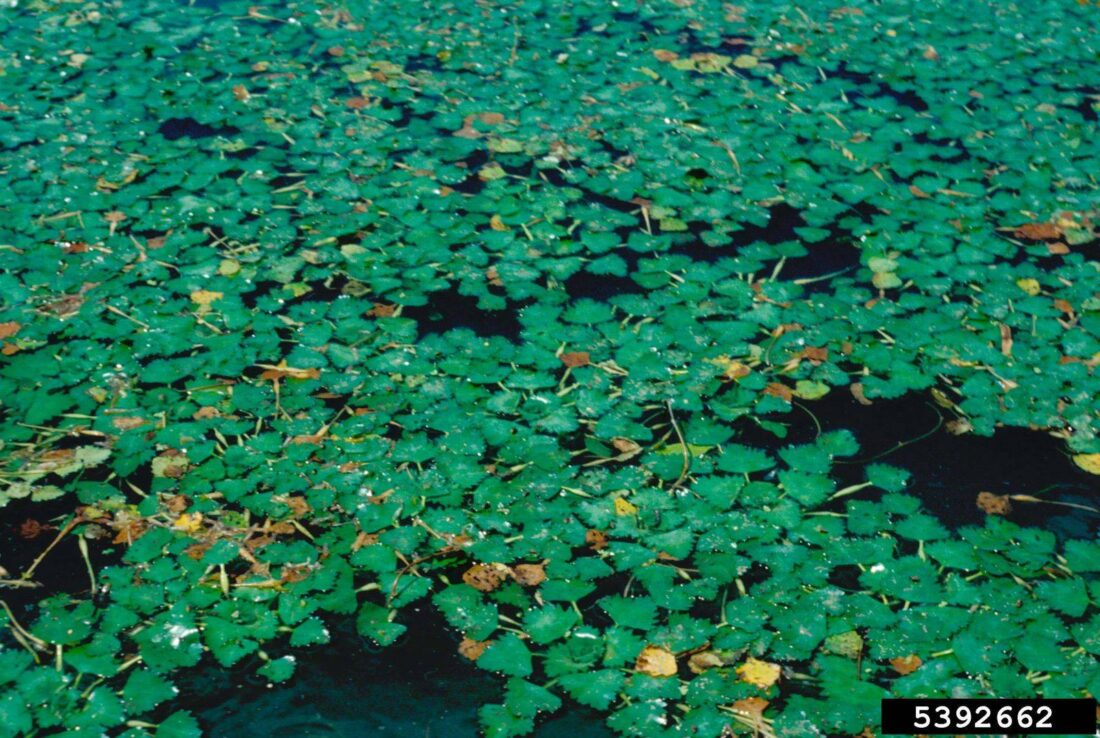
Water chestnut plants flower in July, and reproduce via sharp nutlets which can cling to animals and spread easily through currents. Each seed can be viable for up to 12 years and produce approximately 10 to 15 plants, which in turn can produce up to 20 seeds each. This plant’s reproductive advantages, potential for rapid spread, and tendency to impair the ecosystem and recreation all make it a top priority for targeted removal. Left unchecked, water chestnut can form a dense mat atop a lake or river that makes it difficult to move through the water.
Early detection and targeted removal are only feasible at the early stages of an infestation. As an infestation spreads and increases, so do the costs of corresponding management programs. “When you consider the cost to manage curly-leaf pondweed and Eurasian milfoil in Chautauqua Lake, it makes a lot to sense to invest in early detection and rapid response,” said Dave McCoy, Chautauqua County watershed coordinator. “The lake would have been much easier to maintain if these species had not become established.”
Rapid response programs targeting this species stretch back to at least 2012, with more than 200 plants being removed from the Chadakoin in 2021.
In late June, the Chautauqua Watershed Conservancy’s (CWC) Aquatic Invasive Species Early Detection Volunteer Taskforce took to the water for the first time this summer. Twan Leenders, Chautauqua Watershed Conservancy ecological restoration manager, found a water chestnut plant near the kayak launch in Celoron before even getting into the water. After three hours of surveying with three kayaks, the first task force paddle of the year removed more than 120 water chestnut plants and recorded their locations on www.imapinvasives.org, a platform used by six states including New York and Pennsylvania to track observations of invasive species in near real time. Professionals and the public alike can get involved by reporting any invasive plants they encounter in the lake or watershed.
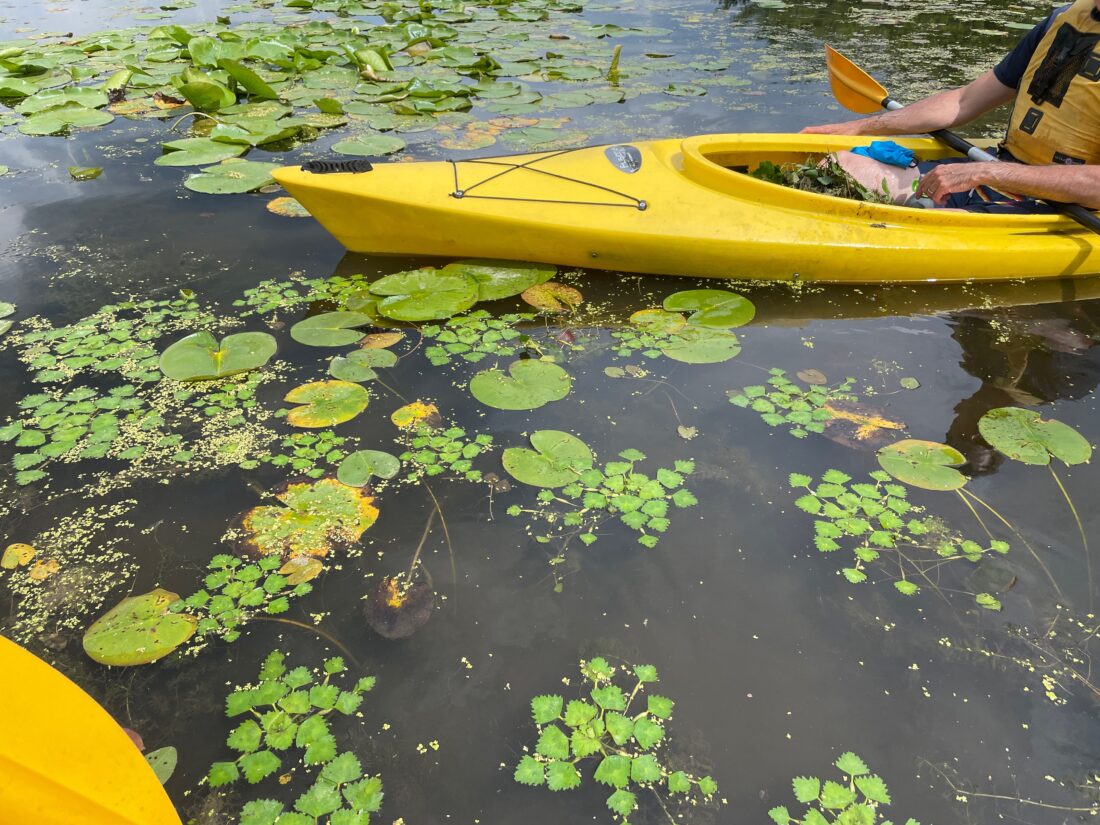
Several water chestnut plants are seen growing amongst water lilies in the Chadakoin River.
In adidition to the water chestnut, the Chautauqua Watershed Conservancy holds on-water citizen science surveys throughout the summer. For more information, email Leenders at Twan@chautauquawatershed.org. In addition to water chestnut, surveys are also expected to target the invasive alga starry stonewort as well as the invasive plant species brittle naiad. Other Chautauqua Watershed Conservancy programs also target invasive plant species found on land, such as the hemlock woolly adelgid and tree of heaven, the latter has been found at locations in the City of Jamestown and can cause a number of ecological problems.
“By definition, non-native invasive species negatively impact the native flora and fauna that has long inhabited the area that they only just arrived in. By catching these harmful newcomers before they become established, we can minimize their impact and help protect the health and sustainability of our ecologically sensitive wetlands, rivers and lakes,” Leenders said. “Chautauqua Lake and the Chadakoin River support several at-risk species, ranging from bald eagles and osprey to spiny softshell turtles and rare aquatic plants. Sadly, all of those wonderful assets and the thriving ecosystem that supports them, are constantly under attack from new environmental threats, like invasive species. It is in everyone’s best interest to keep a watchful eye on these potential intruders, while you’re out there enjoying the beauty of the lake. Observing and reporting environmental concerns is arguably one of the best things anyone can do for Chautauqua Lake and the Chadakoin River.”
The Audubon Community Nature Center has been leading an invasive species rapid response removal program on the lake since 2020, regularly working in the Chadakoin River to complement the early detection programs currently led by CWC and in the past led by the Roger Tory Peterson Institute. Following the first taskforce event of the year and the significant amount of water chestnut removed, partners quickly coordinated to plan future surveys and response needs. ACNC’s rapid response removal team returned to the Chadakoin River within days to remove approximately 200 additional water chestnut plants and search other nearby areas.
“Audubon Community Nature Center has been performing extensive water chestnut removal at their own facility located on Riverside Road since 2015,” said Audubon Executive Director Leigh Rovegno. “Since then, we have seen a severe reduction in the number of plants, however, they continue to pose a significant ecological threat. We have been thrilled to partner with members of the Alliance, CWC, the Western New York Partnership for Regional Invasive Species Management, and other participating organizations to ensure that water chestnut does not continue to spread throughout the watershed.”
In addition to these locally led efforts, State and regional groups also perform important work on and around the lake including the Western New York Partnership for Regional Invasive Species Management and the New York State Department of Environmental Conservation. Local funding has been provided by the Lenna Foundation, Ralph C. Sheldon Foundation and Chautauqua Region Community Foundation.
“The Chadakoin River serves as Chautauqua Lake’s outlet and is a vital area for people, plants, and animals. In order to make sure it continues to develop in the right direction, it is a priority to tackle problems like water chestnut when they are more manageable,” said Randall Perry, Chautauqua Lake and Watershed Management Alliance executive director. “A big thank you to our local charitable foundations and the Alliance Members involved in this collaborative invasive species work, which will benefit the lake and river in the long-term.”
Local News
JCC students named to part-time Dean’s List
Jamestown Community College earned part-time Dean’s List honors for academic excellence during the spring 2026 ...

Appetite for mystery assists Meals on Wheels
Pennsylvania commits to purchasing grapes from 11 Erie-area growers
A neighboring state is taking action in regard to the grape crop. On Thursday, the Shapiro Administration ...
Democratic dinner to honor Kidder
WACS gets update on project timeline
Westfield Academy and Central School Board of Education members learned about the progress and timeline for the ...
Martz-Kohl Observatory to host lecture July 15
Dr. Alexandra Yep will return to the Martz-Kohl Observatory at 7:30 p.m. Wednesday, July 15, to present “The ...