
Author Creates ‘Out-Of-Order’ Alphabet Book To Challenge Students
-
- When author Barbara Gibbon tastes her mother’s Potato Soup recipe, she tastes childhood memories.
-

- Author and illustrator Barbara Gibbon will be selling and signing her out of order alphabet book at Randolph Free Library Saturday, June 17 from 10 a.m. to 4 p.m.
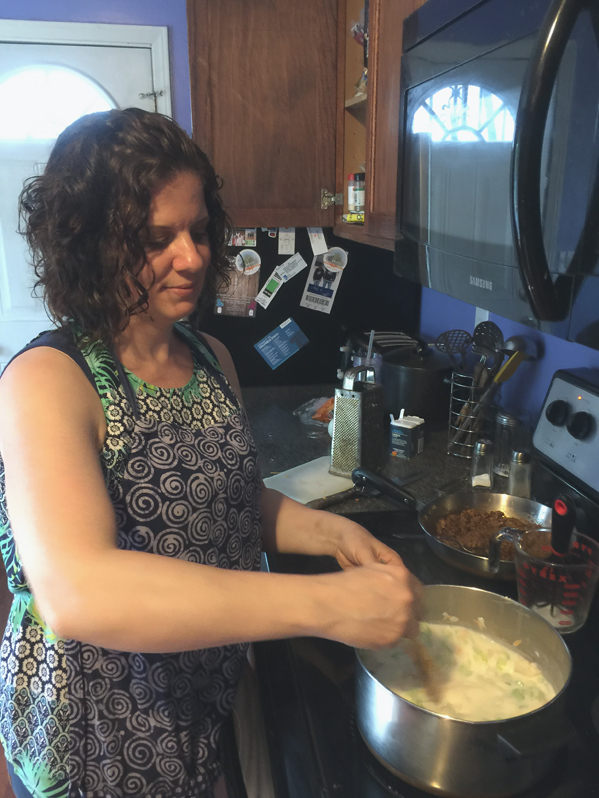
When author Barbara Gibbon tastes her mother’s Potato Soup recipe, she tastes childhood memories.
Childhood is the basis of who we are, the foundation that sets us apart from others. It includes our earliest memories that remain with us until we breathe our final breath. Author and artist Barbara Gibbon reminisces about her wonderful childhood of growing up on a one-lane dirt road and more as she shares her recipes and describes her new book, “Animal Homes ZXA: An Out of Order Alphabet Book.”
When working at a library with children, Gibbon noticed the preschoolers say letters faster than she can flip pages when she read an alphabet book, but they didn’t know the letter when she pointed to it. She could see them singing the Alphabet Song and it appeared they knew the letters, but they didn’t.
She also noticed kindergarteners didn’t know their letters in the second semester, so she couldn’t read with them in their Reading Buddies group. She knew they had to know the letters out of order to be able to read, so she began looking for a book she could use. The only thing available was flash cards. At that point, she decided to write a book herself. Having been a graduate of Columbus College of Art and Design, she was equipped to illustrate it as well.
“I mixed the letters up so they would have to think,” Gibbon says. “I didn’t want to make it too complicated. It is an out-of-order alphabet book, so I’ve organized it by animal habitats for some order and picked five main biomes.”
Since many alphabet books have the same pictures representing letters, she made hers different by using some more unusual animals to illustrate all of the sounds. She found the letter G was almost always used for giraffe.
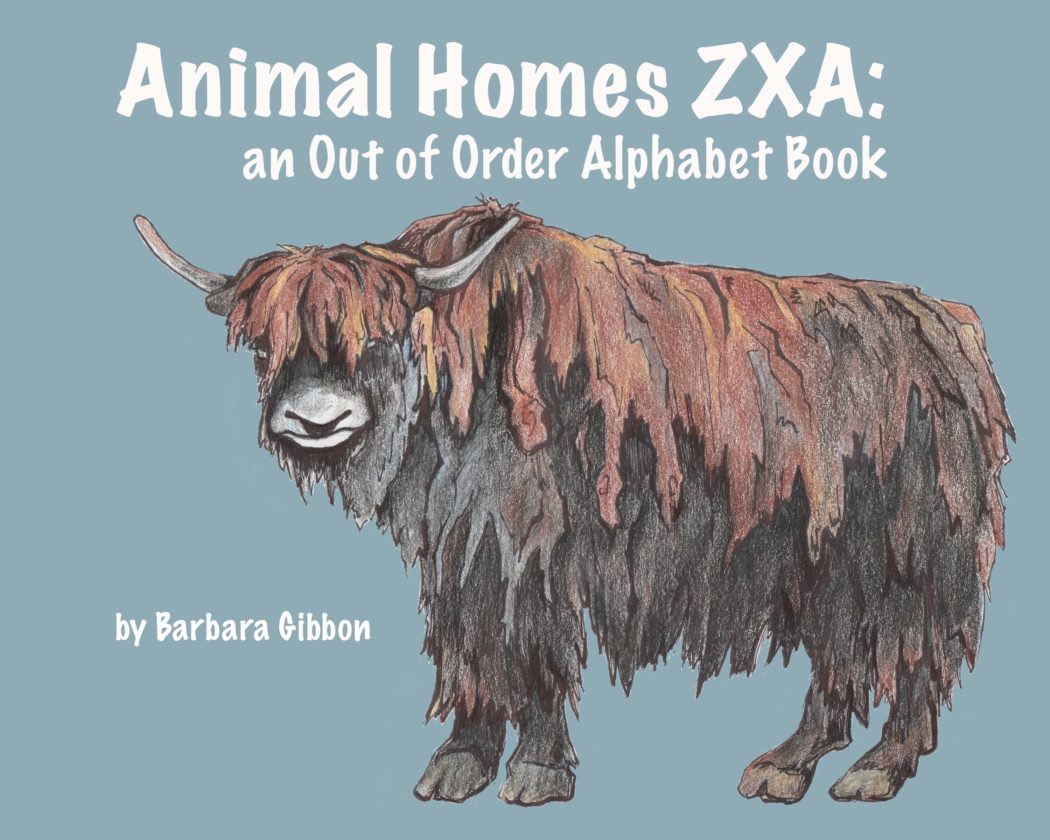
Author and illustrator Barbara Gibbon will be selling and signing her out of order alphabet book at Randolph Free Library Saturday, June 17 from 10 a.m. to 4 p.m.
“How often does the G have that sound? I used gibbon, a small tree-dwelling ape,” the human Gibbon says. “There are not many animals that start with U, so I had to come up with an animal — umbrella fish. With Z, instead of zebra or zoo, I used zebu, a breed of cattle that lives in India.”
She points out that she did not use all unique animals, but some that children recognize. Even when the book includes common things, there are a lot of new vocabulary words as well as new things for the parents to learn, too.
The book is organized into five biomes, including the tundra, which is cold and icy, a hot desert and grasslands. There are three different kinds of forests, but in keeping it simple, she used trees for young children, and made water for wet homes.
“Some animals live in more than one biome, but I just used the most common association that you would have,” Gibbon says. “I tried to make the book fun. There are opportunities for the child to use their imagination. It’s meant to be used one on one with the child.”
The beautiful artwork is detailed and very appealing to children as well as adults. The publication was a two-year process, with the drawings alone taking a year. After she put her children to bed, she would stay up late drawing the illustrations for the book.
“I started with the yak. The artwork is near realistic. I’ve been doing abstract for so long. I only used realism when I drew my kids.”
ı ı ı
Gibbon has many interests, including walking, jogging, biking or just being outside, reading and especially cooking. She has a large family, so she says fitting meals into her budget can be challenging.
“I like recipes that are cost efficient,” she says. “My mom cooked a lot of meals from the More-With-Less Cookbook by Doris Janzen Longacre. It is a world community cookbook of recipes collected by the Mennonites using ingredients that are low cost and nutritious. When I was a kid, I really didn’t care for some of the recipes. It’s funny; now that I’m older, I like them, and bought a copy of the cookbook several years ago.”
Her Vietnam Fried Rice came from the cookbook. She recommends using it when you want to clean out the refrigerator or fresh vegetables can be used.
Gibbon is not a vegetarian, but eats a lot of alternative sources of protein and meals without meat. Once, after eating vegetarian for over a year she was dining with family at her brother’s restaurant and broke her diet.
“My family ordered several platters of chicken wings in various hot, tangy, spicy flavors,” she says. “They smelled so good, and they looked so good, and they tasted so good … It was all over!”
Her family enjoys hummus as a source of protein, but she doesn’t like store-bought hummus, calling it “bland and oily,” while her own recipe is “fresh, spicy and garlic-y.”
Gibbon insists that once one has eaten homemade soup they will find eating soup from a can is “a horrible punishment.” She finds the fresh, delicious flavors to be “nostalgic,” along with the smell of fresh homemade rolls baking in the oven on a cold day. She tells how Mom’s Potato Soup was a hit with her friends after sledding down the steep, unmaintained dirt road that went up the hill past her house. She added cheese and more vegetables to her mother’s recipe. (Her Vegetable Soup recipe is made almost the same as the Potato Soup, except without milk.)
“My dad made the most tasty, fluffiest biscuits,” Gibbon says. “I wrote down his recipe, as he told me, but somehow they never taste as good as his. I always use real butter. Maybe that’s why mine don’t turn out the same.”
She shares that her husband is a great cook who taught her how to make greens. Gibbon prefers to use 2-3 bunches of mustard greens, as they are spicier and have more flavor than collards. When she does cook collard greens, she uses one bunch of collard, and one or two bunches of mustard greens. Gibbon also enjoys making smoothies, which she says are “a hit” with her children.
“They’re great for using up fruit that is turning soft, or bananas that are turning brown,” she says.
In reference to her Homemade Blackberry Pie, she tells how she used to love going blackberry picking with her dad, and not because she liked the work. It was hot and she always ended up with scratches all over her legs and arms from the brier bushes.
“I liked spending time with my parents, and I knew that picking blackberries meant that mom would bake blackberry pie that night,” she remembers. “Mom taught us how to roll out the dough and make a lattice crust. She sewed my siblings and I little aprons with matching chef hats, which we were excited to wear every time we helped bake. We even had child sized pie pans and rolling pins so that we could make our own tiny pies.”
She believes people who have never had a homemade blackberry pie are missing out and that store-bought pies or pies made with canned filling are not worth eating.
“I like to judge desserts on two factors: 1) Is it worth gaining weight from eating it? 2) Is it worth having to run two miles in order to not gain weight? Homemade blackberry pie passes both tests,” she says.
Gibbon says that baking was a fun activity that also equipped her and her siblings with skills. Her parents were very devoted, and encouraged them to cook, draw, build, play outdoors and spend quality time together as a family. Summer was always a great time to play outside. Her dad built a rope swing that hung from a huge maple tree at the end of their driveway. When she and her brother and heard a car coming up their dirt road, which was only a couple times a day, they would race to the rope swing, climb on, and swing out over the car as it passed by.
“I don’t know if the rope was actually long enough to go over the road, but it sure seemed that way when I was a kid,” she says.
She thinks cold weather was the best time for baking, and a fun activity to do with friends when they came to her house. Her friends loved to go to her house, because her mother would always say ‘what would you like to bake, cookies or pretzels?’ “We liked making soft pretzels, and friends could take their creations home to share with their family,” Gibbon says.
Gibbon grew up in Port Allegany, Pennsylvania and now resides in Columbus, Ohio with her husband, Melvin, and three children, including one married daughter. She will be selling and signing Animal Homes ZXA next Saturday, June 17 at the Randolph Free Library from 10 a.m. to 4 p.m. during the Randolph Arts and Crafts Festival. The library is located at 26 Jamestown Street, Randolph, New York. If you can’t make it to the Randolph Free Library, the book may be purchased at Barnes and Noble and on amazon.com. To view or purchase her artwork visit www.bgibbon.com.
Potato Soup
2 T real butter
2 T flour
Salt
pepper
seasoning salt
2 c milk
onion, chopped
garlic, chopped
potatoes (1 per person)
1 stalk celery, chopped
1-2 carrots, shredded
cheese of choice, shredded
Melt butter in saucepan. Using a whisk, stir in flour. Stir over medium low heat. Add seasonings. As butter and flour mixture thicken, whisk in milk.
Turn white sauce to low, stirring regularly, being careful not to scald milk. Saute vegetables in butter in a large pot. Pour white sauce over onions and garlic, and add cubed potatoes. Add celery and carrots for color. Adjust quantity by adding more milk or more vegetables. I add a little water to stretch the soup. Add cheese to soup for protein. Cook on low with a lid until vegetables are tender, stirring to be sure the soup doesn’t burn. Serve with a side of homemade rolls.
Vegetable Soup
3-4 T real butter
onion, chopped
garlic, chopped
potatoes
carrots
celery
salt
pepper
seasoning salt
Melt butter in a large pot. Saute onions and garlic. Add several cups of water and bring to a boil over medium heat. While you’re waiting for the water to boil, wash, peel, and chop vegetables. Season. Adjust quantity by adding more water or more vegetables. You may need to add another Tbsp butter, more onions or more seasoning. Cook on medium with a lid, until vegetables are tender. Serve with a side of homemade rolls or homemade biscuits.
Greens
2-3 bunches of mustard greens or 1 bunch collard and 2 bunches mustard greens
† – • c onions, diced
salt
pepper
seasoning salt
garlic
pinch of crushed red pepper
splash of vinegar
Ç small ham shank, optional
Immerse greens in a sink full of cold water. Remove the greens and rinse sink. Refill sink with cold water, and repeat. Let the greens float in the sink while picking the leaves. Tear the leaf part away from the stem. Pull the leaf away from the thicker veins. With mustard greens, the veins aren’t as thick, so it’s not as much of an issue. The thick veins of collard greens are bitter. Discard the stems and veins. Place leaves on cutting board. Take a handful of leaves, roll them together, and chop. You will have slices of greens. Add greens to a large pot and add water to completely cover over. Add onions and season. Add vinegar, which gives flavor and tenderizes. Add ham shank. Cover and cook over medium heat for at least 2 hours, possibly 3 hours. Check every 10-15 minutes, stirring, and adding just enough water to keep the greens floating. Too much water creates watery, bland tasting greens. Forgetting to add water causes tough burnt greens. Season several times through process, tasting the greens for tenderness and the liquid for flavor. After about 2 hours, begin to let the water get lower, as the greens get more tender. When done there should be enough liquid in the bottom of the pot for leaves to float freely, but not too freely. My husband calls this liquid “pot liquor”. This is the liquid that contains the water, leaf juices and spices, so having enough of it is what flavors the greens. Serve as a side dish. We usually eat greens with homemade macaroni and cheese, cornbread, and grilled BBQ ribs.
Hummus
2 cans garbanzo beans
1 small-medium onion, chopped
3-4 cloves garlic, chopped or 1 T garlic powder
juice of ¢-1 fresh lemon
™ c sesame oil or tahini (toasted sesame oil)
1 T olive oil
Salt
pepper
Rinse and drain beans. Chop beans onion, garlic and lemon juice in blender. Add sesame oil. (This is the ingredient that gives hummus its delicious flavor). Blend together until creamy and smooth. Add 1 Tbsp olive oil and blend again. You might need a dash more olive oil if the hummus is too thick. Season with salt and pepper, adding more garlic if needed. Serve with toasted pita bread.
Smoothies
Empty a large container of vanilla or plain yogurt into a blender. Add a little sugar for plain yogurt. Add a tray of ice cubesand crush. Add whatever fruit you have available: strawberries, blueberries, blackberries, raspberries, bananas. Usually I only have brown bananas on hand, so I’ll add a little peanut butter for extra protein and flavor. Blend together and serve immediately. I think it tastes best with blackberries and raspberries.
Homemade Blackberry Pie
1 ¢ c flour
¢ tsp salt
¢c real butter
5 T cold water
Crust: Mix together flour and salt. With a pastry blender, cut in butter. Drizzle in water. Using a fork, stir gently with a tossing motion. Gather dough together with fingers, divide into 2 parts for top & bottom crust. The idea is to have a thin, light, crust. The crust will get tough the more you roll and manipulate the dough, so try not to do this as you’re rolling out the crusts. Using too much flour also makes the crust tough, so use the flour lightly.
Filling:
3 cups fresh picked wild blackberries
3/4 to 1 c sugar
3-4 T flour
Combine blackberries, sugar and flour in a bowl, and set aside while you roll crust.
Pie preparation:
Divide dough in two. Roll one piece on a lightly floured pastry mat with a lightly floured rolling pin. You should roll the crust thin enough that you can see the print in the pastry mat through the crust. The bottom crust should be bigger than the pie dish so that it extends over the edge of the pan and hangs down. It may be difficult to transfer the crust into the pie pan, but if you lift it gently with a flat metal spatula (not the kind you use for flipping pancakes), and bend the pastry mat, you can ease the crust into the pie pan. Roll out the other piece of dough and slice into strips. Stir the filling gently and pour into the pie pan. Laying the strips across the pie, weave the top crust. Trim the edges of the pie, roll up, and pinch with fingertips. Put a piece of foil around the edges of the pie to cover the crust so it doesn’t burn, being sure to remove halfway through baking. Bake at 400 degrees until the berries bubble rapidly in the center of the pie. Cool on a rack.
Vietnam Fried Rice:
Cook 1 cup rice or use 3 cups leftover rice.
4 T cooking oil.
™ – 1/2 lb any cooked or raw meat, cut into thin strips, optional
3 cloves garlic, minced
1 onion, chopped
1 tsp salt
1 tsp pepper
1 tsp sugar
1 T soy sauce
Cook rice unless using leftover. Heat oil in large skillet. Add the rest of ingredients, except rice. Stir-fry until meat is tender and hot, about 2 minutes. If you’re cooking fresh meat, be sure it is thoroughly cooked.
Add cooked rice. Stir fry 5 minutes, then add 1 cup leftover or frozen vegetables, such as peas, green beans and carrots. Stir well into rice-meat mixture. Just before serving, add 2 beaten eggs. Over medium heat, stir carefully through rice until eggs are cooked. I usually re-season for taste. Serve hot.
Tomato Chutney
2 cups chopped tomatoes
1 medium onion, chopped
3 Tbsp lemon juice
2 Tbsp vinegar
1 Tbsp sugar
pinch of salt & pepper
Combine all ingredients. Serve as a side dish with rice. I like to eat it with Chapatis, a whole wheat flat bread.
Biscuits Supreme
Preheat oven to 450 degrees.
Combine:
2 c flour
4 tsp baking powder
¢ tsp salt
¢ tsp cream of tarter
2 tsp sugar
Cut in ¢ cup shortening.
Add 2/3 cup milk.
Stir together, turn out of bowl, and knead gently on a lightly floured surface about 1/2 minute (10-12 strokes). Roll the dough out about an inch or so thick, and cut into circles with a biscuit cutter. Place on a baking sheet, close enough that the edges touch each other. Bake 10-12 minutes until lightly browned. Be careful not to burn the bottoms. Makes 16 medium biscuits.
Soft Pretzels
1/8 c hot water
1 pkg yeast (or 1 T)
1 1/3 c warm water
1/3 c brown sugar
5 c flour
Stir yeast into 1/8 c hot water. Combine 1 1/3 c warm water and brown sugar in large bowl. After yeast is dissolved add to bowl and stir together. Stir in flour. Knead dough on board. Preheat oven to 475 degrees. Cut off small pieces of dough and roll into a long snakelike shape. Loop it into a U shape, cross over, twist, and bend down to make a pretzel shape. After several pretzels are shaped, prepare water bath. Place a wide saucepan with shallow sides on a stovetop burner. For every cup of water used, add 1 T baking soda. So if you can fit 3 cups of water in your pan, add 3 Tbsp baking soda. Bring the water to a simmer. Drop pretzels in water (only as many as will fit across your pan) and count to 30 seconds. Remove the pretzels from water bath and place on a baking sheet. Sprinkle with kosher salt, or large granule salt. Bake until golden brown, about 7-9 minutes. Remove from baking sheet and cool on rack.
Arts/Entertainment

Wakeley Dance Academy To Host Annual Show Thursday, Friday

Dixiecats To Perform Friday In City
Historical Society Presentation On Amish Thursday
MAYVILLE – William A. Lucas will present “Traveling with the Amish: Past and Present” at the Chautauqua Town ...

Opera House series to screen ‘Lee’

JCC Holds Student Art, Design Exhibition
