
Maple Grove Students Lead Nesting Poles Project On Campus
Trending
A partnership between Bemus Point Central School students, the Chautauqua Watershed Conservancy and Audubon Community Nature Center is for the birds – literally.
The students recently helped build nesting poles, specialized structures that typically range from 35- to 60-feet tall with platform-topped utility poles for large raptors like osprey to 68-inch, ground-mounted poles for small cavity-nesting birds. Nesting poles are designed to provide safe, elevated, and secure breeding spots to prevent wildlife from nesting on hazardous infrastructure.
"Students want to invest in this community--not just for themselves and their families, but also in the habitat that makes Bemus Point unique," said Adam Padd, Maple Grove Junior-Senior High School principal. "Our students and businesses care for this area's beauty today and for years to come."
The nesting pole project began through collaboration between Maple Grove staff, technology classes and the community.
"This project is a great reflection of what can happen when our school and community come together with a shared purpose, and our students were excited from the start, taking pride in being part of something that has a lasting positive impact," said Josh Liddell, Bemus Point Central School superintendent. "Our teachers and administrators were equally invested, helping guide the work and sharing in that excitement along the way. Partnerships with the Chautauqua Watershed Conservancy and the Audubon Society, along with the support of Chautauqua Brick and Kinetic, helped bring this project to life and showed how much can be accomplished when schools, organizations, and local businesses work together."
School leaders reached out to the Chautauqua Watershed Conservancy for their expertise and partnership. Whitney Gleason, Chautauqua Watershed Conservancy executive director, and conservancy officials helped bring experience in conservation and aviary projects to the school project.
"It was really wonderful to see these local high students' hard work turn into something so meaningful," Gleason said. "The comeback of the osprey reminds us that positive change is possible when people step up. We're grateful to the school for partnering with us and to Kinetic for donating the poles and their time to bring this project to life."
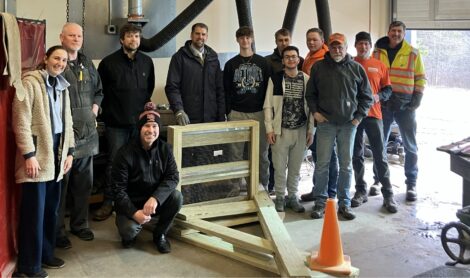
After months of planning and design, students in technology classes taught by Marcus Clark and Matthew Hanley began building the nesting platforms through a proven Chautauqua Watershed Conservancy blueprint and materials from Chautauqua Brick. Nesting materials existing on campus were also installed to attract raptors.
"By elevating raptor nests upon these poles, we do more than offer a vantage point for nature's hunters; we provide a front-row seat to the life cycle in motion," Clark said. "This project is a testament to our environmental consciousness, proving that when we build for the wild, we strengthen the foundation of our own community."
The platforms were built using two 45-foot poles donated by Kinetic, whose crew also came and installed both poles.
The project aims to expand and support local bird habitats. Target species include osprey, hawks, and bald eagles. The nesting pole design prioritizes a safe and healthy environment for birds. And, Liddell said, the project also creates hands-on environmental learning opportunities for students.
"It was a cool hands-on experience and we enjoyed building the nesting platform. We are excited to see what makes the nests their home," said Gavin Darr, a sophomore who worked on the construction of the nesting platform and is an outdoor enthusiast.