Delivery Reform
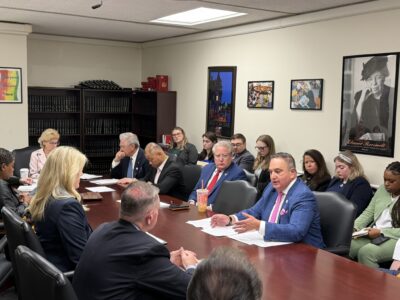
Regional concerns over the way in which New York state implements its health care system were presented to various Chautauqua County medical professionals at WCA Hospital on Monday.
The feedback was compiled through a series of 16 community conversations and more than 7,000 surveys taken from throughout the eight counties comprising Western New York, and will assist in a statewide initiative that would change the way New York residents receive their health care.
The initiative, known as the Delivery System Reform Incentive Payment program, was established earlier this year with a focus on system reform and a specific goal of attaining a 25 percent reduction in avoidable hospitalizations, especially among patients covered by Medicaid, over the next five years. It is being funded through a five-year, $8 billion Medicaid waiver request that was approved at the federal level in April. Of that $8 billion, $6.42 billion has been appropriated toward the DSRIP program.
To learn about how to best design these changes, hospitals and health systems spent the past several months seeking input through community conversations in Western New York and its other regions to learn what works in the health care system, what doesn’t work and how to best build a stronger system to move New York state’s health care infrastructure into the future.
Monday’s findings report at WCA was administered in slideshow format by Bradshaw Hovey, senior fellow with the University at Buffalo Regional Institute, and Gregory Bonk, principal of HMS Associates of Getzville.
“What we have here is a clear-cut, unequivocal intent to restructure the way services are provided,” Bonk said during the report.
Hovey and Bonk presented the top three primary objectives of the DSRIP program as to provide better quality care, to improve the health of New York state’s residents and to lower Medicaid costs. The program’s stated goals include: transforming the health care safety net at the system and state levels; reducing avoidable hospital use and improving other health and public health measures at both the system and state levels; ensuring delivery system transformation continues beyond the waiver period by leveraging managed care payment reform; providing near-term financial support for vital safety net providers; creating a more cost-efficient Medicaid program with improved outcomes; and assuring access to quality care for Medicaid members and long-term delivery reform through managed care payment reform.
The presented data provided an in-depth look at the health care needs of the Western New York region through information obtained by administering community needs assessments. The data also explored areas in which the Western New York region is underperforming medically – such as diabetes testing and screening; adherence to medication for schizophrenia; breast cancer and colorectal screening; preventing HIV and STDs; promoting mental, women, infant and children health; and preventing substance abuse – as well as concerns voiced by issuers of healthcare, including: poverty, chronic diseases, lifestyle issues, access, compliance, capacity, coordination and reimbursement.
“Based on (this information), it looks like all of Western New York has some work to do,” said Betsy Wright, chief executive officer and president of WCA Hospital. “There were areas where we are doing better than other areas of New York, but clearly we have a lot of work ahead of us; and having this information helps us figure out how we can get started on that.”
Hovey said the information presented Monday is being compiled into a formal document which will be released in the near future.
Top stories

Lawmakers Want Senior Dental Care On Marketplace

SKF: 2026 Outlook Unchanged

‘Singing Truth’: Rodney Atkins, Gary Allan To Perform In Salamanca In August
Unitarian Church Hears From Non-Profit Founder
She didn’t plan on starting a non-profit organization. But when Randolph native Destiny Gates lived in a ...
Committee Defeats Borrello Electric Bus Repeal