
Local Nonprofits Collaborate Before Winter Season
Trending
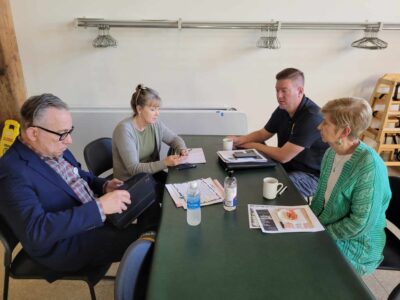
Several area nonprofit leaders met at St. Susan Center to collaborate and devise strategies moving forward with funding, space and how to streamline services they provide.
During Friday's meeting, representatives from St. Susan, UCAN City Mission and the Mental Health Association were on hand, though other nonprofit leaders were invited to attend, including Helping Hands, Healthy Housing, Goodwill and Chautauqua Opportunities Inc.
Topics discussed included the upcoming winter months; how to get more funding for an ever-growing homeless population; food desert locations; how to increase help by city and county officials; and future collaborative efforts.
"We've got a growing homeless population and the city and county has a vested interest in helping us," said Aaron Wadin, executive director of UCAN City Mission. "It takes time, a long time, to get grants, but the city may have a better stream line to funding options than we do (non-profits.)
Moreover, the growing need for social services has placed an overly large burden on the various churches and non-profits in the area.
"We've been running at max capacity for some time now," Wadin said. "However, its almost daily we have women and couples coming to our door requesting help -- help we can't give them and are not equipped to offer."
Additionally, when asked about assistance from the various churches and religious communities, the MHA executive added to the conversation.
"I think this is too big for any one church to handle," said Steve Cobb. "Joy Fellowship Free Methodist Church had issues getting staff in place and had to actually be closed when they couldn't staff it last year. However, I think if we work together, we can support each other mutually."
The onus for the conversation revolved around where to physically house individuals and family members who are homeless.
"If the city could buy property -- and I know of some commercial properties where the landlord would sell very cheaply to the city -- and then non-profits could run and support it maybe a better model," Wadin said. "MHA and UCAN could staff and run the center, St. Susan's could manage the food and the city could own the building while paying the utilities and everyone wins."
However, with ever-tightening municipal budgets and the cost of conducting business increasing year-after-year as minimum wage mandates increase staffing costs and inflation increases the cost of goods and services, many non-profits find themselves in a no-win scenario to maintain feasible operational budgets.
"Every year the minimum wage keeps going up costing us more and more money to do the same thing, but with less and less resources," said Cherie Rowland, St. Susan executive director.
Additionally, the imposed or levied sanctions placed on those receiving services has created a negative, and standoffish barrier for those who are homeless or in need of services.
"When you're homeless your priorities are different than say a normal person," Cobb said. "Most people who are homeless also struggle not only with addiction but sever mental health issues too. If DSS is sanctioning -- meaning a suspension of food assistance funds and housing support -- because a person has a manic breakdown in direct relation to schizophrenia, and misses one appointment, but makes it to the next three and is still sanctioned -- this is not conducive to breaking a cycle."
When questioned about mental health being covered by the Americans with Disabilities Act and its protections afforded, Cobb added, "Yes, I believe in some cases yes. If a person has a legal diagnosis and requires reasonable accommodation, then I would think there would need to be some exceptions made. However, I'm not an attorney."
Additionally, it is apparent that there are many facets to the current dilemma non-profits are having navigating the system and cutting through the red tape. However, the four non-profit leaders around the table on Friday asked for help from their elected officials.
"We need Mayor Sundquist and PJ Wendel to meet with us as a collaborative team," Wadin said. "We need help."