Projects Teach Students Real-World Experience
-
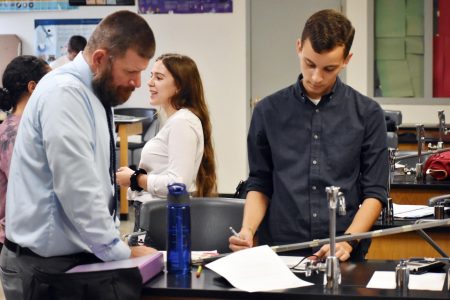
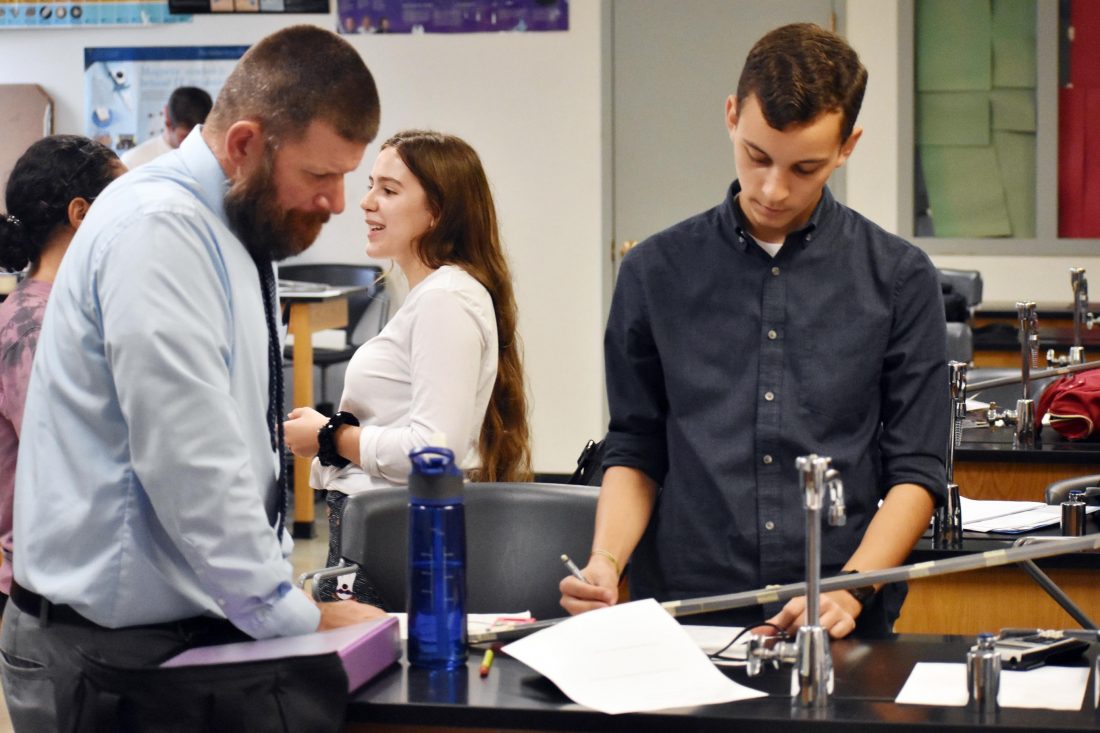
- Steve Propheter teaches his students the basic elements of motion throughout the Jamestown High School advanced placement course. Propheter, JHS AP physics teacher, hoped the lessons can be used by students outside of the classroom one day. P-J photo by Jordan W. Patterson
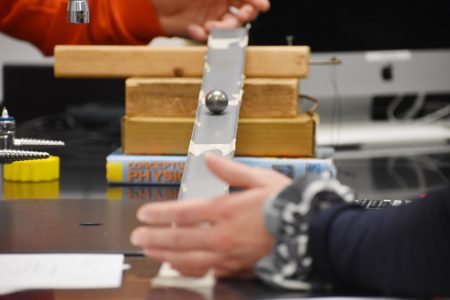
Steve Propheter teaches his students the basic elements of motion throughout the Jamestown High School advanced placement course. Propheter, JHS AP physics teacher, hoped the lessons can be used by students outside of the classroom one day. P-J photo by Jordan W. Patterson
Dropping round, metal projectiles down a ramp to crash on the ground was Steve Propheter’s lesson plan one day in his Jamestown High School classroom. The goal was to teach real-world lessons through the laws of physics.
“It’s more of real life like, ‘Oh, OK this actually works’ type deal,” said Steve Propheter, JHS physics teacher, regarding a October physics lab.
The rolling objects, aimed at a piece of paper laid on the ground, would slam off the school floor while being timed. The other portion of the project would see the same projectile shot into the air from a spring-loaded mechanism. Students in the advanced placement course observed the motion of the tool, wrote down information and oftentimes would try again.
“They’ve solved projectile problems and now they’re doing it for real,” he said.
Using ramps to maintain consistency and calculating velocity, students were required to determine the range and the precise point of impact. The November lesson was part of the motion unit that featured various labs that would later lead into the force unit.
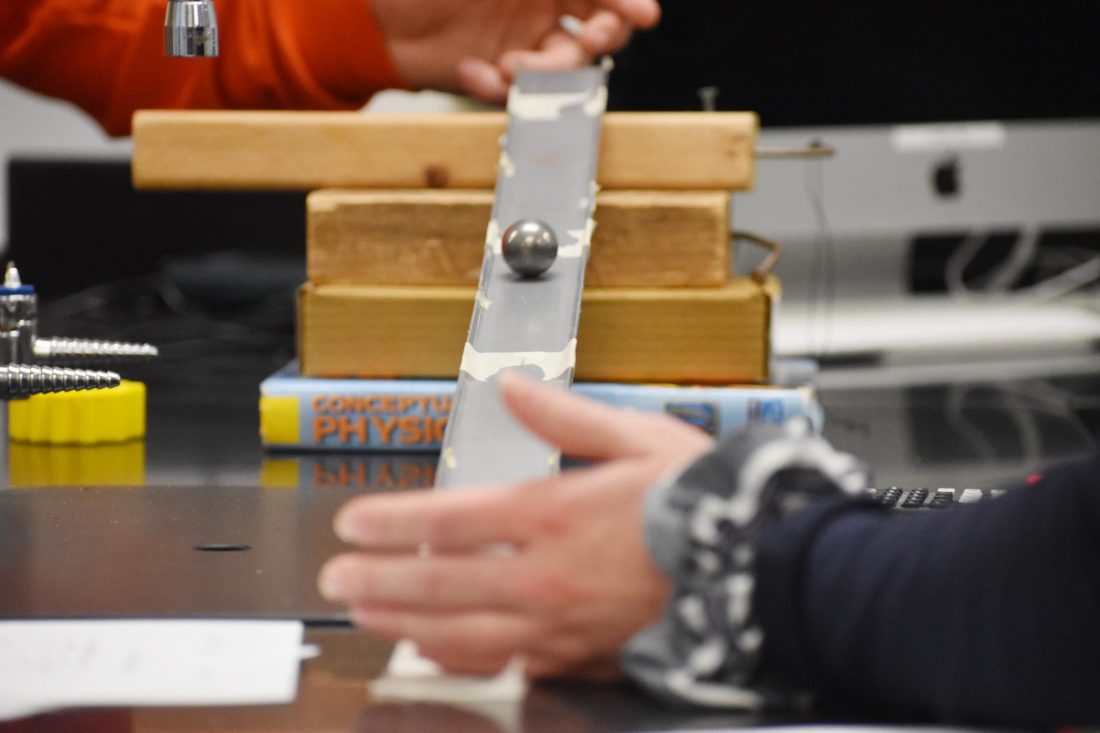
“It’s really a good link. A lot of the stuff we teach isn’t necessarily abstract yet, but when they see the math component of an AP physics course it’s pretty intense,” Propheter said. “So, seeing it on paper as opposed to seeing it in real life, I think this really makes a concrete example — a real connection — of this is what we tell you and this is what happens. It fits all the pieces together in the puzzle for them.”
Propheter, a teacher for 14 years, believes that lessons learned from the recent lab could eventually be applied to life and their future career paths. The class is comprised of 11th and 12th grade students, who Propheter said would later learn physics is essential to what they do next.
“A lot of the students find out the hard way that they need it in their flavor of career, if you will,” he said. “They need it in medical, they need it education and anything to do with science they find out they need physics and in the long run, I think it’s just important to know how stuff actually works and that’s kind of what we do here.”
In the second phase of the lesson plan, the spring-loaded mechanisms launched the projectiles into the air from an elevated height, which Propheter admitted made the second portion “a little bit more complicated.” He added that his students were “shooting for their grade.”
Propheter said while the math-heavy course necessitates lectures and lessons from the textbook, he prefers to use hands-on labs. At that point in October, students had already completed 12 labs. Previous work included creating bottle rockets powered only by water and gravity labs featuring students dropping objects from elevated heights. With complicated math equations, he said the physical labs complement the course.
“I try to do as much hands on stuff so they can get out of the book and plus they really learn science by doing,” Propheter said.
Local News
Southwestern appoints new middle school principal
Southwestern Central School is appointing Katie Miley as its new middle school principal. The appointment will ...
Poll shows Hochul growing lead for governor
It appears the challenger for the top spot in New York state is failing to gain ground on the incumbent through the ...
RibFest organizers eye annual revival as event kicks off in Warren

N. Harmony supervisor to retire
County bed tax applications accepted starting July 1
Organizations, municipalities, businesses, and entrepreneurs can begin applying for Chautauqua County's 2027 ...