
Victims Of Substance Abuse Include More Than The Addicted
Most of the time when discussing the psychological and physical harm substance abuse does to a person, the discussion focuses on the addicted individual. However, according to officials from the Chautauqua Alcoholism and Substance Abuse Council and the Chautauqua County Sheriff’s Department, families of addicts become victims as well of the harmful effects which follow in the wake of substance abuse.
“When we talk about alcohol and other drug abuse in the home, there’s first of all a lot of denial,” said Julie Franco, the director of program services for CASAC. “A denial from the person using; that they somewhat refuse to recognize the circumstance of their situation. And then there is denial from the family members. That it’s not as big a problem as it is.”
Chautauqua County Sheriff Joseph Gerace said it can be devastating to families who, due to their loved ones, find themselves in a crisis. He said many individuals don’t have a support group.
“It’s a very difficult problem,” Gerace said. “It has a huge impact on families.”
Franco said several roles can come out of a dysfunctional family due to substance abuse by one member. Besides the dependent addicted to the substance, an enabler helps protect the dependent in different ways.
“They pick up after them, they get them to bed, they wake them up on time for work,” she said. “They do a lot of things to protect them from themselves, and protect themselves from whatever bad stuff happens when they are using.”
Gerace added that families can be put into danger due to the substance abuser. The substance-dependent person can emotionally and physically abuse them, as well as steal from them to support their substance abuse habit.
Gerace said the large majority of those in the Chautauqua County Jail abuse substances, and a lot of them repeat their offenses.
“Some are abusing more than one substance,” he said.
The crimes they commit can vary between behavioral, such as driving while intoxicated, disorderly conduct and aggressive behavior, to property crimes for money to support their habits.
Several characteristics mark an alcoholic/chemically dependent family system, Franco said. First, they resist change under the belief it may be worse than the pain they currently suffer. They also isolate themselves with limited social contact outside of the family, limiting their view of reality. Members can be emotionally over involved or distant, or some toxic combination of the two, she said. Obsessions and preoccupation develop with the issue or the user. Other problems in the family become completely ignored. Finally, family rules, spoken or unspoken, focus around ignoring the problem.
“Alcoholics Anonymous is a peer-support group with a 12-step program for alcoholics. Then there is Narconon, which is for people who are addicted to drugs like cocaine and pills, and things like that,” she said. “… But there is something called Al-Anon, which is for the families. So, there is an opportunity for the loved ones to attend a support group with people who are experiencing the same issues and can offer help and support in taking care of themselves.”
Al-Anon offers a place for families in similar circumstances to develop a support network to take care of themselves. A similar group called Alateen exists for teenagers struggling with the effects of another’s drinking. The Jamestown community has Alateen at the First Lutheran Church on Thursdays at 6:30 p.m.
“There is a great stigma attached to substance abuse problems as well as mental health problems,” Franco said. “And so there is a level of embarrassment and fear of judgment, and so people don’t necessarily seek out (help) – unless they are hitting rock bottom. … But that is where the encouragement comes in providing more information for people. That people are not alone.”
“Some families get to a point where they turn to the criminal justice system for help,” Gerace said. Otherwise the substance abuser won’t get the help they need because they don’t acknowledge they have a problem.
A person can consider different avenues if someone close to them abuses substances, Franco said. The first focuses on educating oneself about the problem and the substance itself, and what problems it can lead to in the future. Don’t reason with the person until they become sober, and don’t cover up their mistakes, even when drinking gets them into trouble with an employer, police, etc. Refuse a ride when the driver becomes under the influence of a substance. Finally, find help.
CASAC offers confidential services which provide education, information, screening and referral, all of which can be accessed by individuals, families or groups. CASAC is located at 501 W. Third St., Suites 3 and 4 in the Sprinchorn Building in Jamestown. For more information, visit www.casacweb.org or call 664-3608.
Community
City Man Charged In Distributing Child Porn
A Jamestown man is facing federal child pornography charges. U.S. Attorney Michael DiGiacomo announced Monday ...

Beagles Raised For Animal Testing Freed
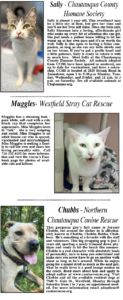
Pets Of The Week
Annual Action Plan Submission On Council Agenda
The Department of Development is looking to submit their Annual Action Plan to the United States Department of ...
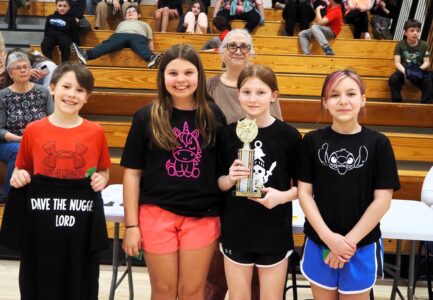
Battle of Books in Ripley more than a good read
Women’s Giving Circle Launches Childcare Innovation Challenge
The Women’s Giving Circle of Chautauqua County is launching a new initiative aimed at improving access to child ...