
Invasive Species Threaten Our Spring Ephemerals
Ahh, spring at last! In our region, this is normally the time of year when the sun has just begun to warm the earth’s surface. The buds on the trees are mounting their swell before bursting into leaves, and the sun is still able to reach the forest floor. This is when the spring ephemeral species abound.
By spring ephemeral, I am referring to woodland plants with a quick life cycle that allows them to emerge, bloom and produce seed during spring of each year before entering dormancy until the following year. This is a common adaptation in deciduous forests that allows herbaceous plants to snatch a few weeks of sunlight before the forest floor is shaded by the overstory trees. Examples of spring ephemerals that occur in our forests include trillium, toothwort, spring beauty, trout lily and may-apple.
By now, most people have at least heard mention of the threats that non-native and invasive species pose to our native flora and fauna. In the Chautauqua Lake watershed, concerns are frequently voiced over species such as the invasive zebra mussel, which cause disruptions in natural food chains and damage to pipes, docks and harbors. Most have heard about non-native aquatic plants, such as Eurasian milfoil, that cause enormous health and aesthetic concerns and create clogged waterways and impede boaters, swimmers and recreationists. But we usually think of invasive species that colonize disturbed or open areas. Those invasive species that are able to colonize and thrive in forested habitats are perhaps fewer in number but of great concern due to their potential detrimental impacts to spring ephemerals. Several of these are described below.
The name bush honeysuckle is used to describe any of the five invasive shrub honeysuckle species that were introduced from Eurasia for their ornamental qualities. Unfortunately, each of these species rapidly invades forests and forms a dense shrub layer that shades out native plant species. Although bird enthusiasts have noted that the berries attract songbirds, studies have shown that bush honeysuckle berries are nutritionally inferior to those of native berries and do not offer neotropical migrants the high-fat, nutrient-rich food sources needed to complete annual migration routes.
Garlic mustard is a seemingly innocent looking plant that was introduced from Europe as a potherb. This biennial produces rosettes of edible green leaves during its first year and produces a tall spike of white flowers the following year that will produce hundreds of seeds per plant. The seeds can remain viable in the soil for more than five years. Of particular concern is the ability of garlic mustard to interfere with normal relationships between plants and fungus in which microscopic fungal hyphae supply necessary nutrients to plants in return for sugar that the plants supply to the fungus. Garlic mustard is able to inhibit these relationships and thus aggressively compete with native species through competition for nutrients, water and light.
Both day lily and periwinkle are ornamental species that escape from the yards of well-meaning homeowners that likely don’t realize the consequences of introducing these species to the area. Both species form an almost impenetrable blanket of growth that eliminates virtually every other species in their path, and both are extremely difficult to remove once established. If these species are planted near watercourses, small fragments can break off and be washed downstream and, in this way, can colonize entire watersheds.
In addition to the loss of native species, invasive species degrade wildlife habitat, alter ecosystem processes and are costly to economies that depend on resources and services provided by healthy ecosystems. For these reasons, when considering additions to your yard, please think of selecting a species that is native to the region, or at least ensure that a species that you select is not invasive. For more information on invasive species in western New York, visit wnyprism.org.
The CWC has two great opportunities to learn more about native and invasive plants in the Chautauqua County watershed. On Saturday at 9 a.m., the CWC will be holding an Invasive Species Pull at its Outlet Greenway Preserve on Old Fluvanna Road in Jamestown. On Saturday, May 14, at 11 a.m., the CWC will be holding its annual Spring Wildflower Walk, led by JCC biology professor Becky Nystrom at 5014 Walker Road in Bemus Point (the site of a future CWC preserve). See the CWC website for more details. Registration is requested but not required. Email info@chautauquawatershed.org or call 664-2166 to register.
The Chautauqua Watershed Conservancy is a local nonprofit organization that is dedicated to preserving and enhancing the water quality, scenic beauty and ecological health of the lakes, streams, wetlands and watersheds of the Chautauqua region. For more information, call 664-2166 or visit chautauquawatershed.org or facebook.com/chautauquawatershed.
Nature
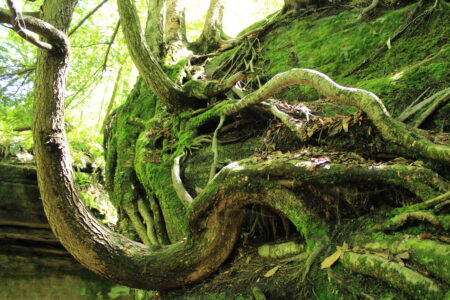
Bryophyta And No Rolling Stone
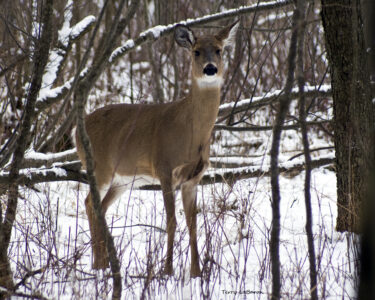
Staying Warm During A Cold Winter
What To Know About When We Get So Much Snow
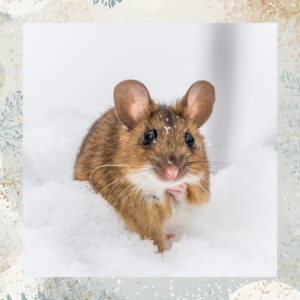
The Secret World Beneath The Snow
There Is Life Beneath The Snow
Winter Exposes Troubled Trees, Bark
The seasons are changing from fall to winter, and one of the major changes to the environment is that the deciduous ...