Learning Anatomy
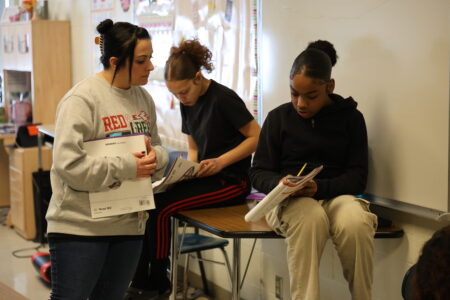
“We are going to do a project today all about the skeletal system. It’s going to be fun but you will also be learning more about the different parts of the skeletal system like the rib cage, wrist and your joints,” said Johnna Cont, Fletcher Elementary School first-grade teacher. “You are going to create the skeletal system out of Q-tips and label all the parts. Does anyone know what the Q-tips represent?”
“The bones,” said the students.
“That’s correct. You will all need to be really good listeners so we can work together to create our skeletal system. What is the plan to create our project?”
Conti worked on the extension project with her first-graders as part of their unit on the human body. The first-grade classes of Rudi Andalora, Ashley Calla, Lori Kindberg, Travis Knight and Conti created a skeletal system from Q-tips as an interactive way to reinforce what they are learning during their English language arts unit where students receive a basic introduction to the human body. Teachers conduct read-alouds asking students to explore and make discoveries about the human body. The read-alouds include a pediatrician who shares rhymes that reinforce basic facts. They are introduced to the five body systems: muscular, circulatory, digestive, skeletal and nervous, through listening and learning activities and caring for their bodies including: how germs cause diseases, an introduction to Edward Jenner and Louis Pasteur and five keys to good health. They also discover the food pyramid to gain knowledge about a balanced diet. The first-grade unit builds upon what they have already learned in kindergarten with their unit on the five senses.
At the first-grade level, listening is a large part of how students learn and gain knowledge. It is also very beneficial to give them interactive projects, which helps reinforce what they are learning in a visual and hands-on way,” said the teachers. “The unit really provides a lot of variety in the read-alouds which include both fiction and non-fiction.”
Some other activities students completed include: trying ballet with Andalora so students could better understand their bodies in “motion” and see firsthand what the skeletal and muscular systems do during movement, outlining a life-sized replica of their bodies with pictures of their organs, creating a book with drawings of human body systems, and creating food collages and a “plate” to understand better about healthy eating and what it looks like. Andalora also found an app to go along with the unit showing the human body in a very visual way for the first graders.
Focus On Schools
Lessons Learned: Garvey Finds Joy In Helping Love Students Grow
Young Playwrights Project Inspires Creativity, Confidence At Love School
PACT Program Strengthens Connections
Caps To Connection: Love Elementary Dedicates “Buddy Bench” On Earth Day
After School Fun: After School Program Provides Washington Students With Community, Growth