Tanneries And Bark
One artifact in the collection of the Fenton History Center brings us back to a winter time activity of many years ago. The artifact is a bark peeler. So what is a bark peeler and how and why does it fit into local history? A bark peeler does just what its name implies. In trying to take bark off a log, one would realize that a tool would be helpful.
The bark peeler was a trusty tool for many ancestors who worked in the lumber camps, sawmills or even tanneries. An early industry in the area was lumbering. As trees disappeared from this area, more lumber camps sprang up in neighboring Pennsylvania, many of which employed a number of Swedes as they arrived in the area. Lumbering was often a winter activity. Even today, the logging activity in this area is done in winter, as it is easier to draw logs in snow than in mud.
The bark may have been a byproduct of lumbering and sawmills but was an important ingredient in another early industry. The tanning of leather was an early industry important to a frontier area. Bark from trees, especially hemlock, chestnut and oak, was used in the tanning of hides for leather that were used for shoes, boots, harnesses, and other clothing or implements used on the farms.
Even today, leather of high quality is vegetable tanned rather than using mostly chrome in the tanning process. The old way used the bark, and the finer the better, although there is no evidence found yet that any bark mills were used in this area. Bark is the easiest to remove in the spring when the sap rises, but the earlier winter harvest of logs was used too. The bark from the lower part of the tree contained the most tannin and was the part that became logs for the sawmills. So the efficient removal of the bark benefited more than one industry.
The animal hides, when ready for tanning, were then soaked for a few months in vats of water and bark and maybe some other ingredients. It is the water soluble tannin in the bark that tans the leather, which is a chemical process.
Tanneries, because they were defleshing the hides and soaking them for a long time in outdoor vats, were smelly places and often located outside of the town. There were tanneries in Jamestown in the early days in the vicinity of “Piousville”, the area now around Winsor and Harrison Streets. This was away from the early settlement in the village of Jamestown and was near a source for water.
By 1855, there were 25 tanneries in Chautauqua County with two of them in the town of Ellicott and one in the town of Busti. Others were concentrated in the northern or western areas of the county. To go with the tanneries in the county, there were 11 harness, saddle and trunk establishments and 37 boot and shoe shops in the county. Ellicott had three of the harness, saddle and trunk establishments and six of the boot and shoe shops. The town of Ellicott then included what became the city of Jamestown.
If you a really interested in bark peeling, check out the Pennsylvania Lumber Museum, located between Galeton and Coudersport, Pennsylvania, which has a Bark Peelers Convention and Festival each year.
Features
Why scratching a bug bite is a bad idea
WASHINGTON (AP) — You've likely heard it since childhood: Don't scratch that bug bite or rash, you'll make it ...

More Than Math: Why losing weight isn’t just about counting calories — and what to do about it
Growing plants in shady spots
One Tech Tip: Why digital devices and online accounts need spring cleaning
If the spring season has brought an urge to scrub your living space from top to bottom, why not clear out the ...
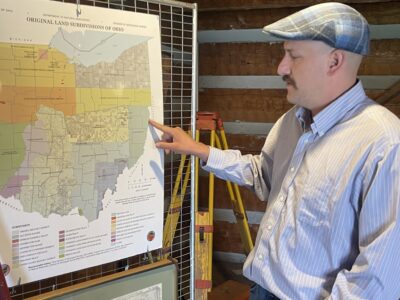
How Expansion Happened: Seven Ranges survey changed the country