
Windows to wildlife
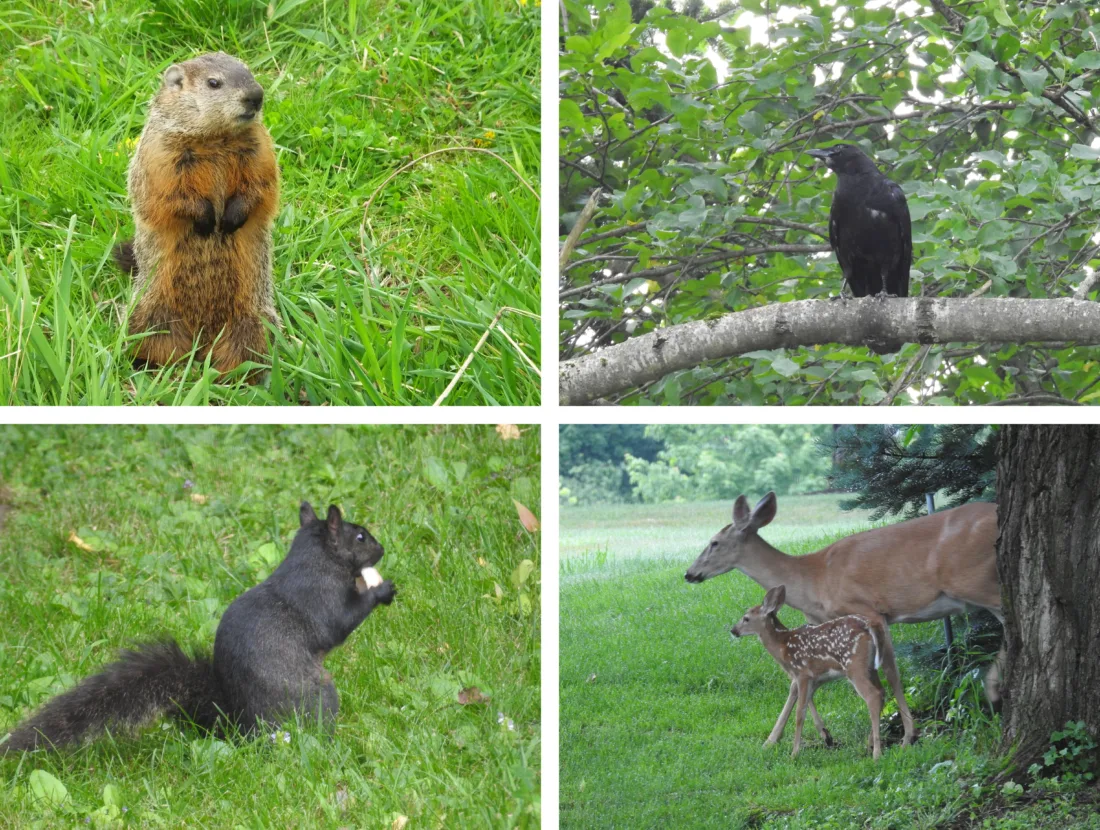
The glass portals in your home are windows to wildlife. Photo courtesy of Steven Sorensen

The glass portals in your home are windows to wildlife. Photo courtesy of Steven Sorensen
Trending
Wildlife is big entertainment across America. In the little postage stamps of real estate we call our yards, wildlife is common. But it's not just rural living that offers this benefit. Three coyotes regularly visit my daughter's yard in a suburb north of Chicago.
In my yard, I've hosted rabbits, deer, coyotes, woodchucks, raccoons, skunks, possums, red squirrels, flying squirrels, gray squirrels (with their black littermates), chipmunks, black bears and even a wood rat.
That's a baker's dozen mammal species not even counting birdlife, but I'll never forget the kamikaze mourning dove that left a Shroud of Turin image for winged creatures on my windowpane. (I'm sorry for cramming two metaphors together there, but I'm sorrier for the dove.) I wasn't home when it crashed into the glass, but the dove left a distinctive, detailed, and deathly impression. I searched for its carcass but never found it. He couldn't have survived the impact. Maybe he was birdnapped by a hungry, opportunistic cat.
The feathered friends that visit my yard include crows, little green herons, the ubiquitous robins, and dozens more ranging from miniscule hummingbirds to comparatively massive wild turkeys. I've seen bald eagles from my yard (but not in my yard) many times. We rush to tell someone when we see a bald eagle, or we post it on Facebook (which I did when I saw three just this week). We have many more bald eagles than most of us realize but still, seeing one of these sky monarchs is always special.
We have a lot more bird species than you might think. Pennsylvania and New York are home to many hundreds. Maybe one reason people worry about wildlife scarcity is because they aren't paying attention. Too little wildlife is one problem. Too much is a problem we have but don't often talk about.
Yes, wildlife can be too abundant. Several years ago, a young bear with a bad case of mange passed through my front yard. Why was he sick? Probably because cases of mange rise when their population is too high.
People often criticize hunters for being "consumptive" users of wildlife, but that's what high wildlife populations require. And man is not the only consumptive user of wildlife. There's this thing called "predation," which means animals are consumptive too.
While deer are not predators, they do their share of killing. They kill lots of trees by eating them--trees that are important to the habitat of other wildlife. When too many deer consume habitat other wildlife needs, you'll have more deer and less wildlife.
Right along with deer, we homo sapiens destroy lots of wildlife habitat too. Every time we build our own nests -- structures with roofs, windows, basements and bedrooms -- we take habitat away from wildlife. Then, on a micro scale, we attract wildlife by planting habitat (we call it landscaping) which beautifies our homes and keeps animals close.
We tend to focus on the macro scale. One of the great macro habitat tragedies was the loss of the passenger pigeon. The last one died in captivity in 1914 in the Cincinnati Zoo, but the real tragedy happened decades earlier. In the process of transforming Wisconsin into what we now call "America's Dairyland," pigeon nesting grounds fell to thousands of axes. Habitat was further devastated by leveling forests in dozens of other states. It was too much for a bird that lays a single egg per year to cope with.
As a species, passenger pigeons would have survived if the habitat had not been destroyed. Hunters took the blame, even though they played a small role. Under today's modern conservation system, hunters play a bigger role in bringing back wildlife and keeping species in balance with each other and with our roads and cars and industrial sites and neighborhoods--and with our ongoing need for timber and food.
Despite the ups and downs of wildlife on a macro scale, your home is a window to wildlife on a micro scale. Keep your camera handy and take advantage of it.
ııı
When "The Everyday Hunter" isn't hunting, he's thinking about hunting, talking about hunting, dreaming about hunting, writing about hunting, or wishing he were hunting. If you want to tell Steve exactly where your favorite hunting spot is, contact him through his website, www.EverydayHunter.com. He writes for top outdoor magazines, and won the 2015, 2018 and 2023 national "Pinnacle Award" for outdoor writing.