
Walleye playbook: Stickbaits 101
Troll Lake Erie, cast Chautauqua Lake
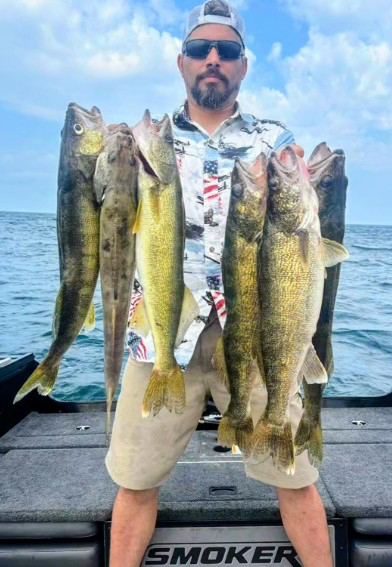
Josh Larsen, founder and director of Primitive Patriot Outdoors, was testing out his brand-new Smokercraft fishing boat a few days ago and found some hungry walleye. Submitted photo
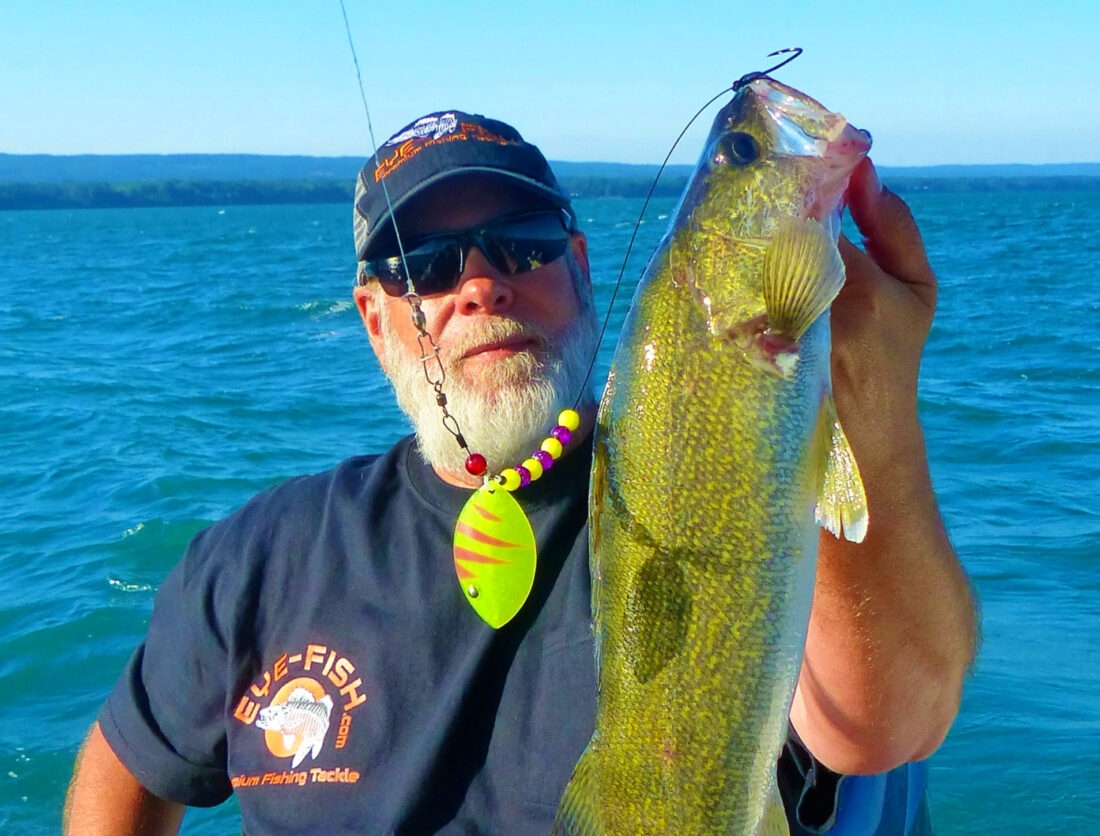
Captain Jim Klein was using an “Eye-Fish” turtle spinner blade and nightcrawler to fool this Lake Erie walleye near Sunset Bay. Photo courtesy of Forrest Fisher
Josh Larsen, founder and director of Primitive Patriot Outdoors, was testing out his brand-new Smokercraft fishing boat a few days ago and found some hungry walleye. Submitted photo
Captain Jim Klein was using an “Eye-Fish” turtle spinner blade and nightcrawler to fool this Lake Erie walleye near Sunset Bay. Photo courtesy of Forrest Fisher
Trending
Fishing with artificial lures can humble even the most experienced angler. Whether you’re trolling the vast waters of Lake Erie or casting along the weed edges of Chautauqua Lake, one thing is certain: both are world-class trophy fisheries, and both will quickly remind you that fish don’t read the instruction manual.
For many anglers, stickbaits remain the go-to lure. These minnow-shaped, minnow-looking baits imitate the forage walleyes and bass feed on, making them effective nearly year-round. But choosing the right stickbait often raises more questions than answers.
How long should it be? What color works today? Should it wobble aggressively or just barely wiggle? How fast should I troll? If I’m on Lake Erie, do I need an inline weight, jet diver or Dipsy Diver? If I’m casting Chautauqua Lake, how long should my leader be? And if I’m using a diving lure, is a shallow-running stickbait with a short lip better than a deep-diver with a long bill? The honest answer? It depends -- but there are some reliable guidelines.
Start with lure size. Three-inch, 4-inch, 5-inch or more? Simple solution. Match the length of the baitfish available at that time of year. Smelt, alewives, emerald shiners and gobies all influence what predators expect to see. When your lure looks like the day’s buffet, you’re already ahead of the game. Don't know forage sizes, ask the mom/pop tackle shop. They know.
Color follows a similar rule. Match natural forage whenever possible, but let water clarity make the final decision. In stained water, chartreuse, white, and black often stand out best. In Lake Erie’s typically clear water, silver, blue, and other natural finishes closely imitate local baitfish. Then again ... fish have a habit of ignoring the rulebook.
Many trolling experts recommend avoiding flashy or neon colors in clear water, but Lake Erie has a way of proving that advice wrong. With today’s abundant walleye population, competition often outweighs caution. Sometimes the loudest, flashiest lure in the box becomes the hottest producer, especially during bright midday conditions. Fish don’t always want filet mignon -- sometimes they’ll chase the equivalent of a disco ball.
Action matters, too. Most days, a subtle to moderate wobble is ideal. Too much rolling can actually reduce depth and look unnatural. Many stickbaits also contain internal rattles that create clicking sounds. On some days that extra noise is the dinner bell. On others, it’s just background music. Let the fish decide.
Speed completes the presentation. Trolling speeds between 1.5 and 2.5 mph consistently produce on Lake Erie. If you’re casting Chautauqua Lake, retrieve quickly at first to get the lure down, then slow your retrieve and let the lure hunt naturally. Occasionally pause altogether.
That brief hesitation often triggers strikes from following fish that were simply waiting for their opportunity.
Depth, however, is influenced by much more than lure design. Line diameter can dramatically change how deep a stickbait runs. One of Western New York’s legendary trollers, the late Russ Johnson, understood this better than most. Russ routinely fine-tuned every lure in his backyard swimming pool before it ever touched open water. By carefully adjusting the line tie, knot size, swivel size and type, and even slightly tuning hook hanger positions, he could make a lure track perfectly.
His favorite lesson surprised many anglers. A classic deep-diving Rebel Minnow rated to run 8 to 12 feet could reach nearly 25 feet simply by tuning it, switching to thin 8-pound braided line and trolling around 1.5 mph. Increase the speed, and it would dive even deeper -- all without adding extra weight.
Of course, when fish are holding well below a lure’s natural range, inline weights, snap weights, jet divers, or Dipsy Divers become valuable tools. Many anglers prefer pairing these diving devices with shallow-running stickbaits because the diver controls the depth while allowing the lure to maintain its natural swimming action. Other situations call for deep-diving plugs. Experimentation usually tells the story faster than any chart.
Local favorites from Dunkirk tackle shops (Bill's Hooks, see Gerri Begier) to Chautauqua bait-and-tackle shops (Chautauqua Reel Outdoors, see Mike Sperry) continue to fill tackle boxes alongside national classics. Stickbaits from Bay Rat Lures, Reef Runner, Rapala, Smithwick Rogue, Bomber Long A, Bandit, ThunderStick and Challenger all have devoted followers on Lake Erie, with each brand earning its reputation under different conditions. Sometimes in custom-painted color schemes. Sometimes adding a small piece of nightcrawler (scent) to the stickbait turns on the bite.
The best advice is simple: know your tackle. Learn how each lure behaves with different line sizes, speeds, and presentations. Keep notes after every trip. Ask yourself why one lure worked while another didn’t. Sound like work? It is, but if you really want to "get good," do it.
Before long, you’ll realize every lure has a personality -- and a few seem to have an attitude.
The fish may still surprise you, but that’s part of the fun. After all, if they bit every lure every day, they’d call it catching instead of fishing.
Gotta love the outdoors.
CALENDAR
July 10: 21st annual Con Club Walleye Tournament in-person registration day, 4-7 p.m., 1 N. Mullet St., Dunkirk. For more info: email Chris at ncccwalleyederby@protonmail.com.
July 11: NRA High Power Rifle Match, 10 a.m. to 3 p.m., East Aurora Fish & Game, 1018 Luther Road, East Aurora. Info: 716-652-5354.
July 11: Firecracker Shoot, Hanover Fish & Game, 125 sporting and 50 five-stand, register on "SCORECHASER;" 9 a.m. start time for shooting; chicken barbecue onsite; Info: Matt Holtz, 716-912-2624.