
The destiny of city deer
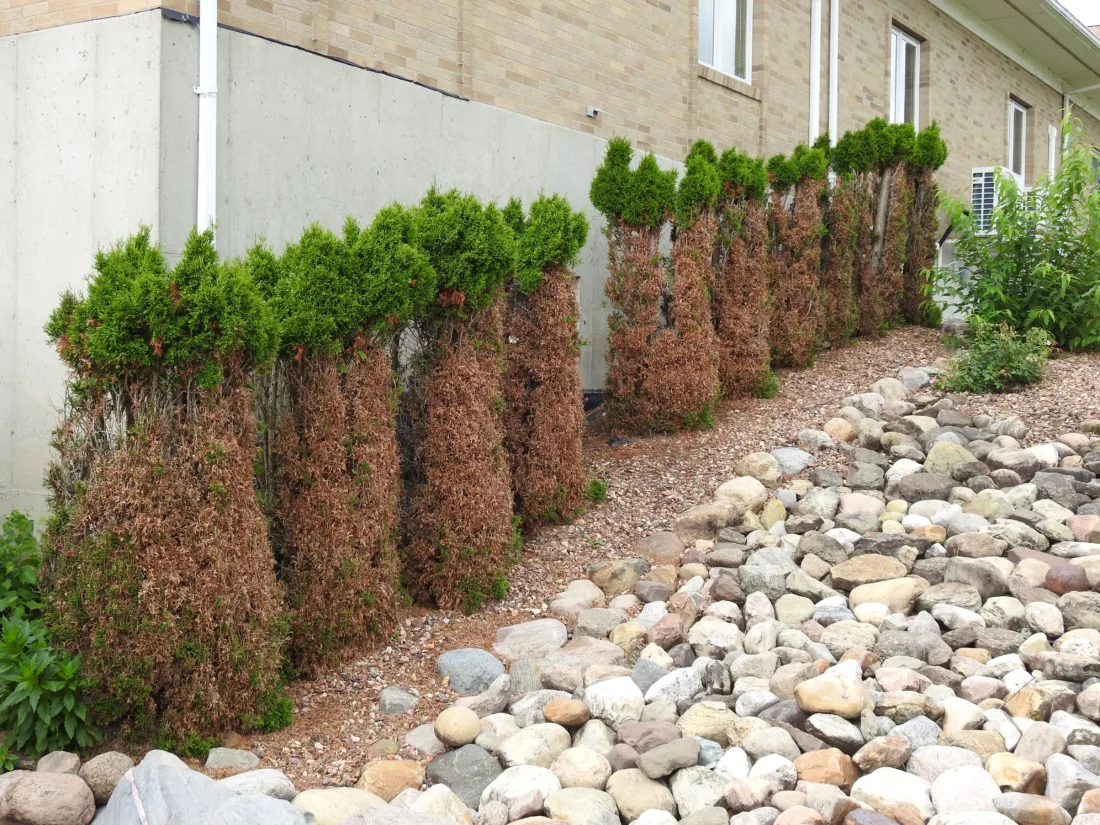
One sign of deer overpopulation is common and easily observable if you know what to look for. When the habitat is unable to meet their nutritional needs, they feed on our expensive landscaping. Photo courtesy of Steve Sorensen
One sign of deer overpopulation is common and easily observable if you know what to look for. When the habitat is unable to meet their nutritional needs, they feed on our expensive landscaping. Photo courtesy of Steve Sorensen
Trending
Many people in lots of cities have seen what I saw a couple of weeks ago. In the middle of the afternoon, I was driving on one of those old brick streets in Jamestown, New York. Maple Street, two blocks off Foote Avenue and a couple of blocks from the hospital. I had to stop to let a deer cross the street. At least one of her companions had already crossed, and both were heading toward busy Foote Avenue.
Hundreds of drivers have seen this common sight. In fact, the last time I was in that area was mid-winter and I saw a dozen deer calmly nibbling the grass and shrubbery in the front yard of a residence. A dozen deer. A couple were probably nine-month-old bucks. Most were does.
Let's do the math. If only six does were pregnant, and those six were carrying two fawns each, those 12 deer in January are now 24 deer in July. Yes, they can double their population that quickly. So, the question is, what is the destiny of all those city deer?
Instead of asking that question, lots of people are quick with a conclusion. "It's no wonder we see so many deer. We've built our homes right where they live."
No. That's not what happened. Think about it. Many of the houses in that area are a hundred years old or more. No deer were watching craftsmen nail those houses together. The first owners were not shooing deer away from their flower beds. In those days seeing a deer (or even just a deer track) in the 10-mile radius around the city on the dozens and dozens of farms and thousands of acres of timber was worthy of a newspaper report.
Today's deer population is vastly larger than back then, especially in the Northeast, and it's growing. Last season, Maine, Massachusetts and New Hampshire all had record deer harvests. New York's statewide harvest rose from 211,000 in 2021 to 227,000 in 2025. In Pennsylvania the trend is the same, from almost 377,000 in 2021 to over 506,000 in 2025. Yes, last year in those two states, hunters killed more than 732,000 deer, and the population continues to grow.
Back in 2002, the Pennsylvania Game Commission issued a record number of antlerless deer tags, in effect asking hunters to reduce the population because deer were degrading the habitat. Hunters responded, killing 517,000. Today we're almost back to that number.
To show how rapidly the deer population has grown in Pennsylvania, back in 19-nevermind when I shot my first deer, the harvest was 144,000 -- a record high. In 2025, it was more than triple that number. In that same period, the deer harvest has roughly tripled in New York, too. A high harvest means a high population. Unfortunately, both states have fewer hunters today.
Fewer hunters -- yes, that's part of the problem. To those who hate the idea of killing deer, I'm sorry to say we're not killing anywhere near enough, and that's bad for the deer. That's true all across the northeastern United States, and it's true in lots of other places too.
Some people think it's unkind to kill deer. The truth is that not killing them creates overpopulation, and overpopulation has very unkind outcomes:
• Deer get smaller. We're past the point where deer can get enough nutrition because every deer is competing with too many other deer for food.
• Fawn mortality is higher. Mothers struggle to supply their fawns' nutritional needs.
• Deer damage the environment. Every day we hear about man's negative impact on the environment. We seldom hear about the negative impact of deer on the environment. When we have too many deer, they damage the habitat they share with other animals. One example: when we have too many deer, the songbird population declines because deer eat their nesting habitat.
• Deer diseases spread more easily. We will have more Lyme Disease and other tick-borne illnesses. More deer will get cutaneous warts. Chronic Wasting Disease will spread more quickly.
• We have more deer-vehicle collisions. What is the deadliest animal in the United States? It's not bears, rattlesnakes, or sharks. It's those brown-eyed beauties in your yard. A million deer (maybe two million) die on our roadways annually. They directly cause billions of dollars in economic losses, and kill over 400 people. Those other animals kill only 18 people on average.
Dear readers, those outcomes and others are the destiny of city deer. But there is an alternative. In the modern system of conservation hunting, the hunter is a caretaker predator who keeps wildlife in balance with its available habitat. Across New York, Pennsylvania, and the northeast, including in and around some cities, the best thing we can do for wildlife is to kill more deer.
ııı
When "The Everyday Hunter" isn't hunting, he's thinking about hunting, talking about hunting, dreaming about hunting, writing about hunting, or wishing he were hunting. If you want to tell Steve exactly where your favorite hunting spot is, contact him through his website, www.EverydayHunter.com. He writes for top outdoor magazines, and won the 2015, 2018 and 2023 national "Pinnacle Award" for outdoor writing.