
Fishing with X-ray vision
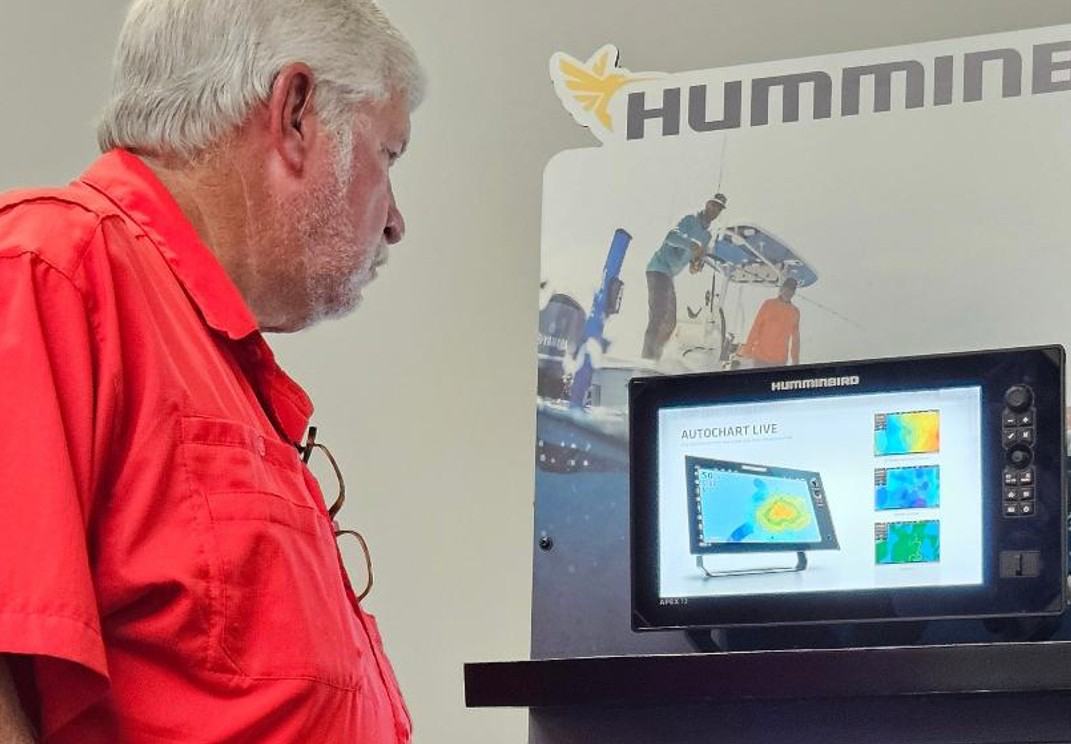
Forward facing sonar allows anglers to see fish all around the boat up to 300 feet in all directions, as well as how deep they are and how they react to a lure when it is cast to the fish. While highly effective, these systems are more costly. Photo courtesy of Forrest Fisher
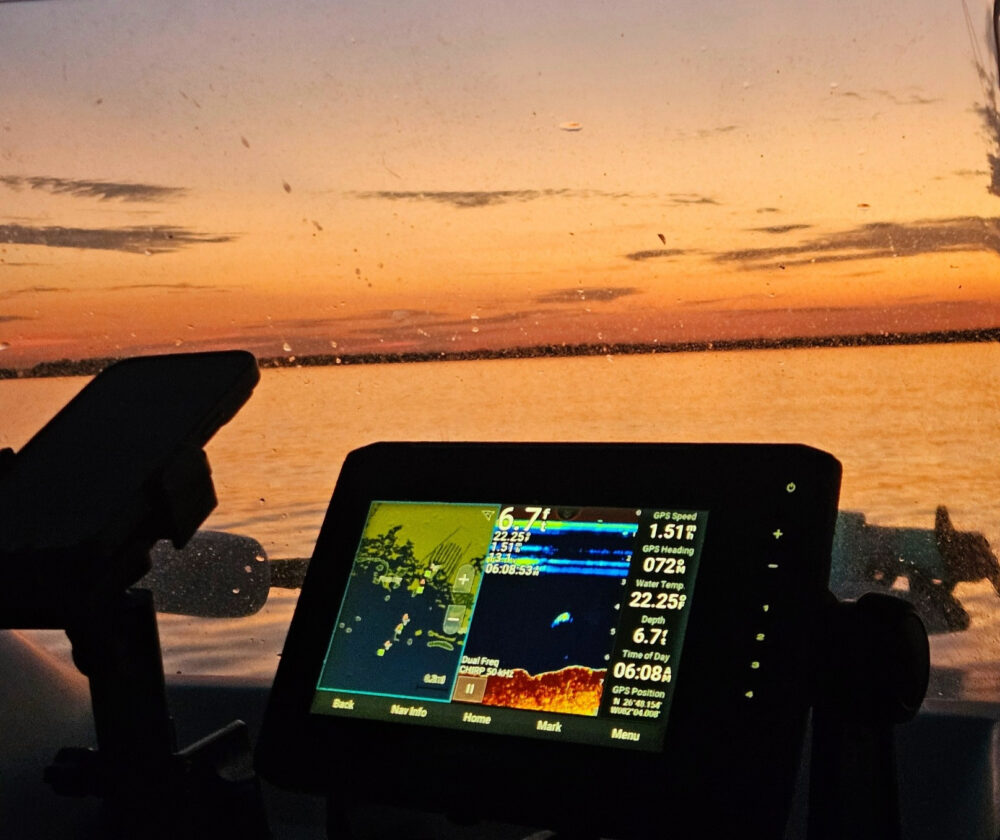
Conventional sonar allows anglers to see fish, but only directly under the boat and is relatively affordable for all anglers. Photo courtesy of Forrest Fisher
Forward facing sonar allows anglers to see fish all around the boat up to 300 feet in all directions, as well as how deep they are and how they react to a lure when it is cast to the fish. While highly effective, these systems are more costly. Photo courtesy of Forrest Fisher
Conventional sonar allows anglers to see fish, but only directly under the boat and is relatively affordable for all anglers. Photo courtesy of Forrest Fisher
Trending
Modern fishing technology has transformed recreational and tournament angling, and no innovation has sparked more debate than forward-facing sonar. Systems such as Garmin LiveScope, Humminbird MEGA Live and Lowrance ActiveTarget allow anglers to see fish in real time, track their movement, and even observe how fish react to a lure. Skilled anglers can instantly adjust lure color, lure size, retrieve speed or presentation based on what they see on the screen. It is sort of like watching you drop fish food into an aquarium, only here the angler is watching a live TV screen simulation using sound waves and radar frequencies.
For many, FFS represents the next evolution of competitive fishing. For others, it fundamentally changes the nature of the sport. The central question facing tournament organizers is simple: Should tournaments open to the general public allow technology that many anglers simply cannot afford?
The case for allowing FFS is rewarding innovation and skill. Supporters argue that fishing has always evolved through technology. Boats became faster, trolling motors gained GPS anchoring, lake mapping improved and side-scan sonar changed how anglers locate fish. FFS is simply the latest step in that progression.
Proponents note that owning expensive equipment does not guarantee success. Interpreting sonar images, positioning a boat, making precise casts and triggering reluctant fish still requires significant skill. In fact, many anglers spend years learning to effectively use FFS. Other anglers never quite learn how to use the new gear.
Allowing FFS can also drive innovation within the sport. Manufacturers invest heavily in research and development, while anglers continually push the boundaries of fish behavior and presentation tactics. Spectators often find live sonar exciting because they can watch anglers actively hunt fish rather than passively fish known spots. Are there any fish on that side of the aquarium? That's an honest question with an accurate answer if you're using FFS.
Supporters further argue that banning technology rarely stops advancement. Competitive sports often reward those who invest time and resources into better equipment, whether in motorsports, cycling, golf or fishing.
Critics counter that FFS creates an economic divide between competitors. Fully rigged systems with multiple screens, transducers, and mounting equipment can cost several thousand dollars. For weekend anglers or families entering local tournaments, that investment may be unrealistic.
The concern is not merely that better equipment provides an advantage -- competitive fishing has always included that -- but that FFS may provide an overwhelming advantage. Anglers using live sonar can locate suspended fish that others might never know exist. They can observe fish behavior in real time and receive immediate feedback that accelerates learning ... and catching.
As a result, some anglers fear tournaments become contests of electronics rather than fishing skill. New participants may feel they cannot realistically compete without spending heavily on technology. If enough anglers believe they are "fishing for second place," participation could decline.
Tournament organizations that prohibit FFS often argue they are preserving accessibility and maintaining a level playing field for the broader fishing community.
Should tournaments open to the public grow the sport or drive anglers away? That's the big question. Whether FFS encourages or discourages participation may depend on the audience. For technology enthusiasts and highly competitive anglers, FFS can increase participation by making fishing more interactive and strategic. Younger anglers raised on digital tools may be especially attracted to tournaments that allow cutting-edge equipment.
However, many traditional anglers value intuition, seasonal patterns, and water-reading skills developed over decades. If they perceive tournaments as equipment-driven rather than skill-driven, they may choose not to participate at all. The challenge for organizers is balancing innovation with inclusiveness.
Some tournament circuits have adopted compromise solutions: separate divisions for FFS and non-FFS anglers, limits on the number of screens, or designated "traditional" events where live sonar is prohibited. Such approaches allow competitors to choose the format that best matches their philosophy and budget.
The real debate is bigger than the best electronics. Forward facing sonar is neither inherently good nor bad -- it is a powerful tool. The real debate centers on what tournament fishing should reward. Should success primarily reflect an angler's ability to invest in and master advanced electronics? Or should tournaments emphasize traditional fish-finding skills that are accessible to a broader audience?
There may never be universal agreement. Yet tournament organizations must consider not only who wins events today, but also whether rule changes encourage the next generation of anglers to participate tomorrow. The future of competitive walleye (and bass, and crappie, and others) fishing may depend less on what technology can do and more on what kind of competition anglers want the sport to become.
Gotta love the outdoors.
CALENDAR
June 16: Erie County Fish Advisory Board, monthly meeting, 7 p.m., Bison City Rod & Gun, 511 Ohio St., Buffalo. Open to public.
June 18: Lake Erie Chapter of Fly Fishers International, monthly meeting, Burchfield Arts, 2001 Union Road, West Seneca, 6 p.m., fly tying 7 p.m., guest speaker, Adam Slavinski on Catskill trout fishing.
June 20: Youth Fishing Derby, Westfield Fish & Game, 8150 Ogden Road, Westfield; 9 a.m. to 2 p.m., free, open to public, register upon arrival; fishing rods/reels for use are available at no charge, Info: 716-326-2289.
June 20: Annual Game Dinner/Picnic, West Falls Conservation, 4 p.m. start, prizes, bring a dish to pass, open to club and nonclub members, 55 Bridge St., West Falls. Info, contact Al Gai: 716-937-3271.
June 20-21: Jake Ernewein Memorial Fishing Contest, Chautauqua Lake, adults and juniors: adults $10 registration, youth under 16, free; Chautauqua Lake Fishing Association, 10 Chadakoin Parkway, Celoron; Info: 716-664-9152.