
Preseason Turkey Scouting
Everyday Hunter
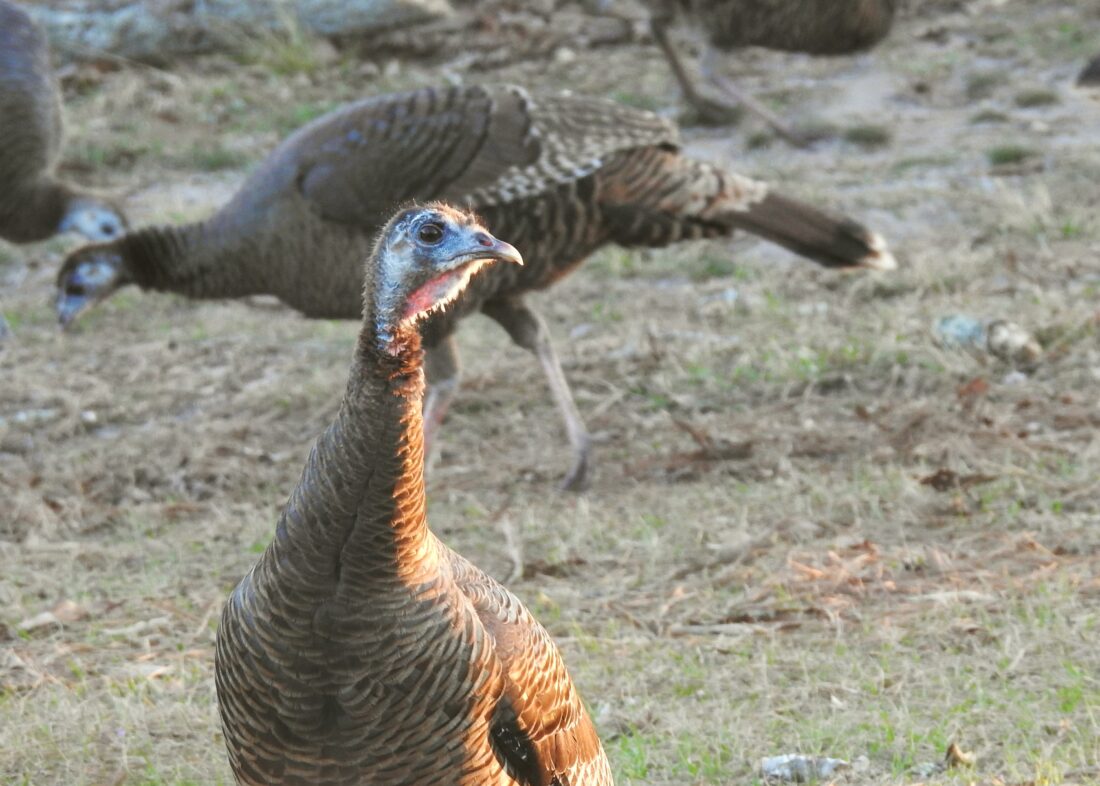
Hens cause a lot of turkey hunting failure. A high population of hens can make calling a gobbler difficult. Photo courtesy of Steve Sorensen
Do you locate a load of gobblers before the season starts? For some hunters, pre-season scouting means tallying a list of places where they hear turkeys gobble. They might log thirty or forty spots where they’ve stopped along the road during the hour from pre-dawn to post-dawn and heard gobblers sound off from their roosts.
The likelihood they will hunt all those places is small, but twenty-five years ago that strategy was effective for many hunters. It’s less effective today because since then lots of private properties have changed hands. More properties are posted against hunting, making property access the number one issue for hunters.
Access to good private property can turn an average hunter into an expert, but permission to hunt it is hard to find. That’s why many serious hunters now invest their time on public land, although public property has its own challenges.
Whether hunting private or public property, the strategy of locating and hearing lots of gobblers can fool you into thinking you’ve done your scouting. It’s far better not to make it a numbers game. Instead, devote yourself to knowing how turkeys use their habitat.
What is turkey habitat? Let’s define it simply as where turkeys live. Killing (or seeing) gobblers in a certain area over and over again tells you turkeys like the landscape and they’re probably still there. So, as a starting place, check areas where you’ve found turkeys in the past. Unless something has changed, you should find them again and their habits probably haven’t changed.
But change is inevitable, and property ownership is not an exception. A simple real estate transfer can change everything. Maybe the old owner didn’t have kids and used his property only to cut firewood in the summer and pick berries in the fall. Even if the new owner gives you permission, he might have unknowingly altered the way turkeys use the property. His different habits and priorities might make the whole area less inviting to turkeys. Maybe he has put up a new building near a roosting site or a strut zone, or he has kids who spend their time camping and riding ATVs (and who can complain about that?)
Also be aware when an adjacent property changes ownership. The new owner might use the land in a different way. Or maybe he is a turkey hunter, and turkeys that roost on his side of the line might stop venturing to the property you hunt.
Timber harvesting brings dramatic changes to a property. Selective cutting a stand of oak or cherry changes food availability and can turn resident turkeys into transients.
A clearcut tract offers little to turkeys. It gives predators limitless hiding places and in only a couple of years the new growth is so thick turkeys avoid it. The main defensive asset turkeys have is eyesight, and they find no comfort in places that rob them of their number one advantage.
Turkeys love farmland. Crops create a reliable food supply, and turkeys learn to tolerate activity associated with farming. But farming practices can change. Active farming attracts turkeys, but they have little interest in a fallow field covered with goldenrod and woody vegetation. Those uncultivated fields harbor plenty of spiders, crickets and other delicacies, but turkeys gravitate to cultivated fields and green fields. It’s not just because those fields provide food. Rapidly growing hay and other crops hide vulnerable poults from the predatory eyes of hawks and crows.
Finally, remember this. The early days of the season are valuable not just for hunting, but also for scouting, so realize that while you are hunting you are also scouting. What you learn in the first two weeks can pay off in the last two weeks.
Scouting is a never-ending mission for the turkey hunter, and pre-season scouting is the capstone of your scouting effort. It’s the time when you put together all you’ve learned from your year ’round observations. Can you succeed without pre-season scouting? Yes, but why would you want to? Scouting provides great motivation to get out into the woods after a long, cold winter.
***
When “The Everyday Hunter” isn’t hunting, he’s thinking about hunting, talking about hunting, dreaming about hunting, writing about hunting, or wishing he were hunting. If you want to tell Steve exactly where your favorite hunting spot is, contact him through his website, www.EverydayHunter.com. He writes for top outdoor magazines, and won the 2015, 2018, and 2023 national “Pinnacle Award” for outdoor writing.
Local Sports
Clymer Finally Breaks Into State Final Four, Making Debut Today
The 2025-26 Clymer boys basketball team made history, becoming the first team in history of the program to reach ...
Big Shakeup Proposed To Deer Hunting Rules In NY
Preseason Turkey Scouting

Frewsburg Upends Delaware Academy 57-30 In State Semifinals
HIGH SCHOOL POSTSEASON
NYSPHSAA Championships Boys Basketball At Visions Veterans Memorial Arena, Binghamton Semifinals Thursday, ...
Fredonia Flag Football Starts Season With Dominant 63-0 Victory Over Tonawanda
TONAWANDA — Nick Bertrando called the opener of Fredonia’s flag football season a “good start for ...