
Which Rifle Caliber Is Best For Harvesting A Whitetail?
-
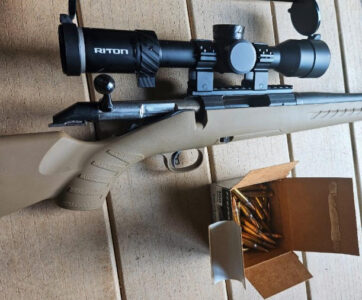
- The familiar deer hunting rifle contenders include the .243 Winchester, .270 Winchester, .308 Winchester, .30-06 Springfield, the 7mm Remington Magnum and a few others. Photo courtesy of Forrest Fisher
-
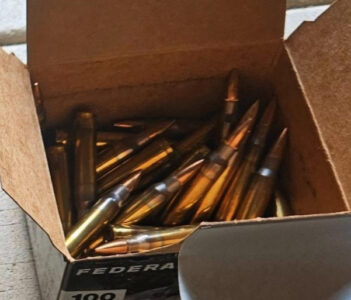
- Bullet grain size can vary for each caliber. Photo courtesy of Forrest Fisher
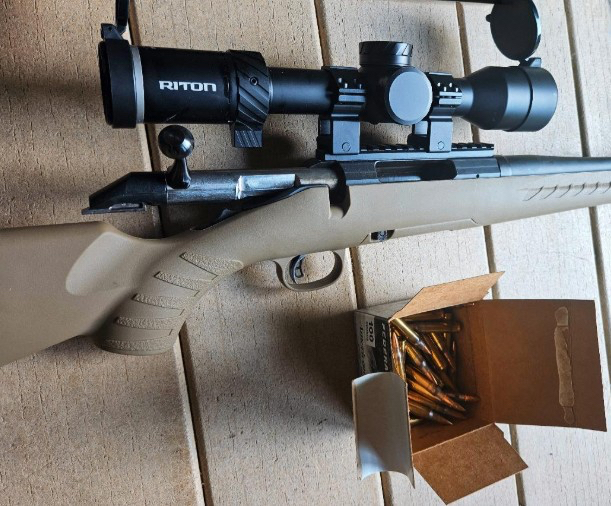
The familiar deer hunting rifle contenders include the .243 Winchester, .270 Winchester, .308 Winchester, .30-06 Springfield, the 7mm Remington Magnum and a few others. Photo courtesy of Forrest Fisher
Walk into any deer camp in Western New York during rifle season, and you’ll hear it before the coffee finishes brewing: the age-old argument over which rifle caliber (where allowed) is best for harvesting a whitetail.
The debate is friendly, occasionally loud and rarely settled. At the center of most discussions are five familiar contenders: the .243 Winchester, .270 Winchester, .308 Winchester, .30-06 Springfield and the 7mm Remington Magnum.
All five have been cleanly taking whitetails for decades, not just here, but across the country. All five have loyal supporters. And all five seem to perform better, according to their advocates, than whatever the hunter in the next chair happens to be carrying. It’s a fun time to know your ammo. The discussion usually starts with recoil and accuracy, then slides quickly into bullet grain weights, trajectories, and how far a hunter really needs to shoot in the mixed woods and farm country of Western New York.
The .243 Winchester often enters the conversation as the “sleeper pick.” Using lighter bullets that are commonly in the 90- to 100-grain range, it offers mild recoil and impressive accuracy. Hunters who favor it appreciate its flat trajectory and easy shooting characteristics, particularly for younger or smaller-framed shooters. In areas where shots stretch across open fields or cut corn, the .243’s speed and precision make it an appealing option.
Next comes the .270 Winchester, a long-standing favorite that many consider a near-perfect deer cartridge. Typically loaded with bullets in the 130 to 150-grain range, the .270 is known for its flat shooting performance and strong downrange energy. It has long been associated with open-country hunting, yet performs just as well on the edge of hardwoods and hedgerows, which describes much of Western New York’s deer habitat.
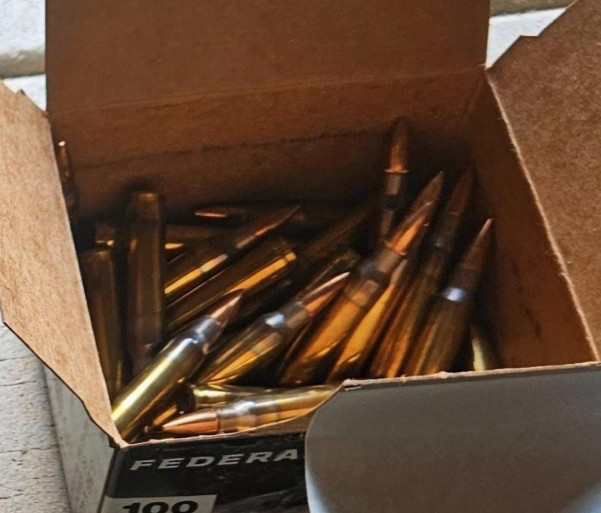
Bullet grain size can vary for each caliber. Photo courtesy of Forrest Fisher
Eventually, the conversation turns to the two cartridges that seem destined to be compared forever: the .308 Winchester and the .30-06 Springfield. An important point often gets lost in the back-and-forth: both cartridges use the same .30-caliber bullet diameter (0.308 inches). The difference is not bullet size, but case capacity, velocity and versatility.
The .308 typically fires bullets in the 150 to 165-grain range and has earned a reputation for efficiency, accuracy, and manageable recoil. Within normal whitetail distances — often under 200 yards in Western New York, the .308 delivers excellent performance without excess blast or punishment to the shoulder.
The .30-06, on the other hand, has a longer case that allows it to push a wider range of bullet weights, commonly from 110 to 220-grains. That flexibility is part of why it has remained popular for over a century. It may not shoot quite as flat as some magnum cartridges, but its ability to handle varied terrain and shot distances makes it a classic “do-everything” deer rifle.
Then there’s the 7mm Remington Magnum, the cartridge that tends to bring out the long-range storytellers. Known for its high velocity and sleek bullet profiles, the 7mm-mag is commonly loaded with bullets around 140 to 162-grains. These bullets retain energy well and produce very flat trajectories, which is impressive on paper and useful in wide-open landscapes. In tighter woods, however, some hunters question whether its extended-range strength is truly needed, especially given the increased recoil and muzzle blast.
Bullet grain size is where the discussion usually becomes most animated. Lighter bullets tend to shoot flatter and faster, making distance estimation less critical. Heavier bullets carry more momentum and are often favored for penetration and reliability at closer ranges. The reality, as most experienced hunters eventually admit, is that shot placement matters far more than a few grains of bullet weight.
Distance also plays a role in caliber choice, though perhaps less than many assume. In Western New York, where a mix of farmland, rolling hills, and wooded cover dominates, most ethical shots occur well inside the maximum effective range of all five cartridges. Flat-shooting characteristics may be comforting, but they are rarely the deciding factor in real-world conditions.
Overlaying all of this is the legal framework. In counties where rifles are permitted during the appropriate big game seasons, hunters must follow our New York State regulations regarding lawful firearms, seasons, and safe use. The conversation around calibers almost always circles back to responsibility: knowing one’s equipment, understanding limitations, and prioritizing ethical harvests.
By the end of the debate, no clear winner ever emerges. The .243 remains accurate and approachable. The .270 stays fast and flat. The .308 remains efficient and practical. The .30-06 continues to be versatile and time-tested. The 7mm-mag keeps its reputation for reach and power.
And that, perhaps, is the real conclusion. Deer camps wouldn’t be the same without these discussions, and whitetails across Western New York continue to fall every season to all five cartridges. The rifle may change, the bullet grain may vary, but the tradition and the arguing will always be part of the constant fun … until next year.
Gotta love the outdoors.
CALENDAR
Feb. 3: Children in the Stream, Youth Fly Fishing program, free, Costello Room, Rockefeller Art Center, SUNY Fredonia, 7-8:30 p.m., 12 years old and older, info: 716-410-7003 (Alberto Rey).
Feb. 7: Lakeshore Longbeards NWTF Banquet, White Inn, 5 p.m. doors open, 6:30 p.m. dinner, live auction, raffles, annual youth event fundraiser; Info: Robert Turk, 716-673-6703; https://events.nwtf.org/EVT-20816.
Local Sports
Swabik Sets Kansas Record
MANHATTAN, Kan. — The University of Kansas men’s track & field team entered the DeLoss Dodds Invitational ...
Trocki, Harvey Power Bears Past Cardinal O’Hara
FREWSBURG — Jadyn Trocki and Abery Harvey combined for 49 points to lead the Frewsburg girls to a 59-33 nonleague ...
HIGH SCHOOL SCHEDULE
Monday’s Schedule Boys High School Basketball Jamestown at Frontier, 7:30 p.m. Dunkirk at Southwestern, ...
Several To Be Honored As CSHOF Banquet
The Chautauqua Sports Hall of Fame will enshrine eight individuals at its 44th annual Induction Banquet on Monday, ...

Disappointing Finish
Nichols Rallies Past Red & Green
BUFFALO — For a half, it was all going so well for Jamestown on Saturday night at St. Joseph’s Collegiate ...