Getting Ready For May 1
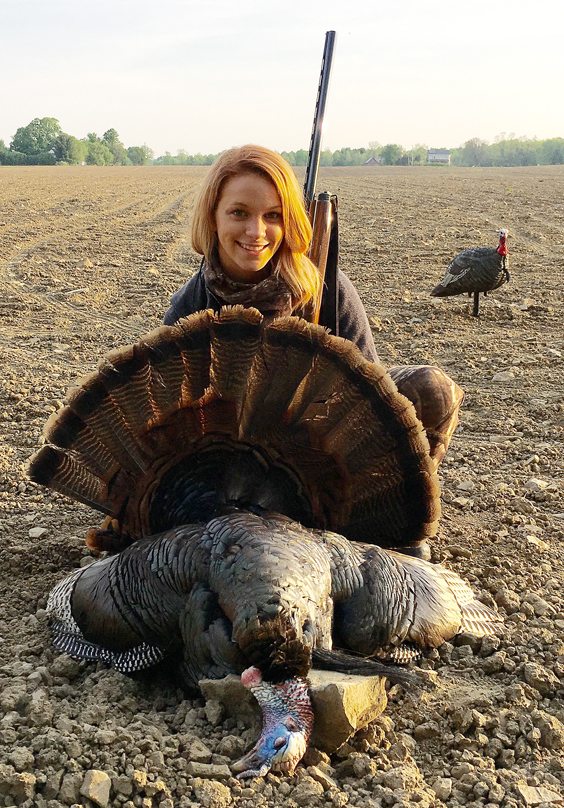
Retta Garrett with her first longbeard. Submitted photo
It seems Mother Nature has been listening to that old woodchuck from the Keystone State: winter isn’t ready to release her grip on Western New York.
This past weekend we were all set to get after some geese during the special spring season. Then, as luck would have it, the night before we got hit with 12 inches of fresh snow. All the work that had been done looking for the right fields was all for naught. Twenty years ago, I would have probably hauled all my stuff 500 yards off road to go sit in a field with 12 inches of snow on it, but not now. Guess I’m getting a little wiser or, as some younger guys in the group would say, lazier.
One thing is for sure, though. May 1st is quickly approaching. Opening day of spring season is a special day for many of us. After a long winter, there is nothing better than getting out and chasing a mature longbeard.
While many are fussy about the winter holding on, I prefer to look at the bright side. As long as we have winter weather, the gobblers aren’t willing to start their annual mating ritual. For those who remember, the 2017 season found the majority of local birds well into, if not done with, their breeding. It looks like the 2018 season will be different in regard to an early spring.
Wild turkeys are almost as fickle as the springtime weather we experience while hunting them. These and other factors often combine to limit opportunities for turkey hunting success to just a few hours of hunting per season. Solid preparation can be the different between filled tags or tag soup at season’s end. Serious turkey hunters are prepared to deal with any situation and leave nothing to chance.
Turkey hunting is a fairly simple affair from a gear standpoint, but there are still plenty of things to consider prior to the season. Don’t wait until the day before the season begins to get organized. Over the years, I have come up with a few things that make our hunts more enjoyable and successful.
Inspect and try on clothing and footwear. It may be time to replace a faded pair of hunting pants or leaky boots. While turkeys aren’t known for their sense of smell, deer are. Nervous whitetails have ruined countless turkey hunts when they blew and ran, right as a longbeard was strutting into the decoys. The past few seasons I have been taking many of the precautions scent-wise as I take while deer hunting.
Packable rainsuits are game changers when faced with crummy weather. Check for rips and tears that need mending. This vital piece of gear is often put away wet and ends up having that musty smell. This is a great time to wash them. Run-and-gun hunters who don’t have a rainsuit should seriously consider getting one.
Use a large tote such as a Plano Sportsman’s Trunk to store clothing critical gear so you’re always organized and ready to go. If you want to keep your clothing as scent-free as possible, keep it in the ozone and activated carbon-powered OZ Chamber that we discussed last week.
Remove everything from your turkey vest and make sure the zippers and buckles are working OK, and repair as needed. Again, they don’t last forever and it may be time for a new one.
We all use a facemask while spring gobbler hunting and there is nothing that will make or break your hunt than wearing a mask that smells. Wash or replace that stinky facemask and make sure you have a backup. The same goes for gloves. Always wash them and carry extra pairs.
Go through your calls and make sure all of them are in working order and prep them for active duty. Diaphragm calls are often in poor condition and need to be replaced. Take an inventory of what you need and stock up. Keep worn-in mouth calls you’ve practiced with in your vest ready to hunt and have extras available.
Be sure your vest has other essentials such as biodegradable wipes, insect repellent, lens wipes and a quick snack.
Pattern your shotgun. Just because it patterned good last year doesn’t mean that will do the same when the moment of truth is standing 25 yards in front of you. Try to replicate actual hunting conditions when possible by wearing full head camo, vest and boots.
Pattern guns with different loads and choke combos. Inexperienced hunters and youth who may have difficulty holding the gun steady should consider using a slightly more open choke that offers a bigger pattern inside of 30 yards. Practice in the comfort zone, not ridiculously long ranges that increase the odds of missing or wounding birds.
Practice with lighter loads that don’t promote a flinch. Use the big stuff during the actual hunt. Smaller statured hunters should consider using a lighter 20 gauge that offers less weight and reduced recoil.
Trim your decoys down to what you really use and keep them in the big tote or available in your vehicle. Today’s decoys work better because they are incredibly realistic. Turkeys aren’t getting any dumber, so it’s time to get serious about your decoys.
Even if you don’t hunt from a ground blind often, have one ready for inclement weather or when you have a fidgety hunting partner. They’re also great for early season hunts when there isn’t a lot of vegetation for cover
If you hunt public land, make sure no rules have changed since last season. If you hunt private land, be sure and check in with landowners. Ask if anybody else is hunting, where you can and cannot park etc.
Consistently successful turkey hunters never leave well enough alone when it comes to hunting spots. Do your homework and scout the countryside. Always shoot for a net gain of hunting property with each new season. Always be on the lookout for new hunting ground. This can be a difficult task, but all the effort often times pays off in a filled tag.
Local Sports
Sabres’ 2,000th Win Gives Them 100 Points
BUFFALO (AP) — Bowen Byram flipped a long shot into an empty net with 1:43 remaining to lead the Buffalo Sabres ...

Cresanti, Lewis, Johnson Power Trojans Past C/S/P 97-43 In Girls Track

St. Bonaventure Names MacDonald Next Men’s Basketball Coach

Section VI Youth Team Takes Second In State
Warriors’ Seeley Has Big Day
SALAMANCA — Nolan Seeley went 3 for 3 with a walk, drove in two runs and scored four runs to lead Salamanca past ...