
A Year In The Life Of A Lake
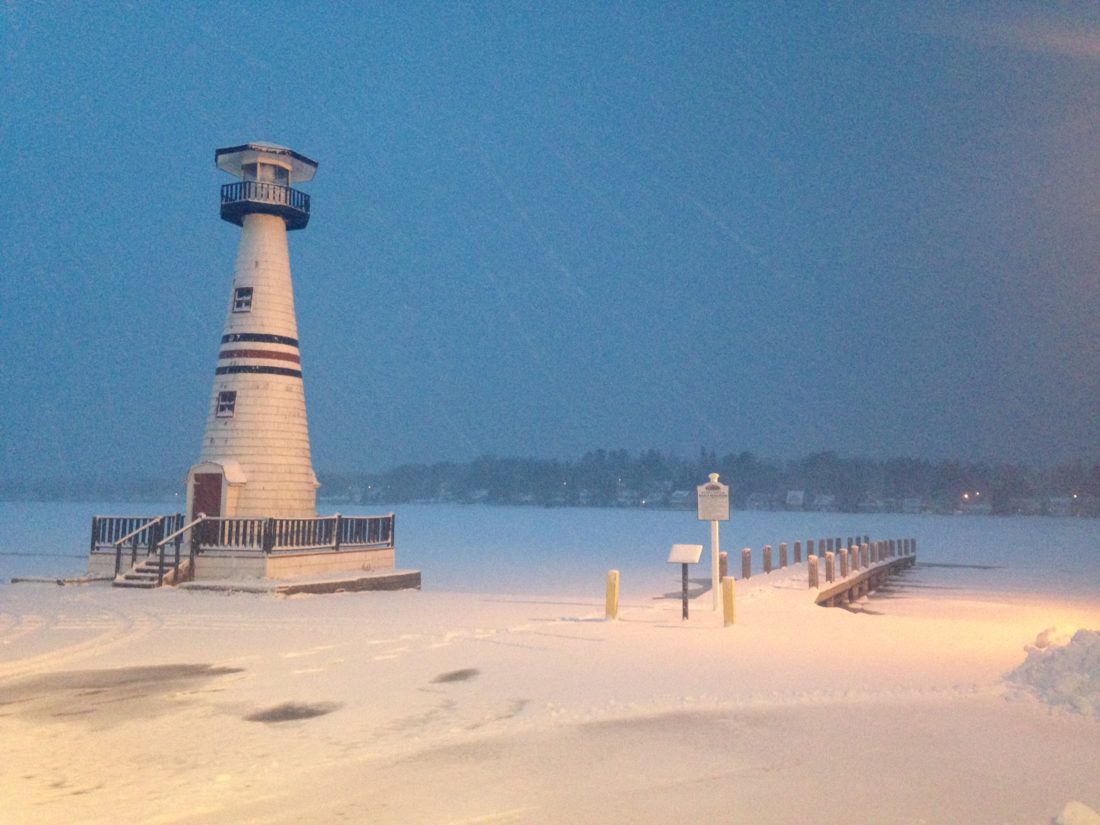
At Lucille Ball Park in Celoron, the January ice stretches across Chautauqua Lake, where it may not melt until March. Photo by Jen Maguder
It’s a warm Saturday afternoon in early June, and I have been invited to go swimming off a neighbor’s dock. I walk out to the end of the dock and touch my hand to the water’s surface. The lake has been heated up by the sun and feels pleasant. Deciding that it’s warm enough to swim, I leap off the dock and into 6 feet of water. It’s freezing! I was fooled by the warm water on the surface. A couple feet down, the water is many degrees colder. I climb out and get back on the dock, deciding to try again in a few weeks.
Now that it’s January, the days of swimming in Chautauqua Lake are long past. Ice is starting to cover the lake’s surface and will likely remain until at least mid-March. The start of the freeze-up is always entertaining to me because ducks start standing on the lake rather than floating in it. Before the freeze up occurs, another very interesting process, known as the fall turn-over, takes place.
If you’ve ever had a swimming experience like mine, you know what stratification is, where one layer of water is a very different density and temperature from an adjacent layer. As water gets colder, it gets more and more dense until it reaches 39 degrees Fahrenheit (4 degrees Celsius). At that temperature, water is as dense as it can be. Any colder, and the density will decrease as the water starts to become ice. Water that is 39 degrees Fahrenheit will sink to the bottom of the lake since it is the most dense.
As the intensity and duration of sunlight decreases and temperatures cool off in fall, the surface of the lake starts getting colder. Eventually the water on the surface of the lake will be the same temperature as the cold water that has been sitting at the lake’s bottom all summer, unable to rise due to its density. At this point, a unique situation will occur where all the water in the lake is about the same density. When a windy day comes along and makes strong waves, the water will mix.
The mixing process is important for moving nutrients and oxygen around the lake. Turn-over allows fresh oxygen to reach the lake’s bottom, where it has likely depleted due to the number of organisms living in the sediment that breathe it. Throughout winter, ice will prevent oxygen from entering the lake water. In spring, the ice will melt and the water at the surface will reach 39 degrees Fahrenheit once again. When the whole water column is roughly the same temperature throughout, wind will be able to mix the lake again just like it did in fall.
It is amazing how the properties of water allow for the turn-over process to happen just often enough to support life in the lake. Although 39 degree water isn’t comfortable for us to swim in, it is very important that lake temperatures get that low on a regular basis. If not, the lake life would experience more dead zones, where there is no oxygen, as can occur in Chautauqua County lakes in summer when algae blooms are decomposing. Lake life and our wonderful local fishing opportunities rely on the seasonal cooling and warming of water.
Enjoy ice fishing this winter and swimming when the lakes are warm again! Just as these two activities are important components of a year at Chautauqua County lakes, so is the turn-over. It’s an interesting process that a year wouldn’t be complete without.
The Chautauqua Watershed Conservancy is a local not-for-profit organization that is dedicated to preserving and enhancing the water quality, scenic beauty and ecological health of the lakes, streams, wetlands and watersheds of the Chautauqua region. For more information, call 664-2166 or visit www.chautauquawatershed.org or www.facebook.com/chautauquawatershed.