
County’s rapidly rising payroll is a perilous path

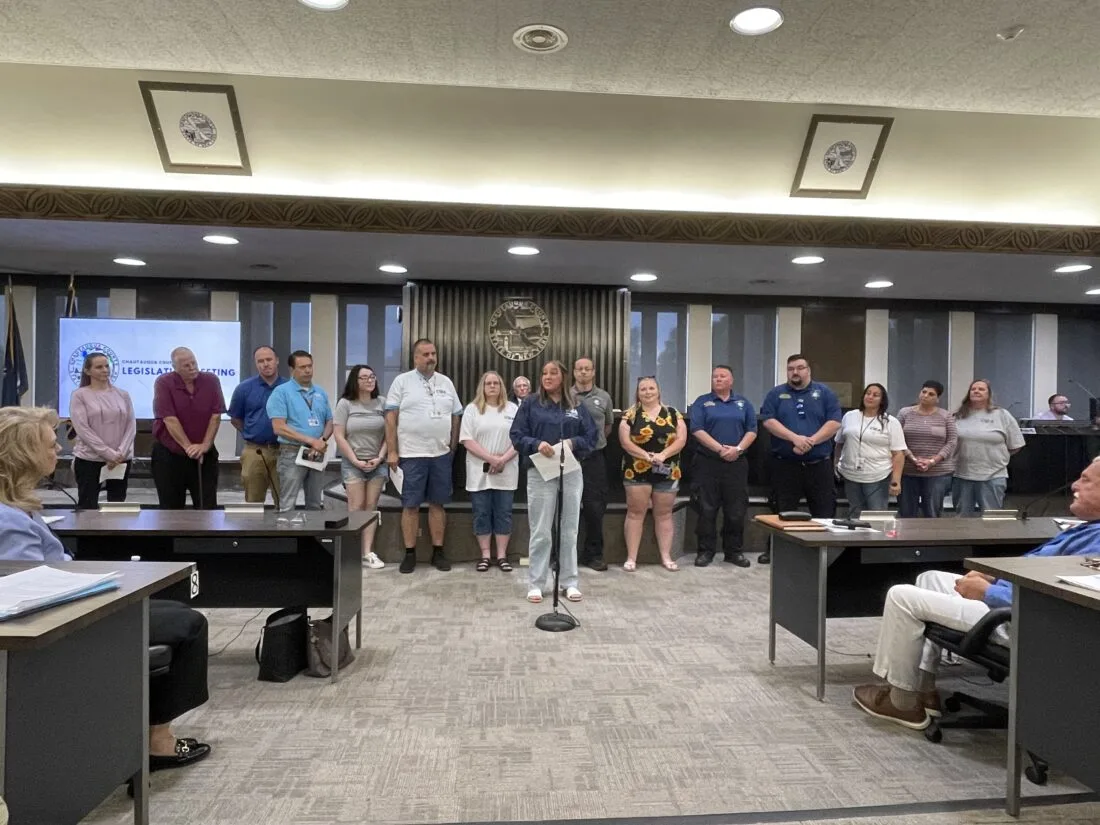
File photo CSEA members are pictured at the Chautauqua County Legislature meeting in June
File photo CSEA members are pictured at the Chautauqua County Legislature meeting in June
Trending
Just as the summer tourist season was beginning to heat up, a group of area workers were already steaming. Though about 15 members of the Civil Service Employees Association were in attendance in Mayville, their message was delivered on a united front.
Bonnie Peters, CSEA Unit 6300 treasurer, said the union decided to show up at the June meeting of the Chautauqua County Legislature following a comment made in May.
"Some of our members were at the last meeting, and it was brought back to us that one of the legislators indicated that a study should be done on our salaries and that it is possible that we make too much money," she said.
That, of course, is a matter of interpretation.
At the moment, the CSEA is working under a four-year contract that includes 3% raises for 2024 and 2025 and 3.5% raises for 2026 and 2027. In addition, $1,000 bonuses for each of these years are included in the deal.
Before the current agreement went into effect, Chautauqua County -- according to seethroughny.net -- had 1,337 employees who earned a combined total of $62.8 million. Twenty-one of those individuals were compensated at more than $100,000.
Three years later, in 2026, 84 of the 1,402 workers are earning more than $100,000 annually. Overall payroll costs reached $80.4 million -- or $19.6 million more than in 2023, representing a 28% increase.
Without checks and balances, government becomes a steamroller when it comes to increasing expenses. At the moment, Chautauqua County is no exception.
What is most concerning when examining the payroll is how much salaries for individual positions have increased over the last decade.
Consider that in 2017, the county executive's salary was $85,000. This year, it is $122,303 -- an increase of $37,303, or 43.8%. For the position of public health director, the salary increased from $102,759 in 2017 to $213,121 this year -- a 107% increase.
In the private sector, human resources directors are hired to look out for the company's best interests. That is not how things have played out in Mayville.
Shortly after being named to the position in 2022, Deborah Makowski established a Salary Review Commission that compared employee earnings in Chautauqua County with those in higher-cost counties, including Broome, Ontario, Putnam, Rensselaer and Schenectady. With the approval of the Chautauqua County Legislature, that process ultimately increased pay ranges for a number of managers as well as other staff members.
That exercise was of great benefit to Makowski as well. The individual who formerly held the position earned $85,000. In 2026, the position paid $188,139 -- or 121% more than her predecessor just four years earlier.
Overall, the county's average salary for this year is $57,345. Its median wage is $58,215, which is about the same as the county's median household income, according to the U.S. Census.
None of these figures are meant to be an indictment of any staff member. No matter the workplace, many employees believe they are underpaid.
That is human nature. Even Hollywood celebrities and major league athletes who earn eight-figure sums annually often express the same sentiment.
At the moment, however, our region's economy faces a dangerous dilemma. While we rely heavily on public-sector salaries, population declines mean residents are paying more in taxes to fund these positions.
Dunkirk and Jamestown are consistently facing challenges with unsustainable contracts. Dunkirk, the north county city, is on the brink of bankruptcy. Chautauqua County, through wage increases and generous benefits, could be headed down the same path.
At least one legislator has already signaled his concerns. In a recent commentary in this newspaper, Fred Johnson of District 19 noted that there needs to be better budgeting by the county moving forward.
"With all the best of intentions, we have been cruising along watching our compensation and benefit costs rising faster than our local taxes and being subject to a raft of price increases from many of our suppliers that are above the inflation rate," he said. "This cannot continue. We have to bring the concept of productivity into the public sector vocabulary."
Does this Republican-led Legislature have the will to do that? Judging from past results and its giveaways, this will be a tough ask.
John D'Agostino is editor of The Post-Journal, OBSERVER and Times Observer in Warren, Pa. Send comments to jdagostino@observertoday.com or call 716-487-1111, ext. 253.