
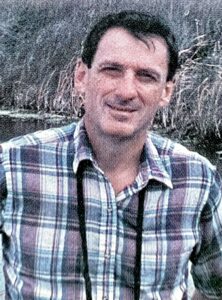
Dr. John Hilton Rappole, PhD
November 10, 1946 -June 30, 2026
Trending
Dr. John Hilton Rappole Sr. died suddenly and unexpectedly at his home, amidst the beauty of nature, and entered into his own migration mystery on Tuesday, June 30, 2026. His passing is an astounding loss to his family and the ornithological and conservation communities, to whom he dedicated incredible intellect and passion for over five decades.
Born to the late Dr. Albertus Whitney and Francesca Elizabeth Goodell Rappole on November 10, 1946, in Jamestown, NY, John began his lifelong quest to absorb the world and always looked at it with a sense of wonder. In French class at Jamestown High School John's life was distinctly altered, as it was there he met his future wife, Bonnie. Married on June 11, 1966, they recently celebrated their 60-year wedding anniversary.
John completed four years of pre-med education, graduating from Colgate University with a B.A. in Biology. However, his passion lay with nature, plants, and animals, particularly birds. His favorite quotation, "Speak to the Earth and let it teach you" (The Bible, Book of Job), inspired John to continue his education in zoology at the University of Minnesota.
In 1968, John was drafted into the United States Army, where he dutifully served three years, 1969-1971, working his way from Field Artillery to First Lieutenant. He was awarded a Bronze Star and Commendation Medal for his exemplary leadership and service. Following the war, John returned to finish graduate school and ultimately achieved his M.S, PhD, and Post Doctorate education in Vertebrate Zoology in 1976.
During his pivotal graduate work from 1973 to 1975, Bonnie, always his champion, migrated their family from Minnesota to Mexico and Texas, enabling John to continue his research. Over the next two years, John, Bonnie, and their team, mist net captured and banded over 30,000 individual birds of more than 150 species thus making the most significant contribution to P.L. Sclater's 1857 long-running study of the birds of the Tuxtla Mountains. Splitting his time between the tropical rain-forests of southern Veracruz in the winter, and Welder Wildlife Refuge in the fall and spring, John proliferated the research that would serve as foundational bedrock for the rest of his career. As a Welder Graduate Fellow, John formulated multiple key discoveries during his time there, including the birth of his career-defining Dispersal Theory. A pioneer in research and conservation, John persistently challenged the status quo: prior to his work, scientists assumed migratory birds stopped over during their journeys as aimless wanderers, yet his achievements proved migratory songbirds are stable, integrated members of tropical ecosystems during winter, not just "wandering intruders" (Southern Home Theory).
John's scientific drive also took him on adventures to Myanmar. He led five major ornithological expeditions into the remote sub-Himalayan region, resulting in several landmark achievements. John and his team discovered, described, and named a completely new species of scimitar-babbler (Jabouilleia naungmungensis), alongside a new subspecies of olive-backed tesia (Tesia olivea); they logged and catalogued 413 distinct bird species which drastically expanded the known geographic ranges for dozens of previously poorly understood birds; established the first comprehensive regional database that tracks the effects of climate change on local bird distribution and seasonal migration corridors over time; and collected biological data to analyze patterns of avian malaria and investigated how isolated populations interact with global avian blood parasites.
John's lifelong commitment to learning and service culminated in 20 years as a research scientist for the Smithsonian Conservation Biology Institute where he was granted emeritus status, a title that honored not just his tenure, but a legacy of devotion to ornithological research and conservation reflected in his 16 published books, dozens of published papers, and worldwide presentations. His fearlessness and tenacity were exemplified not only in these academic achievements but in his creative projects as well: he developed new radio transmitter harnesses for birds which are still used today to track migration patterns, and, working with a cartographer, was the first to determine that mosquitoes -- not migratory birds, as originally thought -- were the cause of West Nile virus. Yet John's encyclopedic knowledge was met with extreme humility; world renowned, but one would never know it in talking with him.
John was interested in all people had to say and gave them his utmost attention and respect. A highly principled individual, he valued honesty, forthrightness, high moral and ethical standards; he truly exemplified these traits. John enjoyed nothing more than getting together with family. The cabin was a sanctuary for storytelling, fishing in the pond, exploring in the creek, and more than a few boisterous croquet games in the yard. Whether it was a hike with family and friends in the Chautauqua gorge, a walk in the state lands or talking on the deck at the cabin, he instilled fascination with the natural world in everyone. His presence will persist through his family and in these spaces forever.
John is survived by his wife, Bonnie Elizabeth Carlson Rappole; his children, Brigetta (Ian) Rappole Earthy of Jamestown, John Hilton "Jay" (Nyree) Rappole Jr. of Front Royal, VA, and Nathaniel Brian "Nate" Rappole of Richmond, VA; his grandchildren, Rachel (Scott), Linnea (Austin), Zachary (Bekka), Julianne, Isabelle, and Lauren; and his great granddaughter, Phoebe; his siblings, the late Francesca (Bryan) Miller, PhD, Dr. Bert (Mary) Rappole, MD, Dr. Robert "Doc" (Barbara) Rappole, DVM, and Rosemary (Diane) Randolph-Rappole; and many beloved nieces, nephews, and cousins.
John's memorial service will be at 2pm on Saturday, August 29, 2026, at St. Luke's Episcopal Church, Jamestown, NY. A Celebration of Life luncheon will follow at the family's cabin, with further details forthcoming.
John was a lifelong member of St. Luke's Episcopal Church. Donations may be made to the church in support of building preservation, 410 N Main Street, Jamestown, NY 14701.
To leave words of condolence for the family, please visit lindfuneralhome.com.