
Hochul to review plea bargain reduction bill
Trending
An end-of-session bill allowing prosecutors and courts to negotiate sentences below mandatory statutory plea agreement reductions has been sent to Gov. Kathy Hochul for her review.
The legislation (A.10024/S.8944) was approved in a largely party line vote in the state Assembly, 105-36, with Assemblyman Andrew Molitor, R-Westfield, voting in favor and Assemblyman Joe Sempolinski, R-Canisteo, voting against. The state Senate vote was 37-24 with Sen. George Borrello, R-Sunset Bay, voting against. The bill was sponsored by Sen. Zellnor Myrie, D-Brooklyn, and Assemblywoman Gabriella Romero, D-Albany. Hochul is being asked to approve a bill that would allow courts, with the consent of the prosecutor and the defendant, to accept pleas below current statutory plea reduction thresholds and impose upon repeat felony offenders sentences authorized for offenders without such repeat felony offender status.
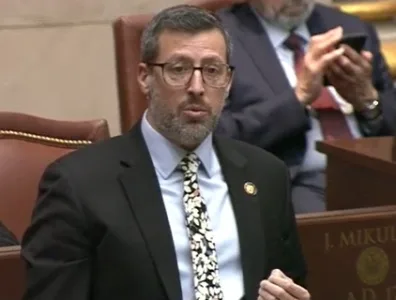
Molitor engaged in a lengthy debate on the bill with Romero on the Assembly floor prior to voting in favor of it. The Westfield Republican and former Chautauqua County assistant district attorney said he has seen sentencing laws from the perspective of a defense attorney and as a prosecutor, with each case, defendant and witness being different. Different circumstances can present difficulties when courts aren't left with any wiggle room in the way they handle cases.
"And, you know, sometimes in the midst of a case something happens and you need both as a prosecutor and a defense lawyer and even a judge, you need the flexibility to achieve a just result," Molitor said. "And a just result isn’t always, you know, sorry, the law says you have to go to prison for a long period of time, because we’re talking about an individual, a person. And I think the built-in protection in this particular bill is that the prosecutor and the court have to agree to this plea reduction. It’s not just one side. So I think there are a lot of benefits to this bill."
Molitor did raise a concern about the lack of uniform application across the state of existing mandatory sentencing guidelines, particularly when it comes to repeat offenders.
"So some people, I think — and, you know, maybe I am a little bit – I haven’t quite made up my mind on this particular bill, but I think some people will be very uncomfortable with the court and the prosecution being able to deviate from those mandatory sentence enhancement categories. You know, it’s not always the case that judges and prosecutors apply the law as evenly as they probably should. Depending on where you live in the state and, you know, what kind of DA you have, you could see maybe this could open the floodgates, I’ll say it, and essentially eliminate mandatory sentences on — on violent felony crimes. And in other parts of the state, this won’t get used at all. So, you know, we don’t know. We just don’t know."
Molitor ended up making his decision based on voters being able to vote out a district attorney or a judge who abuses the law. Romero said in her legislative justification that prosecutors are explicitly permitted to condition reduced pleas under her proposal on the defendant being adjudicated as a second felony to allow for more serious penalties to be imposed were such a defendant to subsequently reoffend despite being offered leniency by prosecutors and the court.
"I believe in small incremental change," Romero said. "This bill will not help millions or maybe even thousands of people, but for the defendants that are involved in these plea bargains, maybe the hundreds of people, we will have done a little bit of good today."