
Panama reviews submitted BESS research
Trending
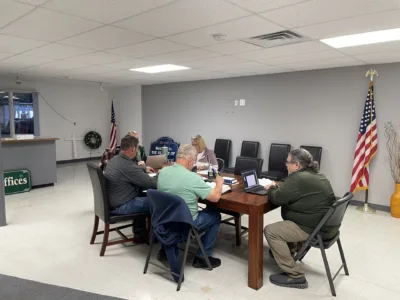
PANAMA -- Conversations surrounding Battery Energy Storage Systems have been held in the recent past in the village of Panama, and during their most recent meeting the village board dove more into the research behind the hazards associated with the systems.
Originally, the village was meant to have someone who has done research on BESS as they appear around the county come to talk, but as that person could not make it, the village board looked at the research that was sent along to them at their October meeting. Mayor William Schneider said BESS are being seen more in the northern parts of the county, but it is anticipated that they will start to drift towards the areas around the village soon, so the village is looking to be prepared, especially with the increase in usage of solar farms. The man who sent the research to the village is a scientist and aerological engineer, who has worked with the town of Ripley on this subject as well, outlining some potential hazards with BESS.
"One of the things that can create an issue is if they start a reaction and overload and start a fire," Schneider said. "These particular lithium ion thermal batteries, they call them runaway events, and what happens is they cannot be put out with water or foam and it basically has to burn until the modules in the container are consumed."
The additional problem with that, Schneider said, is that there are several containers or modules that sit close by each other, so if one was to catch on fire the process could cause issues with the one sitting next to it and cause that one to catch on fire as well. Emergency responders then have to cool the existing ones that are not on fire until the first one burns out, and there is no time frame on how long that could take, needing to be done continuously and for many hours.
"The problem is if the cooling issue were to stop somehow or be prolonged, the other units could start a chain reaction," Schneider said.
Other potential issues about BESS that connect to the fire issue that were outlined for the village include the possibility of toxic runoff that could get into the groundwater and surrounding water ways, along with toxic gases that can come off as containers fail, meaning responders need full respiratory protection and that, Schneider said, would most likely mean the hazmat team would have to come in as well, and residents would likely have to be evacuated.
Schneider also addressed liability concerns with the companies that come in and build the systems, with the liability then falling back on the municipalities and residents.
"So this is something we're going to need to take a look at," Schneider said. "I've reached out to the town because I want to know what their language is on these systems, and then I'm also going to reach out to the lawyer to find out if the town has a particular law regarding these, do we have to reinvent it for the village or does that also cover us as we are inside the town itself. I know that can be a sticky point in certain circumstances, so I want to make sure we have all of our t's crossed and i's dotted."
While nobody has asked about putting these systems in the village, Schneider said it is something the village needs to prepare for as they are not sure what will happen once nearby proposed solar farms are put in and functioning. It was noted that the village does not have to put in BESS, and the thought would be that the village would not due to the dangers.
"Especially in a village that is one square mile and 450 residents and we have major waterways and most everybody's got groundwater, we don't have a public water system, these are all very high concerns," Schneider said. "I'm also very concerned as a retired emergency services and hazmat responder. It's dangerous for everybody all the way around."
Schneider added that emergency services are not prepared for something like these systems either, citing similar potential dangers that come with fires in electric vehicles, though those are on a smaller scale. After talking with the town and lawyers, Schneider said the village could come back with a resolution against allowing BESS in the village, if that is the way everyone decides that they want to go.
Conditional use permits or variances were also discussed, as technology has the ability to change years into the future. Having to deal with electric buses as the state continues to push for them was also brought up and noted that the village will have to deal with that at some point as well.
"There's all of these little intricate things that we don't know enough about right now," Schneider said. "We need to see how some of this plays out. So, the safe thing would be to do this, cover the bases, and then as technology increases, gets better, safer, then the village can relook at the issue again."
The village also briefly discussed upcoming fall related items, including Trick-or-Treat hours being from 5 p.m. to 7 p.m. on Halloween, and village leaf pickup being scheduled for November 4, with a rain date of November 5. Residents are also asked to bring their leaves out to the curbside for leaf pickup.