
Hochul signs Electric Landscaping Equipment Rebate Program bill
Trending
A 10-year state rebate program for commercial landscapers who purchase electric-powered landscaping equipment has been approved by Gov. Kathy Hochul.
The state Assembly passed A.2657A by a 99-42 vote during this year's legislative session with Assemblyman Andrew Molitor, R-Westfield, and Assemblyman Joe Sempolinski, R-Canisteo, voting against the legislation. A companion bill passed the state Senate by a 52-10 vote with Sen. George Borrello, R-Sunset Bay, voting in favor.
The bill is designed to improve air quality, reduce noise pollution and lower greenhouse gas emissions by creating a rebate program for commercial landscapers who voluntarily purchase emission-free mowers and other landscaping equipment. In addition to commercial landscapers, the rebate program would also be available to state agencies and authorities, local governments and school districts, private schools, universities, and non-profit organizations.
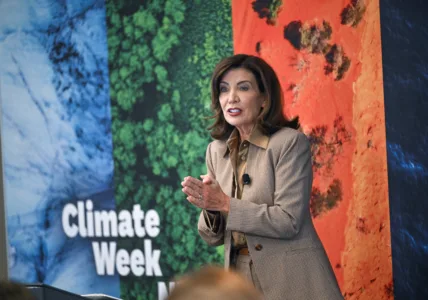
"I will never stop fighting to clean up the air we breathe," Governor Hochul said. "The rebate legislation I signed will encourage the purchase of cleaner and quieter battery-powered lawn mowers and other landscaping equipment that will benefit us all."
Democrats in the state Legislature have been unable to ban the sale of gas-powered lawn equipment in the past. The Electric Landscaping Equipment Rebate Program took a different route by offering point-of-sale rebates to commercial landscapers and institutional users, including municipalities, who purchase battery-powered electric landscaping equipment, such as leaf blowers, weed whackers, or lawn mowers.
Assemblyman Steve Otis, D-Port Chester, said the legislation is important because 69 communities have adopted local laws restricting the use of gas-powered lawn maintenance equipment. The bill also doesn’t add any additional money to NYSERDA’s budget, a way for the bill to avoid a 2022 veto because the governor wanted the legislation to be part of budget legislation.
"Addressing the climate crisis requires action on all fronts," said Sen. Liz Krueger, D-New York City. "Gas-powered landscaping equipment emits a stunning amount of air pollution, not to mention the noise that blights communities across the state. This new rebate program will make it easier for New York’s landscaping companies and institutions to transition to cleaner, quieter equipment. It’s a win for small businesses, workers, communities and our shared environment, and I thank Governor Hochul for signing it into law today."
Assemblyman Phil Palmesano, R-Bath, noted that the program’s costs will ultimately be paid by utility ratepayers if NYSERDA uses proceeds from the Regional Greenhouse Gas Initiative to pay for the rebate program. Otis said the bill doesn’t change what ratepayers are paying into RGGI.
“”I’m sorry, my colleagues. This is just more misplaced priorities,” Parmesano said in his comments on the bill in April. “I have great respect for the sponsor of this bill. I really do not like this bill. This is another out-of-touch policy in a climate energy agenda that continues to put green policies over ratepayers from a bigger perspective. … I do not have confidence in NYSERDA. They are sitting on $2.4 billion in ratepayer funds right now that have been taken from them, but this bill doesn’t reduce that at all. This just makes more opportunity to take that money from the ratepayer. I urge you all to go home and ask your constituents, ‘Would you rather have direct ratepayer relief right now or would you rather subsidize someone’s electric lawnmower or someone’s electric weed eater?’ There’s no doubt every one of your constituents would say I want direct ratepayer relief right now.”
Hochul also signed two other pieces of legislation this week.
A.9590A authorizes the Dormitory Authority of the State of New York to provide financing to the New York Climate Exchange, a non-profit consortium led by the State University of New York at Stony Brook, for the construction of facilities on Governors Island that will promote climate education and research. The physical campus is projected to open in 2029.
S.1986 gives school districts more time to pay off clean energy upgrades using money they save on their utility bills by increasing the time period for recovery to up to 25 years, up from the current 18.