
Rural Minds launches new youth mental health program
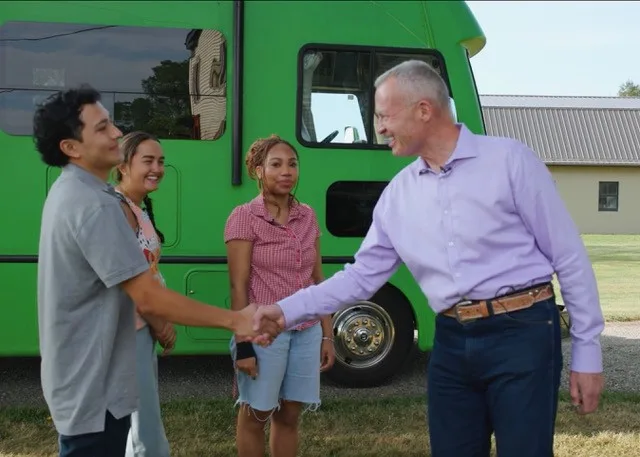
Jeff Winton is pictured with a group of youth who recently came to his farm in Mayville to film a documentary on Rural Minds and their work, such as the recently launched youth program.
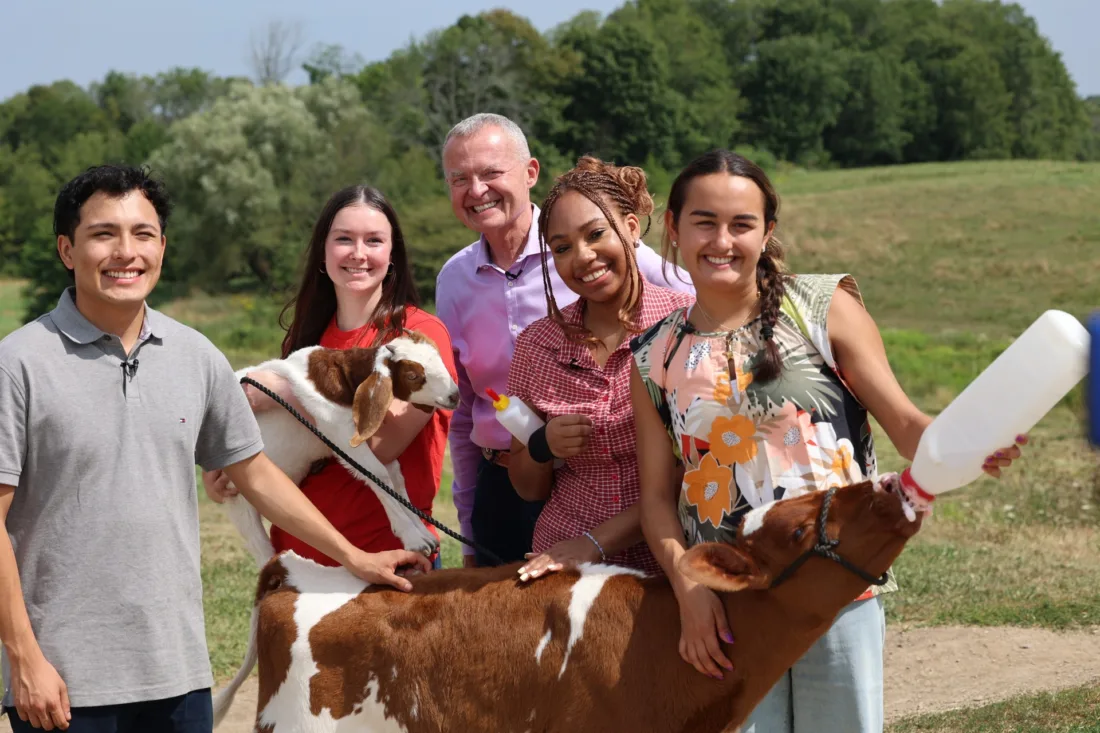
Rural Minds is launching a new program focused on Rural Youth Mental Wellness, in conjunction with September being National Suicide Prevention Month.
Jeff Winton is pictured with a group of youth who recently came to his farm in Mayville to film a documentary on Rural Minds and their work, such as the recently launched youth program.
Rural Minds is launching a new program focused on Rural Youth Mental Wellness, in conjunction with September being National Suicide Prevention Month.
Trending
MAYVILLE -- September is National Suicide Prevention Month, and in conjunction with that, local rural mental health focused nonprofit, Rural Minds, has launched a new program focused on youth in Rural America.
The Rural Youth Mental Wellness Program is launching nationwide and will be anchored by a new set of free, digital self-help sessions, called "Single Session Interventions" adapted in partnership with Northwestern University's Lab for Scalable Mental Health and delivered through a digital platform built by Koko.
"This program is long overdue because the CDC recently released statistics that demonstrate that young people who grow up in rural areas, like Chautauqua County, ages 15 to 19 are 74% more likely to die by suicide than their urban peers," Founder and Chairman of Rural Minds, Jeff Winton, said. "That's just a tragic statistic that really illuminates what we're facing here in Rural America, especially with younger people. Statistics for people in general in Rural America is that they are 50% more likely to die by suicide, and that in itself is tragic. Young people have an even higher prevalence now according to the CDC than the general population does."
The new program is designed to help address these statistics. Winton said the program is a multi-faceted one that has been in testing for the past year, with a pilot program done in rural New York State and Pennsylvania, that they learned from to design the program. The program itself was also designed not just for youth but with their help as well. A steering committee of young people from both states, many involved in 4-H, FFA, and The Grange, helped design the program, noting what they as youth in Rural America needed, and what those in their local community needed.
"It has a number of different elements to it," Winton said. "There's a number of fact sheets and informational modules on particular topics such as depression, eating disorders, LGBTQ+ youth, peer pressure, suicide prevention, substance abuse, so on and so forth. These are all listed by topic on the homepage of our website, ruralminds.org."
The part of the program done in collaboration with Northwestern University in Chicago involves do-it-yourself modules where young people in their free time can go in and be trained on taking care of themselves along with their friends and other young people in the community. The modules are short, 10 to 15 minute segments designed with rural youth in mind, reflective of the fact that young people do not necessarily have the time or interest for something that is several hours long. The program also includes tools for adults, as Winton said adults play a key role whether as the parent or caretaker of the young person or the teacher, 4-H leader, or any adult in the rural area that is in the life of a young person in a rural area who may be struggling.
The fact that this program is launching nationally is something Winton noted to be important as well.
"The need exists across the entire country," Winton said. "I spend a lot of time traveling. I was just in Minnesota last week talking to adults and young people there. I've been in Montana, I've been in Kentucky, Missouri, Kansas. I travel a great deal in my role as founder and chairman of Rural Minds and no matter where I go I hear the same story that young people are struggling, due to loneliness, due to the fact that we still have a stigma in rural areas where people don't feel comfortable talking about mental illness, unlike other physical illnesses like cancer or heart disease."
This is a theme Winton said he has heard no matter where he has traveled. With it being a new program, he added they will continue to make changes or modifications to it as they continue forward. He also noted and acknowledged two sponsors who have helped with the funding for the program; the Sompo Foundation and Boehringer Ingelheim. Both sponsors do work in Rural America and Winton said they both realize what Rural Minds has been seeing with this growing issue.
"We especially have a growing issue now because of the things happening to agriculture in our country," Winton said. "Young people see their parents and neighbors struggling with the price of fuel, with the price of fertilizer, with the fact that due to immigration reform we've lost a lot of farm workers. They see the rural hospitals closing. They see the fact that with the latest trade war we're having with Canada and other countries, that the agricultural markets have been impacted dramatically. They are watching, and they are seeing and hearing the impact this is having on our local communities and their families in many cases, and this is contributing to the mental health crisis we're seeing in people, no matter what part of the country we may be talking about."
This program is something Winton said everyone should be interested in, as there are elements for everyone. While it is specifically designed with and for young people to help them deal with their struggles and to become a peer advisor in the community, adults should be interested in it as well. Winton said young people are not only the future of the country but the future of agriculture as well.
"If we don't take care of people in farming communities like where you and I live, there won't be anybody left to produce our food or fiber for our clothing," Winton said.
The hope is that the program will be used in places such as schools, by clergy people of any religion, groups such as 4-H, FFA, the Farm Bureau, the Grange, and by anyone who finds themselves in Rural America, working with young people. The tools for the program were designed to be easy to use, and Winton said there should be no reason why adults and young people should not find them interesting to use. Even though the tools and modules were designed with Northwestern University in Chicago, Winton added that Rural Minds worked with them on the design and imagery and in the content to focus it on young people in Rural America.
"It's a program we're very proud of," Winton said. "We're hoping that people will use it, and we're hoping quite honestly that people will help us share it and provide us with feedback, because we're going to continue to refine this program."
It took a long time to get to the current CDC statistic, Winton said, adding that it will take a long time for it to be turned around as well. The goal is to ensure that everyone knows about the program and provides feedback, and that includes feedback from people not in rural areas as well, such as cities like Jamestown or Dunkirk, where Winton said people still eat and wear clothing. He added that people who live and work in cities are needed for support to help with the mental health crisis in America too. The hope is that young people will also be willing to share their stories with Rural Minds through the program, as Winton said their stories are critically important to get out to the public. A section on the website is dedicated to the ability to share stories, and Winton said the hope is that young people will reach out and want to share their story, besides just those who are a part of Rural Minds.
"Young people would rather hear from another young person than from an adult, such as the story I tell about the tragedy that took place in my farming family," Winton said.
Winton said there is hope and there is help for people who need it, citing this program as the newest example of that, along with the national 988 number that anyone can call or text 24/7 for help if needed. Winton added that they are encouraged that young people are more comfortable talking about things like mental health, compared to generations such as his own that have not been comfortable with that, or other sensitive topics. He also emphasized that the new program is in its first role out nationally, and that they will continue to evolve it as the need evolves, and that they hope people will be willing to reach out on the website so they can continue to make the program useful and helpful for those it is intended for.
With September being National Suicide Prevention Month, Winton said there are events being held around the country and locally, such as walks, to help raise awareness to the growing issue in the country.
"The latest statistic I've seen is that every 11 minutes someone dies by suicide in this country," Winton said. "That again is a very tragic and sobering statistic."
Winton said if people hear about one of these events that might interest them, they may be more likely to go to one and learn about the role they can play in helping someone who may be struggling with suicidal thoughts to seek help. Some examples of such an event include the United Hope Recognition Walk, scheduled for Saturday, September 12 at the Ellery Town Park, beginning with registration at 9 a.m.; and the Stomp Out the Stigma 5K race scheduled for Saturday, September 26 at the Chautauqua County Airport, with registration there beginning at 5:30 p.m.
For more information on Rural Minds and their new youth program, visit ruralminds.org.