
New limits proposed on animal-tested cleaning products
Trending
Legislation introduced recently in the state Assembly would prohibit the sale and import of some household cleaning products that were created using animal testing.
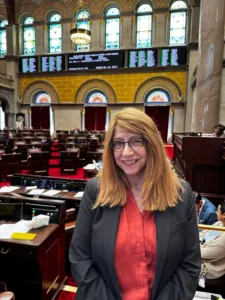
Assemblywoman Linda Rosenthal, D-New York City, is proposing a new section of the state General Business Law to set new limits on the sale of products that were tested on animals.
Products included in Rosenthal’s bill include spot removers, stain removers, upholstery cleaners, glass cleaners, dish soap and laundry detergent. The prohibition would not apply to animal testing or data conducted in compliance with existing federal or state law, animal testing conducted because no nonanimal testing methods exist. There are also exceptions for products tested in compliance with foreign government rules, products tested on animals in the United States before Jan. 1, 2028, even if the product in its final form or ingredient was made after that date.
Violators can face an initial fine of $500, with an additional $1,000 fine for each day the violation continues.
Rosenthal said there have been enough advancements in product testing methods in recent years that animal testing shouldn't be needed. New technologies include in-vitro testing and computer modeling that are now cheaper, faster and more accurate than many animal testing methods, the lawmaker said. More than 40 counties now limit animal testing in the cosmetics industry, while New York in 2022 became the ninth state in the nation to enact a cruelty-free cosmetics law, prohibiting the sale of any new cosmetic products in New York state that relied on animal testing methods.
"Companies have quickly adjusted to these laws, saving animals from unnecessary cruelty while ensuring that consumer products are safe," Rosenthal wrote in her legislative justification. "However, despite the increased availability of non-animal testing methods, not all industries have shifted as quickly as the cosmetics industry. Many manufacturers of household cleaning products continue to test on animals, exposing these animals to an array of chemicals and ingredients to determine toxicity and potential for harm. Much like the testing done for cosmetic products, these tests are cruel, unnecessary and the same information can be achieved through non-animal testing methods. Like New York’s cruelty-free cosmetics law, this legislation would prohibit the importation and sale of household cleaning products that rely on data from animal testing methods."
Rosenthal's bill appears to be in agreement with goals laid out in January by Lee Zeldin, U.S. EPA administrator, to end mammalian animal testing by 2035. After Trump made the animal testing phase-out a goal, the Biden Administration shifted away from rigid target dates, opting instead for a more flexible approach to reducing vertebrate animal testing because officials stated the necessary non-animal testing science was not progressing fast enough.
Zeldin said in January the EPA's Office of Chemical Safety and Pollution Prevention will prioritize developing and implementing high-quality alternatives to reduce testing on vertebrate mammals, like rabbits, mice, rats, and dogs, to align with regulatory requirements.
Zeldin said some animal testing is required to support statutorily mandated regulatory responsibilities to test certain chemicals,. But the EPA will work in targeted ways to further reduce animal testing whenever possible and collaborate with other government agencies, researchers and advocates to develop and validate the use of alternative methods for toxicity testing.
For the first time ever, EPA's Office of Pollution Prevention and Toxics (OPPT) used high-quality alternative scientific methods to animal testing in its cancer evaluations for dibutyl phthalate and di(2-ethylhexyl) phthalate, sparing an estimated 1,600 mice and rats from undergoing lab experiments.
"I'm absolutely committed to making sure EPA gets back on track with the historic goal set out during President Trump's first term in office. Unlike the previous administration, the Trump EPA will not delay scientific progress on developing alternatives to animal testing. We will pursue this goal while adhering to the law and the highest quality scientific standards," Zeldin said.