
Weed fight
Discussions, studies continue for best options for Chautauqua Lake
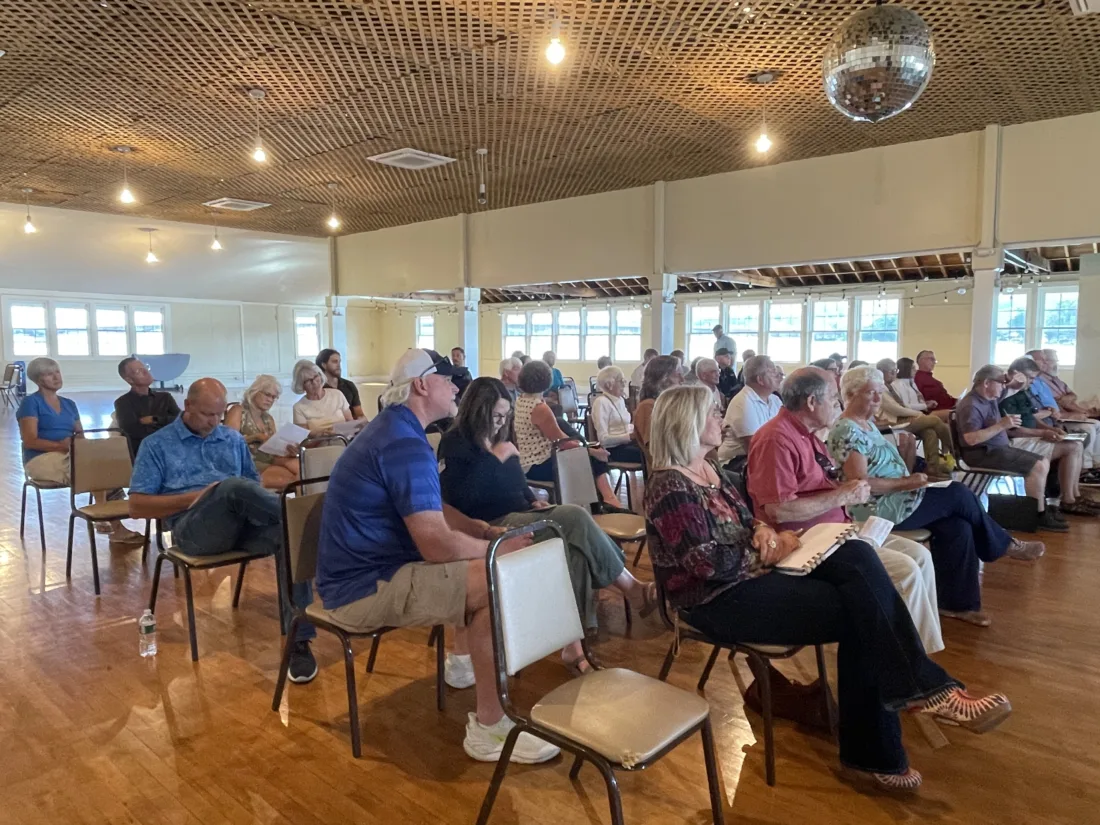
A large crowd gathered at the Village Casino in Bemus Point for a Chautauqua Lake Public Information Session, sponsored by the Chautauqua Lake and Watershed Management Alliance. P-J photos by Gregory Bacon
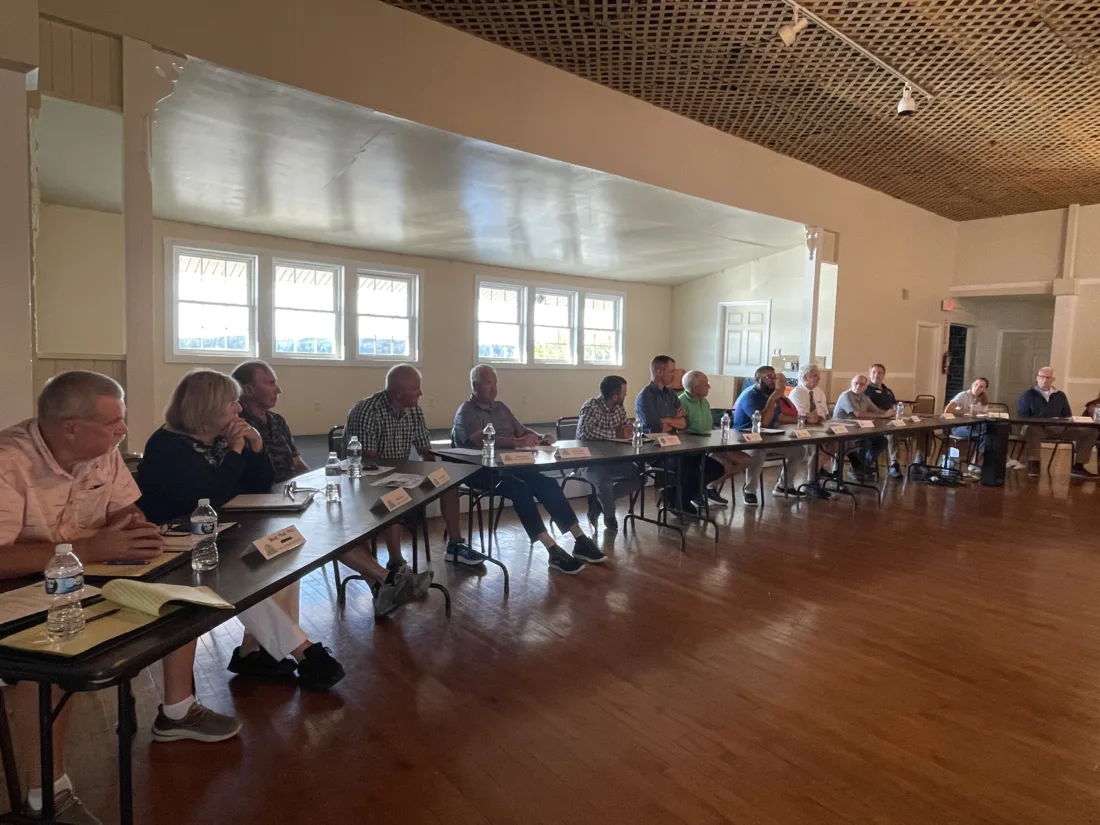
Pictured are members of the Chautauqua Lake and Watershed Management Alliance Board of Directors.
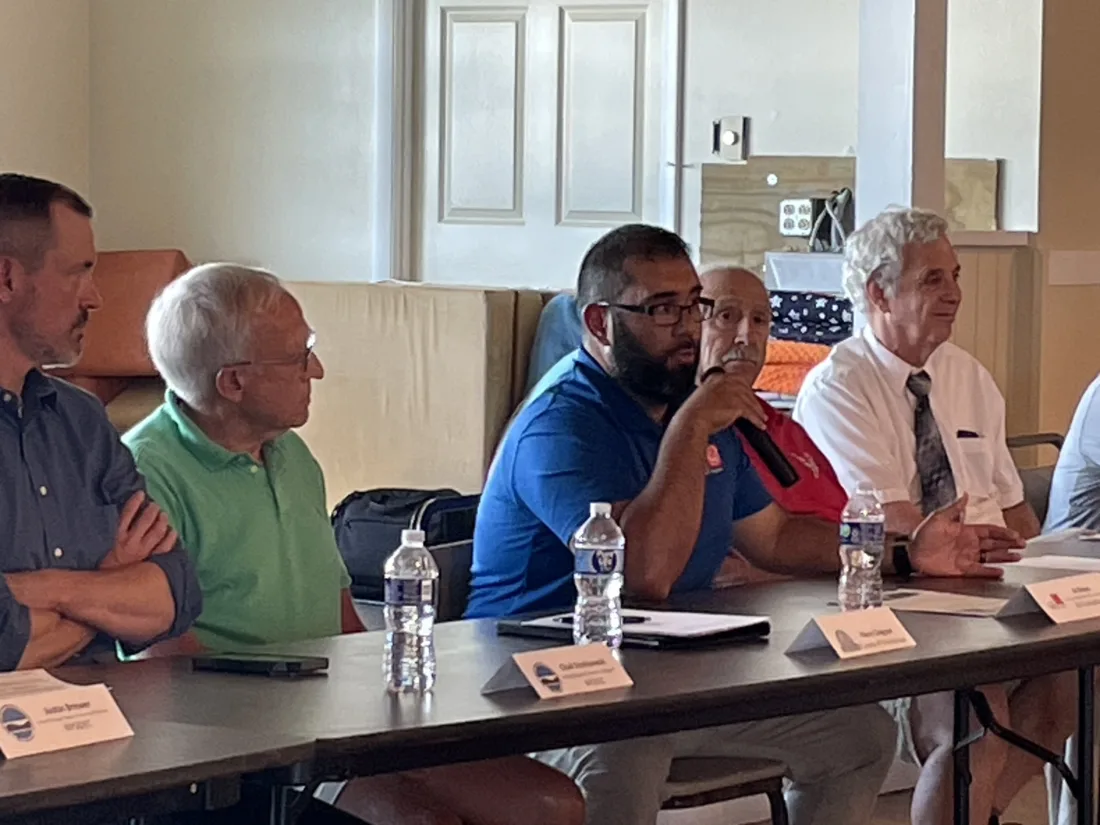
GEI Consultant AJ Reyes speaks at the Chautauqua Lake Public Information Session.
A large crowd gathered at the Village Casino in Bemus Point for a Chautauqua Lake Public Information Session, sponsored by the Chautauqua Lake and Watershed Management Alliance. P-J photos by Gregory Bacon
Pictured are members of the Chautauqua Lake and Watershed Management Alliance Board of Directors.
GEI Consultant AJ Reyes speaks at the Chautauqua Lake Public Information Session.
Trending
BEMUS POINT - Although this year was a pretty good year, there continues to be weed problems in Chautauqua Lake, with various studies looking for a long-term solution.
On Tuesday, the Chautauqua Lake and Watershed Management Alliance held a public information session where they invited representatives with the state Department of Environmental Conservation to discuss the management plans and objectives with the lake, including addressing invasive macrophytes, harmful algae, and starry stonewart investigations.
No permanent solutions have been proposed, although officials believe they are closing in on an action plan.
To kick off the discussion, former Assemblyman Andy Goodell, who is a board member of the Chautauqua Lake Partnership, said the relationship with the DEC has improved tremendously. That has led to a better path when seeking the best options for treatment.
Goodell noted the challenges of treating various invasive species and the cost, noting that it can run between $700 to $1,200 per acre.
Chad Staniszewski, the acting regional director of DEC's Region 9, noted that although they have a regulatory role, they're doing other things as well, including an internal loading study.
"I'm told that when this study is completed, we will have some additional information to determine how much of the nutrients are actually coming from the sediments that actually exist in the lake," he said.
Staniszewski believes if they can quantify that, they can develop "an actionable phase where we're actually doing something, in real work to address that."
Staniszewski said they also want the permitting process to be "more workable and more flexible."
AJ Reyes, an aquatic ecologist and certified lake manager with GEI Consultants, said their role is to provide "objective scientific advice" for the alliance.
They also work to bring different partner groups together.
"The idea is to have somebody that is sort of overall, looking at the general direction - somebody who can work with the aquatic plants, work with the water quality, work with the fisheries, work with the regulators to sort of have a unified vision moving forward," he said.
Reyes acknowledged the different groups with different perspectives for lake management, but said the cooperation among them has vastly improved.
"No successful lake management gets done when you have groups opposing each other because lake challenges themselves are so insurmountable in a lot of different ways," he said.
Reyes noted there has been a lot of data collected from the lake over the years. He wants to see that data turned into everyday management. He noted that some years are going to be worse than others, so they need to be flexible when developing treatment plans.
Staniszewski said he hopes the data from the DEC's internal loading study will be shared publicly in the next month or two. After that, he believes a report from that data will be produced somewhere around Jan. 1. Staniszewski was asked that once a plan is proposed, who will implement it. He admits that's unclear.
"To be honest with you, I don't think we know. ... I think it's going to be a collaborative effort between the county, the lake management groups, and the state to implement a plan," Staniszewski said.
Reyes it's important to finish the studies first.
"I can't tell you how many lakes I've worked on that have a harmful algal bloom problem and just jump to a solution, instead of actually looking at things because they get too tired of either past studies or anything like that, and they end up wasting a lot of money," he said.
Justin Brewer, an aquatic biologist with the DEC's Bureau of Fisheries, said his role is to protect and enhance the fishery. He said any plans created will need to make sure the fish population remains healthy and protected.