
Officials praise $20M grape juice purchase by USDA
Trending
On a rainy Monday, Chautauqua County's grape growers received some sunshine.
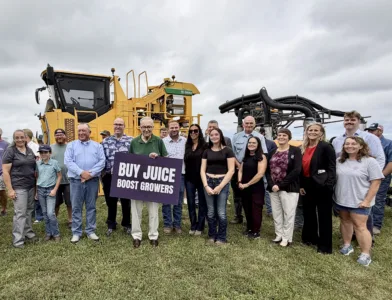
One week after a visit to Portland and a plea from U.S. Sen. Charles Schumer, the U.S. Department of Agriculture announced its decision to purchase $20 million worth of Concord grape juice, providing critical support to growers across the Lake Erie Grape Belt following months of advocacy urging USDA to intervene in a rapidly deteriorating market.
The Concord grape industry has faced significant challenges following Refresco's decision earlier this year to cancel grower contracts across Western New York, Pennsylvania, and Ohio. Approximately 126 growers representing roughly 2,600 acres of primarily Concord grapes were impacted, leaving many farmers without a buyer for their crop after making substantial investments to prepare for the 2026 growing season.
"Everyone knows the best Concord grapes come from Upstate New York. But when Refresco canceled contracts with many grape farmers earlier this year, growers were left in a lurch with nowhere to sell their harvests. That's why, last week, I stood shoulder to shoulder with Western New York grape farmers in Chautauqua County and urged the USDA to buy extra Concord grape juice for nutrition programs," Schumer said. "I'm proud to announce that USDA has heeded my call to purchase Concord grape juice. This is a win for Upstate farmers, families, and New York's economy. I'll keep fighting for our growers and a stronger domestic food supply chain."
Chautauqua County is the leading grape-producing county in the state and the largest grape-growing county in the country outside of California. Every year, about 800 growers produce 150,000 tons or more of grapes on more than 22,000 acres on the Lake Erie Plain across northern Pennsylvania and Western New York. Products like juices and jellies that come from Concord grapes are processed locally and sold across the world. The Cornell Cooperative Extension estimates that the Lake Erie Grape Belt region supports about 2,000 jobs, contributes upwards of $300 million in economic impact, and supports a fruit and vegetable processing industry that employs over 5,000 workers.
"Earlier this year, New York State Concord grape farmers were left stranded after having their contracts suddenly canceled," Gillibrand said. "That is why I called on the USDA to step in and purchase surplus Concord grape juice for federal nutrition programs. I am thrilled that the USDA answered our call by enacting Section 32 of the Agricultural Adjustment Act to support Western New York's growers during this critical time. This decision delivers relief to our local farming families and protects a critical part of New York's agricultural economy.”
Western New York's grape sector is an economic anchor for the state's agricultural industry, as Lake Erie's shallow depth extends the growing season by moderating temperatures as it keeps air moving when grapes are at risk for frost. The region extends far beyond Chautauqua County. Niagara County is home to the Niagara Escarpment American Viticultural Area, which contains nearly 60 farms across more than 1,000 acres of vineyard. The Niagara grape was created in Niagara County by cross-breeding Concord and Cassady grapes and is now a staple for making white grape juice.
The USDA purchase comes after Schumer, U.S. Sen. Kirsten Gillibrand and U.S. Rep. Nick Langworthy of Congressional District 23 pressed Agriculture Secretary Brooke Rollins to use the department's authority under Section 32 to conduct a bonus purchase of surplus Concord grape juice to help stabilize the market and protect growers. This is the third federal buyback purchase Langworthy has facilitated with amounts totaling $85 million.
"Keeping our Concord grape industry strong and thriving is a top priority, and I am extremely pleased to see USDA take this important step to support our growers," said Congressman Nick Langworthy. "When Refresco walked away from its contracts, it put hardworking family farmers across the Lake Erie Grape Belt in an incredibly difficult position. I immediately pressed USDA to act, and this $20 million purchase will help provide much-needed stability and relief to growers while reducing excess inventory and strengthening the market. I will continue fighting to make sure our grape growers have the support they need to keep their farms productive and pass them on to the next generation."
Section 32 funds, which are the source of funding for the grape buy announced today, are authorized by Section 32 of the Agricultural Adjustment Act of 1933 and used by USDA to purchase agricultural products, which are in turn used for nutrition programs such as the school lunch program. These "bonus buys" have been used by USDA in the past to stabilize agricultural markets, support communities, and deliver nutritious food to those who need it most.