
‘Meaningful Journey’: Lucille Ball-Desi Arnaz Center sees highs, lows over 30 year history before finding relative tranquility now
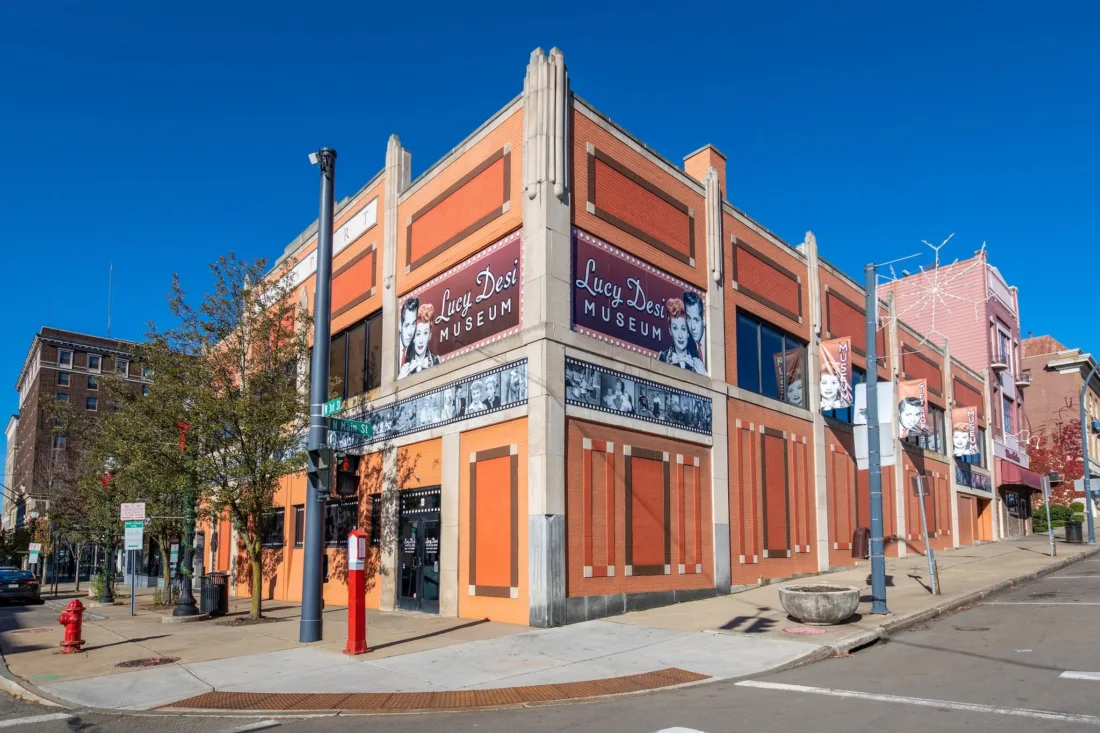
The home of the Lucille Ball-Desi Arnaz Center is pictured.
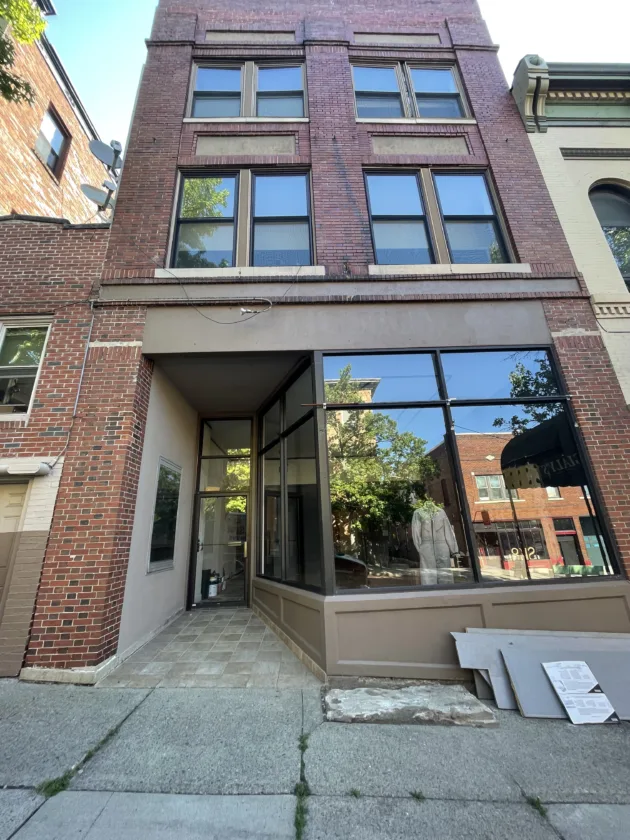
This building at 212 Pine St., Jamestown, served as the original home of the Lucille Ball-Desi Arnaz Center. The museum has since moved into expanded space at 2 W. Third St. P-J photo by John Whittaker
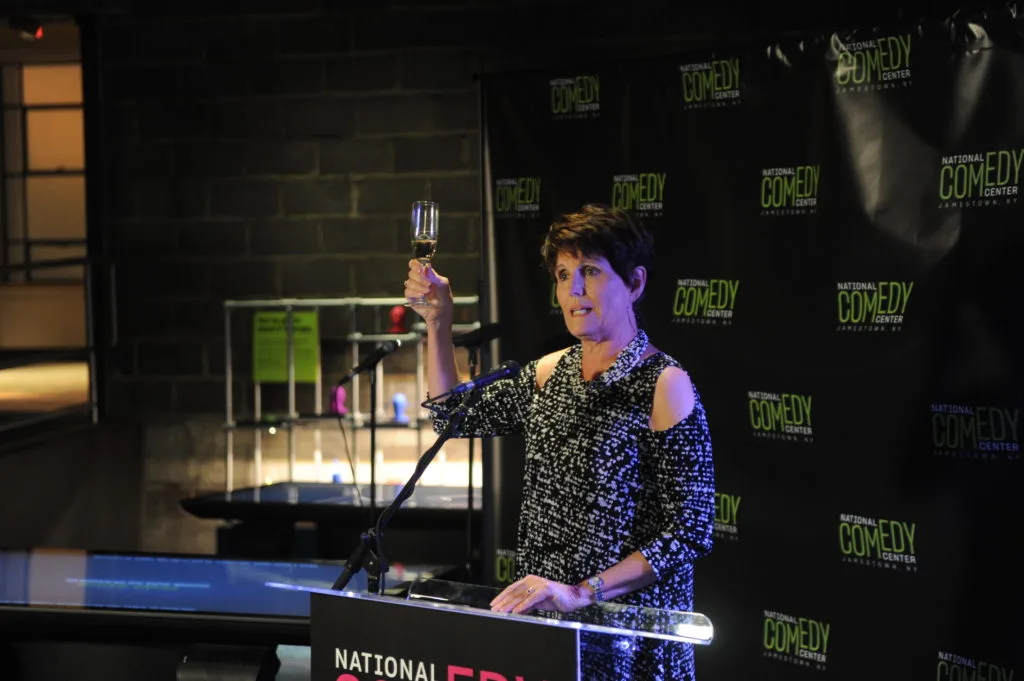
Lucie Arnaz toasts the opening of the National Comedy Center during its grand opening in 2018.
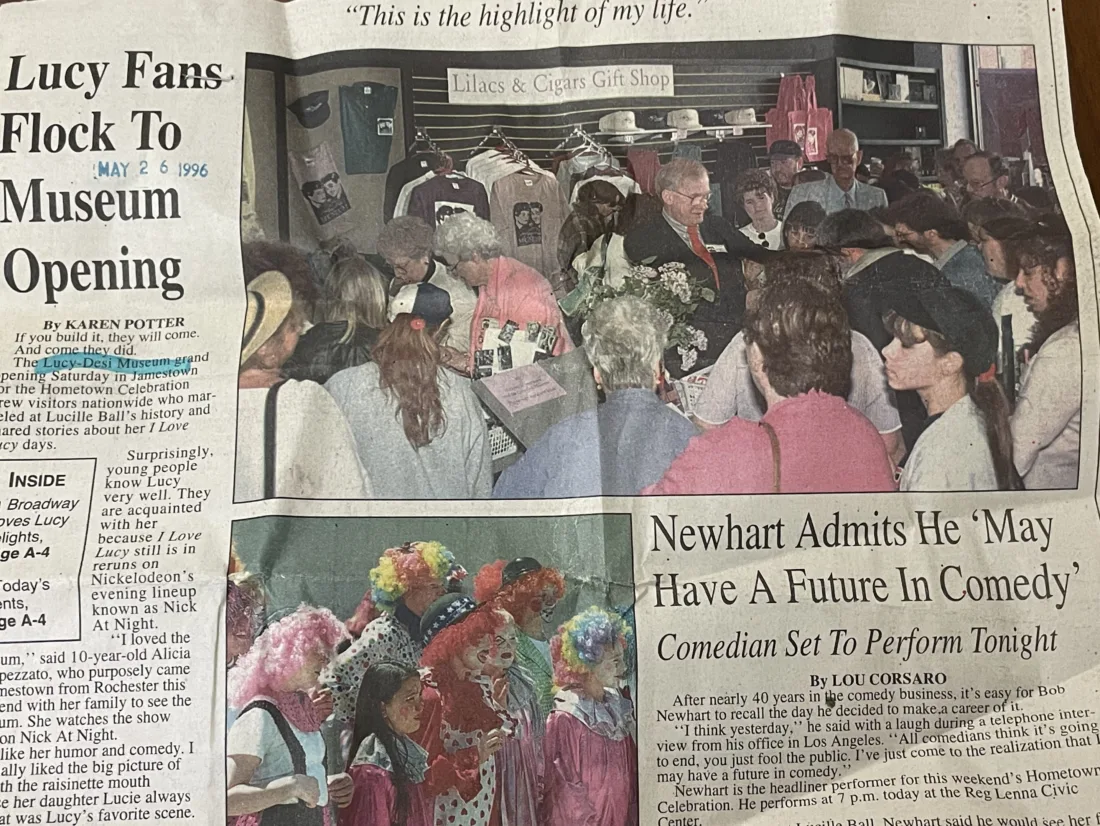
Pictured is a Post-Journal clipping from the 1996 grand opening of the Lucy-Desi Center on Pine Street.
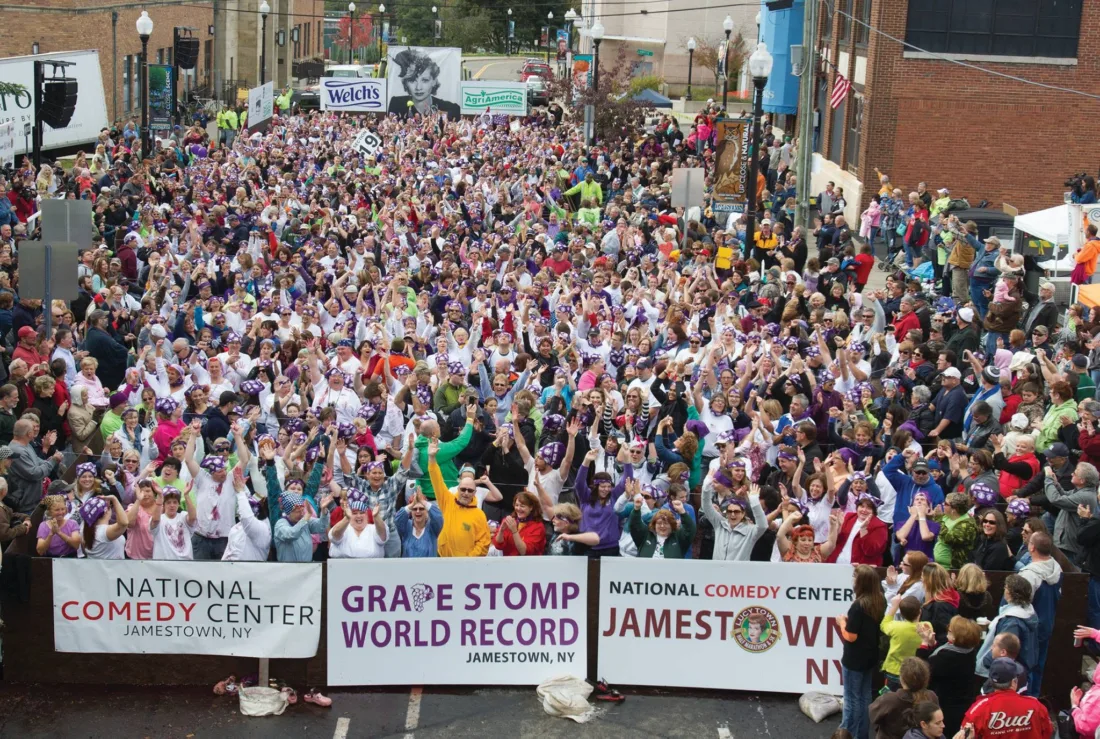
In 2014, the Lucy Desi Center for Comedy set a new world record Saturday when 1,232 people stomped 60 tons of grapes in a city-block-sized vat in Jamestown.
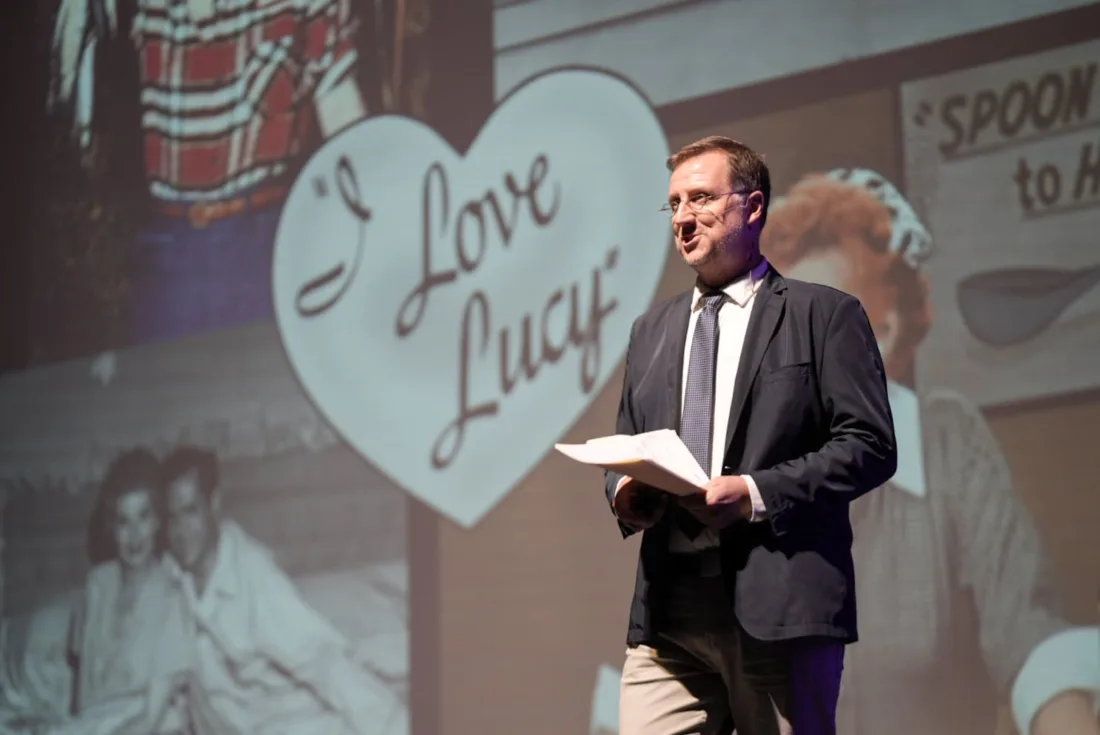
Wanda Clark, Lucille Ball's longtime personal secretary and friend as well as a former Lucy-Desi Center board member, is interviewed on stage during the 2024 Lucille Ball Comedy Festival by Ric Wyman, Lucille Ball historian, author and former center executive director.
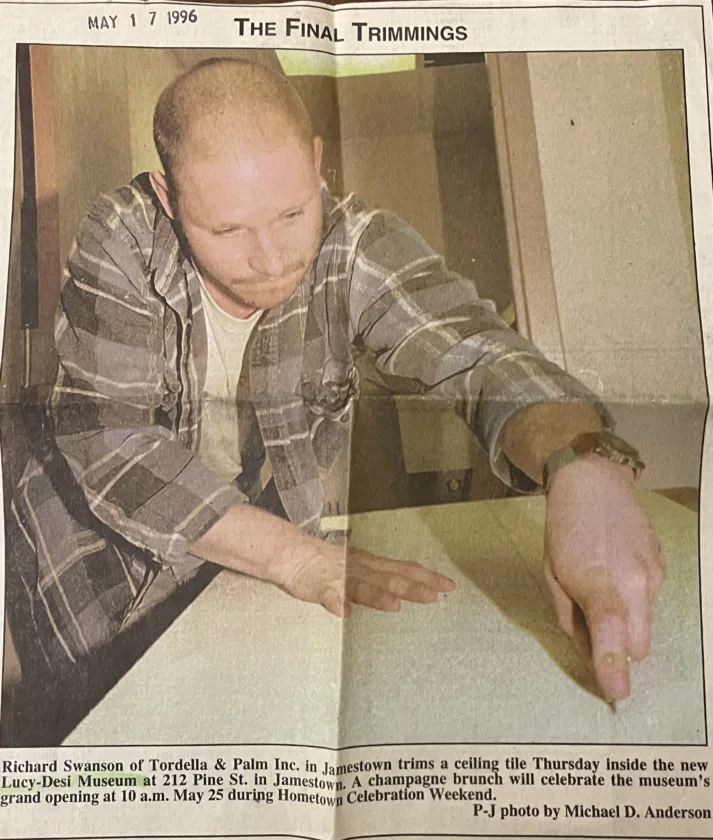
This clip shows a worker putting the finishing touches on a ceiling tile in the original home of the Lucy-Desi Center on Pine Street the day before the grand opening.
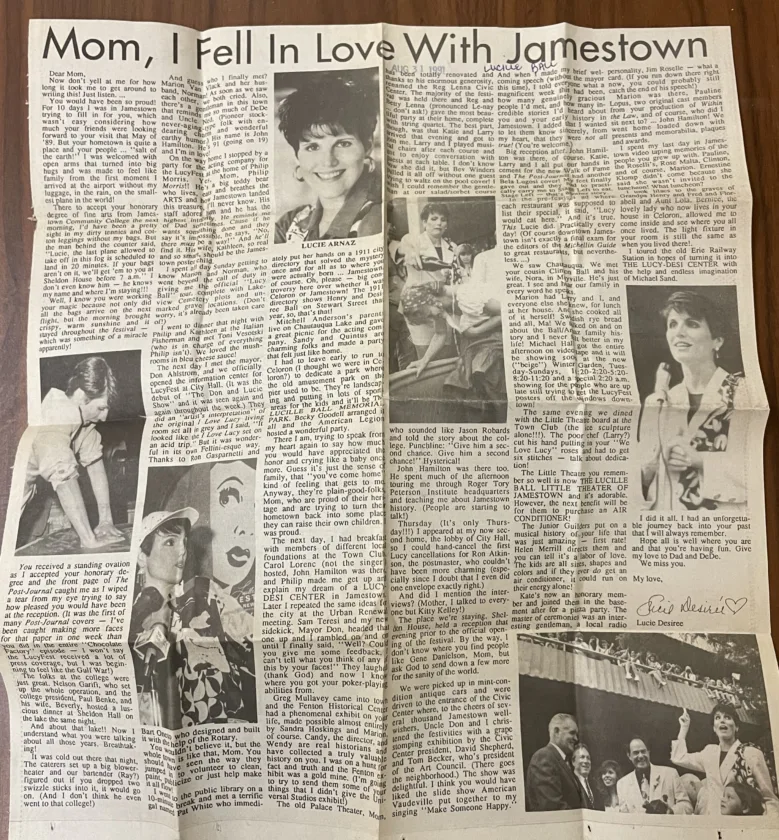
This Aug. 31, 1991, essay written by Lucie Arnaz told the story of Arnaz’ trip to Jamestown for what would have been Lucille Ball’s first visit to the city in decades. In it, Arnaz mentioned her support for a plan to turn the former Erie-Lackawanna Railroad Station into the Lucy-Desi Center.

Journey Gunderson, executive director of the National Comedy Center, noted Bert Kreischer, one of this year’s Lucille Ball Comedy Festival headliners, as an example of a comedian who took a new path to comic stardom than many of those who came before him.
The home of the Lucille Ball-Desi Arnaz Center is pictured.
This building at 212 Pine St., Jamestown, served as the original home of the Lucille Ball-Desi Arnaz Center. The museum has since moved into expanded space at 2 W. Third St. P-J photo by John Whittaker
Lucie Arnaz toasts the opening of the National Comedy Center during its grand opening in 2018.
Pictured is a Post-Journal clipping from the 1996 grand opening of the Lucy-Desi Center on Pine Street.
In 2014, the Lucy Desi Center for Comedy set a new world record Saturday when 1,232 people stomped 60 tons of grapes in a city-block-sized vat in Jamestown.
Wanda Clark, Lucille Ball's longtime personal secretary and friend as well as a former Lucy-Desi Center board member, is interviewed on stage during the 2024 Lucille Ball Comedy Festival by Ric Wyman, Lucille Ball historian, author and former center executive director.
This clip shows a worker putting the finishing touches on a ceiling tile in the original home of the Lucy-Desi Center on Pine Street the day before the grand opening.
This Aug. 31, 1991, essay written by Lucie Arnaz told the story of Arnaz’ trip to Jamestown for what would have been Lucille Ball’s first visit to the city in decades. In it, Arnaz mentioned her support for a plan to turn the former Erie-Lackawanna Railroad Station into the Lucy-Desi Center.
Journey Gunderson, executive director of the National Comedy Center, noted Bert Kreischer, one of this year’s Lucille Ball Comedy Festival headliners, as an example of a comedian who took a new path to comic stardom than many of those who came before him.
Trending
In September 1990 -- before a Lucille Ball Festival of New Comedy, Lucy's Birthday Celebration or a host of comedians flocking to Jamestown each year -- a headline writer in The Post-Journal asked a question: Will Jamestown Erect Lucille Ball Museum Downtown?
It would take about five-and-a-half years, but the answer was a resounding yes. Earlier this year the Lucille Ball-Desi Arnaz Center celebrated the 30th anniversary of its grand opening. Our archives show what a fascinating journey it's been.
At its heart, the story of the Lucy-Desi Center is about more than museum pieces, festivals and economic impact to the region. It's a story about how best to remember a hometown girl who left a lasting legacy in Hollywood -- and a daughter's will to make sure her mother's vision was followed.
FROM THE BEGINNING
The story in the Sept. 26, 1990, edition of The Post-Journal reported on a Jamestown Urban Renewal Agency meeting during which JURA approved a $10,000 request from Michael Sand Inc. of Brookline, Mass., to pay for a feasibility study of putting a Lucille Ball museum downtown. The money had been part of a fund created in 1989 for the purpose of creating a Lucille Ball Museum. The idea was sparked in part by the reaction to a Lucille Ball memorial exhibit at the Fenton Historical Center, according to Philip Morris, former executive director of the Arts Council for Chautauqua County. The study was to include a close look at the realities of bringing a Lucy museum downtown, the creation of a fully developed concept of what the museum would be and writing a formal proposal to be presented to Lucille Ball's family for approval, said Sam Teresi, who in 1990 was still the city's development director.
"In conjunction with the Civic Center and the New Comedy Festival, this could be one of the most exciting and important developments to come down the road for Jamestown in a long, long time," Teresi said during the 1990 JURA meeting.
A little less than a year later, Lucie Arnaz came to Jamestown after her mother's passing. In a detailed account shared with The Post-Journal, Arnaz discussed a trip that included the inaugural LucyFest, the designation of honorary degrees to Lucille Ball from Jamestown Business College and Jamestown Community College, a tour of the recently renamed Lucille Ball Little Theater of Jamestown and a tour of the former Erie Railway Station -- a building Arnaz had hoped would one day be the home of the Lucy-Desi Center.
In 1993, it was announced that designs for a Lucy-Desi comedy center in Jamestown had been finished. Plans called for 20,000 square feet of exhibits and other elements in three exhibit areas: the lives of Lucille Ball and Desi Arnaz, the history of comedy, and one focused on answering the question, 'What is Humor?'A fourth area was to include a Comedy Hall of Fame that would feature a changing exhibit of comedy legends. At that time renovation of the train station was at least two years away, and in reality wouldn't be completed for another 19 years.
The Lucy-Desi Museum did, indeed, open, though it was a scaled-back version from the one presented in 1993 in a much different location than the railroad station. The $5 million projected renovation cost for the train station was too much of a financial burden, but a building owned by the Arts Council at 212 Pine St.was a much smaller project. That building became the first home of the Lucy-Desi Center.
While the center was on its way, it wasn't until two major fundraising announcements that the 1996 opening date was formally set in stone. The Gebbie Foundation -- at that time largely focused on human services work -- and Paul Bush, the founder of Bush Industries, stepped forward with grants that allowed work to begin on the facility.
"The Lucy-Desi Museum will add real excitement and opportunity for growth to downtown Jamestown," Bush said while reviewing plans for the museum with Morris in March 1996.
The Desilu, Too Estate donated and loaned the majority of the collection that went on display in the museum. Those items still make up the bulk of the materials on display too -- though there have been notable additions and changes in recent years, as Journey Gunderson, the center's executive director, told The Post-Journal recently.
Three months later, the Lucille Ball-Desi Arnaz Center was a reality. Fans flocked to the center when it opened on May 25, 1996, with more than 1,800 people visiting the museum during the spring Lucy's Hometown Celebration Weekend festival headlined by Bob Newhart. In the fall, the center hosted its New Comedy Festival after five years of hosting one festival that celebrated Lucille Ball as well as new comedy.
"The response from the public was beyond my expectations," Morris said "I thought it would be liked, but I didn't expect it to be this wildly received."
GROWTH – AND GROWING PAINS
For the first several years after the opening of the museum on Pine Street, the Lucy-Desi Center received donations as small as a collector's 'Little Ricky' doll created by the American Character Doll Co. in 1953 to 50th anniversary I Love Lucy sets. The center became a repository for items from those who knew Lucille Ball best, such as Wanda Clark, Ball's personal secretary for more than three decades and donor of many personal items.
But by late 2001 there were storm clouds brewing.
Ric Wyman, director of the Lucy-Desi Museum, was fired by the Arts Council of Chautauqua County board after a difference of opinion regarding the museum's direction, though he was offered a different position in the organization. The firing prompted a response from Lucille Ball's children, with Lucie Arnaz and Desi Arnaz Jr. saying they were going to let the Arts Council's contract to use the name and likeness of Lucy and Desi expire, which would end the Arts Council's ability to exhibit the materials on display, while working to create a new not-for-profit entity.
The situation escalated in 2002, when the museum closed for about five days after a threat of legal action after negotiations regarding the transition of the museum and gift shop from the Arts Council to a new non-profit broke down. The stalemate was broken a few days later, with the museum transferred to the new Lucille Ball-Desi Arnaz Center that had been established by Lucie Arnaz and Desi Arnaz Jr. Wyman was installed as the center's executive director, with the center to move from its Pine Street home to a new downtown building within two years. That search for a new building quickly centered on the former W.T. Grant Department Store building on Third Street that eventually became the home of the Dr. Lillian V. Ney Renaissance Center and now Wicked Warren's and the site of a former Rite Aid building at the corner of Third and Main streets.
Office space was secured in the former Fleet Bank building at Main and Third streets that was used as the home of the Lucy-Desi Center gift shop before eventually becoming home to the CHQ Chamber offices.
Prior to the end of the Lucy-Desi Days' grand finale in May 2005, Lucie Arnaz and Ric Wyman, who was then the Lucy-Desi Center's executive director, told the audience the center had received a $500,000 gift to renovate the former store into the Desilu Playhouse, a place to house the I Love Lucy 50th anniversary traveling exhibit that had toured the country in 2001 and 2002. Eventually, the 2 W. Third St. Rapaport building transitioned to the museum's permanent home.
But the early 2000s were also a time of growth. Festivals in the spring and fall brought people to Jamestown to celebrate Lucille Ball and Desi Arnaz, and donations continued to pour in. Those included a large donation from Lucie Arnaz and Desi Arnaz Jr. in 2003 that included childhood framed portraits of Lucy and Desi, Desi's 1992 TV Hall of Fame Award and clothing items.
The center had received hundreds of acquisitions from other donors over the past 30 years, mostly I Love Lucy 1950s merchandise and newspaper clippings remembering Lucy and Desi's legacy. The I Love Lucy sets donated to the museum in June 2005 -- part of a special exhibit celebrating the 50th anniversary of I Love Lucy -- include replicas of the Ricardos' New York City apartment and Hollywood hotel suite that hosted episodes like "Harpo Marx." This time period also resulted in the donation of objects belonging to I Love Lucy creator Jess Oppenheimer donated in 2006 via his son Gregg Oppenheimer, including a movie projector used as a prop for the I Love Lucy episode "Home Movies."
TIME TO CHANGE
By 2004, Lucie Arnaz was signaling the need for a new direction for the center to go along with the new building. Artifacts were pouring in, but Arnaz said clearly during that Memorial Day 2004 meeting that the Lucy-Desi Center needed to move beyond simply preserving artifacts and memories.
"We hope to incorporate all of that when we have the time, effort and space to go beyond this," Arnaz said. "We need to talk to people about how we feel about the impact it had on all of us and why that's important, why it's a memorial place for Lucille Ball and Desi Arnaz and for what purpose? It's not just to store old clothes. There's more to that and how does it reveal itself in daily life?"
One addition to the program was the Legacy of Laughter series developed by Lucie Arnaz and Desi Arnaz Jr. as they looked for ways to explore, extend and celebrate the impact that humor has on the world. The series was hosted in Jamestown, Boulder City, Nev., and Los Angeles, among others, for which Desi Arnaz Jr. and Lucie Arnaz were awarded the TV Land Legacy of Laughter Award on behalf of their mother. At the same time, the center continued to add new artifacts that included memorabilia donated by famed comedienne Carol Burnett in October 2007 of every episode of The Carol Burnett Show in which Lucille Ball appeared, Lucille Ball's first signed contract and costumes worn in I Love Lucy episodes.
The next two years would be difficult. In December 2007, Lucie Arnaz, Desi Arnaz Jr., Wanda Clark and Mary Rapaport all left the Lucy-Desi Center board citing irreconcilable differences, though Lucie Arnaz said she still hoped to work with area officials to further the legacy of Lucille Ball and Desi Arnaz. Several local residents were added to the board in their place.
Things were quiet until the fall of 2008, when Wyman and the newly constituted center board parted ways. That set the stage roughly a month later for Lucie Arnaz to sign a new licensing agreement with the center to avoid the same issues that hit the center in 2001. A few months later, the center laid off staff members and was operating on a skeleton crew with reduced hours amid a tough wintertime economy and a search for a new permanent executive director.
After Corie Curtis' short stint as the center's executive director, the board hired Journey Gunderson, who took the reins in 2011. She's been there ever since.
TRANQUILITY
The hiring of Gunderson in 2011 is often associated with the growth of the National Comedy Center. It also coincides with a largely quiet period of change for the Lucy-Desi Center. The board made an intentional decision to follow two parallel tracks with the original Lucy-Desi Museum and the development of the National Comedy Center with a focus on continuing to invest in new exhibits and story telling in the Lucy-Desi Museum while growing the broader National Comedy Center.
Recent additions include highlighting I Love Lucy's writers, spurred by the acquisition of the archive of Robert Carroll Jr. There is also an exhibit focusing on Forever Darling, the film that premiered in Jamestown 70 years ago this year. The center also added the "Professor" costume from I Love Lucy, something Gunderson termed a crown jewel in its collection and a national treasure. "The Audition" was filmed on October 12, 1951, three days before the official television premiere of “I Love Lucy." During the episode, Lucy Ricardo replaces a clown named Buffo for an act at Ricky's club. Lucy is referred to as "the professor" and is dressed in an oversized blue suit who plays the cello. The costume was also worn in the unaired pilot filmed in March 1951 and was part of a routine that Lucy and Desi did in their vaudeville tour in 1950, so it was worn then as well. The live stage tour was part of an effort to prove to CBS that audiences would accept Lucy and Desi as a couple on stage and, by extension, television. That makes the costume a key piece of the Lucille Ball and Desi Arnaz story.
Also taking on new significance in recent years is Lucille Ball's and Desi Arnaz' role as a studio executive and the importance of Desilu Studios on Hollywood, including updated storytelling about the studio's role in making the original Star Trek series.
"We've updated the gallery to the legacy of Desilu studios and focused on objects belonging to Ball and Arnaz from their time as executives," Gunderson said. "I don't know that we always told the story of Lucille Ball as a major studio head and incredibly pioneering female executive before, and now we do. And also we have updated storytelling around Star Trek, which has its 60th anniversary this year and it used to be that you only know if you knew that Lucille Ball should be given the credit for advocating for the making of Star Trek and greenlighting it twice and overruling her all-male board of directors to do so. Those are some of the stories we've invested in even in the last five or six years."
A close management structure between the Comedy Center and the Lucy-Desi Museum has brought additional resources to the original museum in terms of marketing and promotion, event production, archiving, museum curation, making exhibits, accounting, administration and other back office duties. Lucille Ball's story is also interwoven into the National Comedy Center, creating greater awareness amongst comedy fans who may not have been Lucille Ball fans. In 2019 it was announced that the comedy center was digitally preserving handwritten notes and family photographs belonging to Lucille Ball as part of a project marking the 30th anniversary of the "I Love Lucy" star's death.
Visitorship is strong for the Lucy-Desi Museum, Gunderson said, as the two museums feed visitors to each other.
What will the next 10 years be for the Lucy-Desi Center? Gunderson said the story of Lucille Ball and Desi Arnaz resonates in 2026 just as it did three decades ago. Ball and Arnaz stood up to the heads of CBS to take control of the creative process that resulted in I Love Lucy.
There was once a worry that the Lucy-Desi Center had to move past I Love Lucy to have a future. While the center has expanded to feature more of Lucille Ball and Desi Arnaz' impact on the entertainment industry beyond their hit television show, Gunderson said Lucy is still attracting fans of all ages.
"Every day there are still Lucy fans coming to Jamestown for the first time and every day there are also new Lucy fans remarkably, young people," Gunderson said. "I think when people imagine or picture a Lucy fan they sometimes wrongly assume it's someone of an elderly age cohort. We see the opposite. We see people of all ages coming to Jamestown because they are Lucy fans. There are few legacies in our entire entertainment history that have that magic in a bottle."
'WE'VE DONE WHAT WE SET OUT TO DO'
In 1991, Lucie Arnaz wrote a lengthy piece for The Post-Journal on her 10-day trip to Jamestown that was to have been Lucille Ball's homecoming. Titled "Mom, I Fell In Love With Jamestown," Lucie Arnaz wrote about her experiences fulfilling what was to have been Lucille Ball's homecoming trip to Jamestown – her first since the premiere of Forever Darling. That event, by the way, is celebrating its 70th anniversary this year, with a special archives experience commemorating Lucy and Desi bringing the premiere of Forever Darling to Jamestown will be held at the museum at 10:30 a.m. Aug. 7 as part of the Lucille Ball Comedy Festival. In her piece, Lucie Arnaz wrote seeing some of Lucy's old friends, and her visit to the train station that she hoped would be the home of the Lucy-Desi Center.
"I did it all," she wrote. "I had an unforgettable journey back into your past that I will always remember."
In the end, the vision Lucie Arnaz articulated for the Lucy-Desi Center in 1991 has largely come to fruition despite some growing pains along the way. It took the construction of two centers to encompass the vision Lucille Ball – and her family – had for the Lucy-Desi Center. Earlier this month, Lucie Arnaz visited both the Lucy-Desi Museum, and the National Comedy Center.
"It was a wonderful visit," Gunderson said. "It was fantastic to be able to spend a lot of time outside of an event weekend. It wasn't like a visit during a festival, which is always hectic. It was an incredible opportunity to reflect and have long conversations about Jamestown. It was Lucie Arnaz and Kate Luckinbill, who is Lucille Ball and Desi Arnaz' granddaughter. It was so wonderful to have them in town and look each other in the eyes and say, 'We now have done what we set out to do. We've made good on the realization of the vision that at one point felt fleeting or far off or hard to achieve. I love that Lucie Arnaz was the strongest voice reminding Jamestown that this was supposed to be more broad and about comedy. And to sit with her this month and watch her enjoy the National Comedy Center experience so much, it's hard to put into words how meaningful that was."