
Federal Help Requested: Schumer urges USDA to purchase local grapes
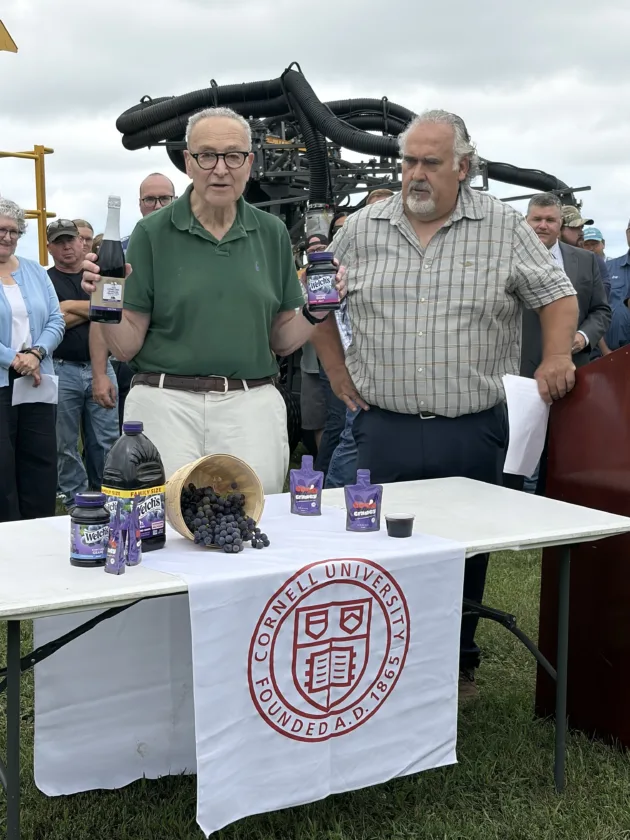
Senator Chuck Schumer promoted products made from locally produced grapes at an event on Monday in Portland.
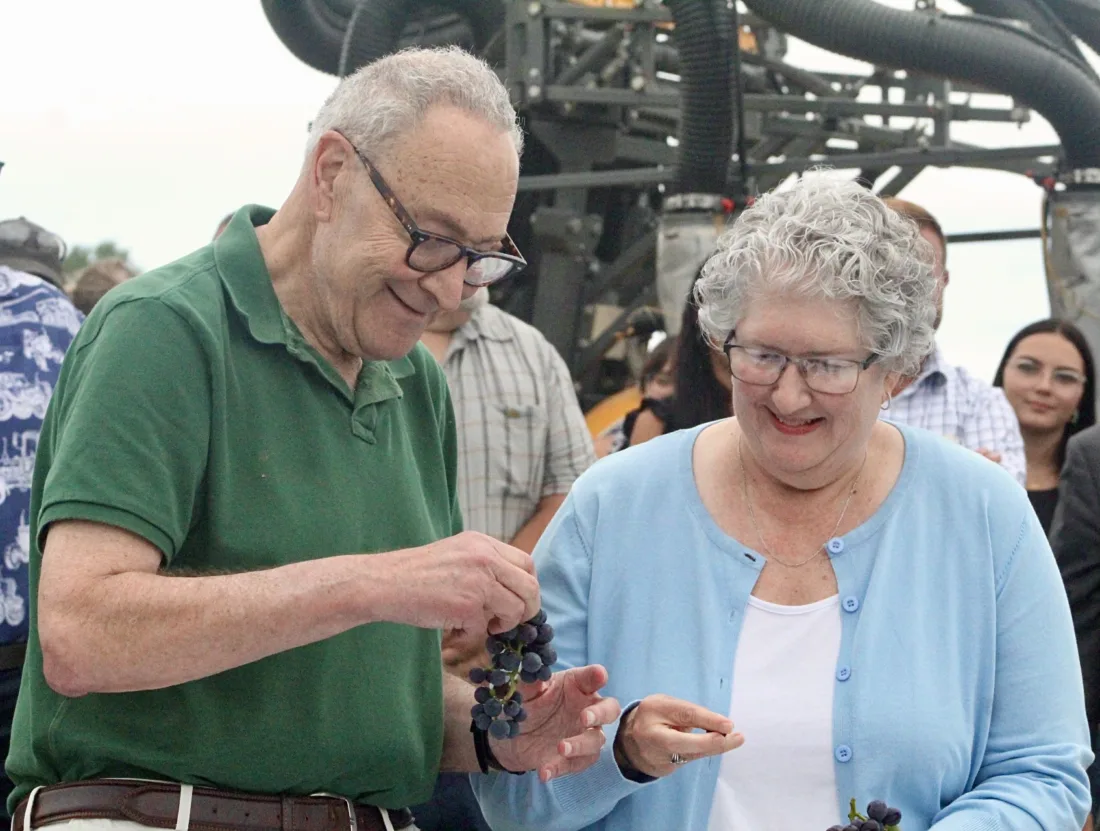
U.S. Senator Chuck Schumer tastes grapes produced in northern Chautauqua County on Monday afternoon alongside Wendy Oakes Wilson, New York Wine and Grape Foundation Board Chair.
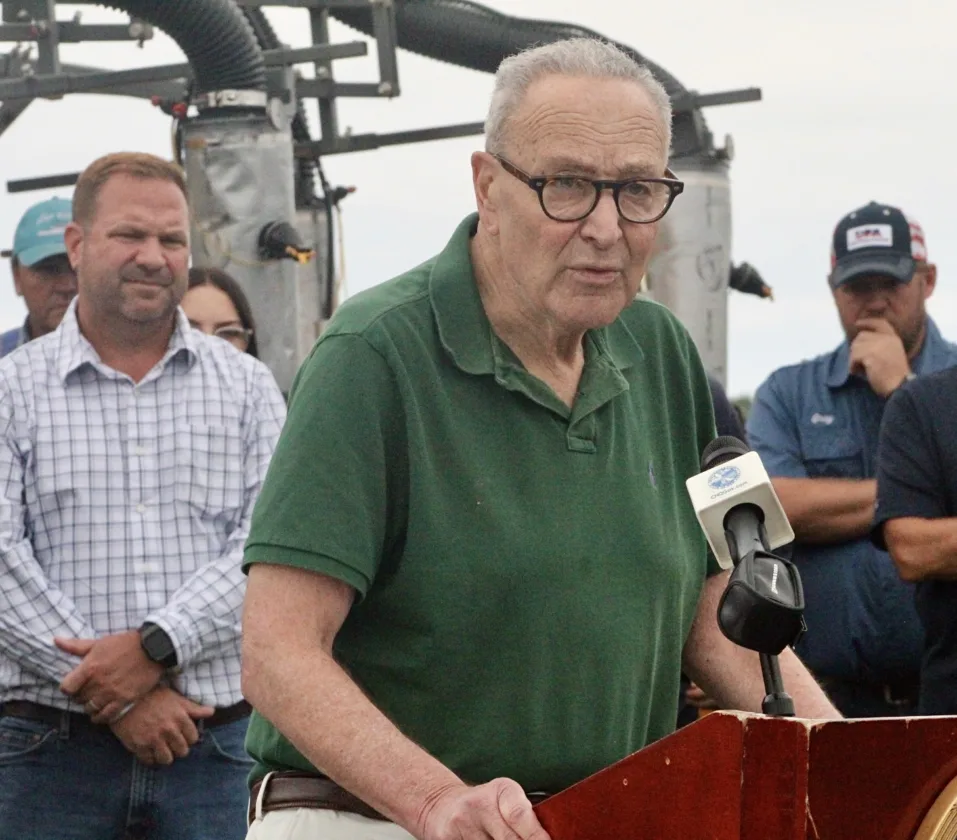
U.S. Senator Chuck Schumer spoke at the Cornell Lake Erie Research and Extension Laboratory in Portland on Monday to urge the USDA to purchase concord grape products for use by domestic nutrition programs across the country. P-J photos by Braden Carmen
Senator Chuck Schumer promoted products made from locally produced grapes at an event on Monday in Portland.
U.S. Senator Chuck Schumer tastes grapes produced in northern Chautauqua County on Monday afternoon alongside Wendy Oakes Wilson, New York Wine and Grape Foundation Board Chair.
U.S. Senator Chuck Schumer spoke at the Cornell Lake Erie Research and Extension Laboratory in Portland on Monday to urge the USDA to purchase concord grape products for use by domestic nutrition programs across the country. P-J photos by Braden Carmen
Trending
PORTLAND -- U.S. Senator Chuck Schumer came to Chautauqua County on Monday to take a stand with local grape farmers after they were dealt what he called a "heartless and cruel" blow from a major beverage producer that pulled its support earlier this year.
Refresco suddenly canceled contracts with more than 120 farmers across New York and Pennsylvania after they had already invested in preparing their vineyards for this season. In an attempt to right that wrong and support local grape farmers, Schumer is calling on the U.S. Department of Agriculture (USDA) to purchase the excess grapes from local farmers who were counting on the contracts they had in place with Refresco.
"I will do everything in my power to support our farmers," Schumer said. "The brutal, sudden, nasty cut-off by this company (Refresco) must not be allowed to stymie, to thwart, to reduce our great concord grape growing industry here along the shores of Lake Erie."
Schumer explained to the dozens of farmers and advocates in attendance that the USDA has the power to purchase products for nutrition programs, such as school lunches, with the utilization of Section 32 funds. Section 32 funds are provided by the Agricultural Adjustment Act of 1933 and used by the USDA to purchase agricultural products, which are in turn used for nutrition programs. These "bonus buys" have been used by the USDA in the past to stabilize agricultural markets, support communities, and deliver nutritious food to those who need it most.
A year ago, Schumer helped stabilize prices through a similar request through utilization of Section 32 funds, and with the cancellation of the contract with Refresco, the need for help from the USDA is even more significant this year.
"This area that grows concord grapes is a jewel for all of America. We must fight to preserve it," Schumer said.
Schumer said a variety of factors including the canceled contracts with Refresco, the rising costs of gas and equipment, tariffs, and uncertainty surrounding the industry have led some grape growers to consider abandoning their operations. Schumer said, "We can't let that happen. This is so vital, not just to the farmers and their families, but to the whole region."
Schumer turned to the crowd gathered behind him on Monday and pledged to use the power of his office as Democratic Leader of the United States Senate to influence the USDA to purchase the grapes produced in western New York.
"The USDA buying more grapes is a win-win-win. It's a win for our farmers; it's a win for hungry families; it's a win for our upstate New York economy," Schumer said. "We're going to win this fight."
According to the Cornell Cooperative Extension, Chautauqua County is the leading grape-producing county in the state and the largest grape-growing county in the nation outside of California. Every year, about 800 growers produce 150,000 tons or more of grapes on more than 22,000 acres on the Lake Erie Plain across western New York and northern Pennsylvania. The Lake Erie Grape Belt region supports approximately 2,000 jobs, contributes upwards of $300 million in economic impact, and supports a fruit and vegetable processing industry that employs over 5,000 workers.
Schumer touted his past successes with dairy farming and specialty crops support when he spoke to grape farmers on Monday. He turned to the crowd behind him and said, "I believe in our farmers, I really do. I will continue to fight for you because it's a very important industry for New York, and America."
Schumer was not alone in his stance. U.S. Senator Kirsten Gillibrand also called on the USDA to initiate a bonus buy of concord grape products from producers in the Lake Erie Grape Belt and New York's Niagara region. In a statement released on Monday, Gillibrand said, "Given current market conditions, now would be the opportune time for AMS to purchase concord grape juice. AMS bonus buys have shown to be a successful tool in stabilizing the market, reducing carryover inventory, and providing fresh juice to schoolchildren and families alike. Without USDA intervention, grape producers and local economies alike will be severely harmed."
Local leaders in the industry also spoke on Monday, including Bob Patterson, President of Chautauqua County Farm Bureau and President of Westfield Maid Cooperative, Inc.; Dr. Terry Bates, Director of Cornell Lake Erie Research and Extension Lab; Wendy Oakes Wilson, New York Wine and Grape Foundation Board Chair; Fred Johnson, Chautauqua County Legislator; and Chad Schofield, owner of Schofield Farms LLC, Westfield Ag and Turf, Affinity Agriculture LLC, and Repurposed Organics LLC.
Schumer concluded his comments on Monday afternoon with a direct statement about the grape farming industry in western New York as a whole.
"We've got to keep this industry going. We've got to keep it strong," Schumer said. "This is an industry that has survived. It's not like some of the industries that have left. They've stuck with us. We've got to stick with them."