
Lake getting higher marks as elodea fades from 2025 levels
Trending
Two familiar foes have been the focus of management work in Chautauqua Lake this summer -- nuisance plant growth and invasive species.
The Chautauqua Lake Partnership and Chautauqua Lake Association continue to lead the way on annual management operations as they work to address plant growth and improve usability. Working with applicator Ready Scout, CLP has performed four targeted herbicide treatments in 2026. On May 5, 80 acres were treated with Clearcast for invasive curly-leaf pondweed. Two treatments aimed at reducing invasive Eurasian watermilfoil were performed with ProcellaCOR, totaling 205.5 acres on June 17 and another 234.5 acres on June 29. Another 10 acres around the Celoron marinas were treated with Komeen for weeds and algae on June 17.
Due to the very intense growth of plants in the south basin in 2025, alliance members worked together over the course of the winter and spring to ready a new action plan if similar conditions repeated. The large masses of native elodea that choked out areas in 2026 have not returned. Alliance partners, aided by certified lake managers from GEI and Ready Scout, developed a plan to create navigation zones using herbicide treatments and mechanical removal, working in coordination with Department of Environmental Conservation officials to secure new permits. While the lake community did not need to implement this new approach in 2026 thanks in part to Mother Nature, the groundwork has been laid for future management when these challenges come back.
Plant harvesting, removal, and shoreline cleanup has been underway all summer by staff from the CLA and town of Chautauqua Mobitracs. Last week CLA reported that they have collected 246 truckloads accounting for nearly 5 million pounds of material. The Mobitracs and CLA equipment have moved across the lake in a regular schedule over the course of past months, posting work reports and upcoming work plans on Facebook. Capital investments by Chautauqua County and donations, CLA operations have been improved by several new pieces of equipment acquired over the off season.
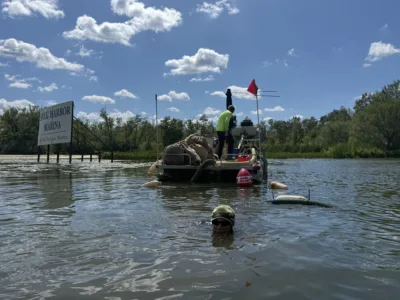
The partnership has also worked to address another invasive species problem – the algae starry stonewort. Grant funds secured by the towns of Chautauqua and North Harmony are currently being used to perform diver-assisted suction harvesting of the species at Prendergast Point and Ashville Bay. Integrated Lakes Management of Illinois returned to the lake in July after their first season on the water in 2025, resuming DASH near the mouth of Prendergast Creek before moving to the south basin in August. DASH is being performed in targeted areas and paired with larger bulk removal by the CLA and Mobitracs in order to reduce the size of these starry stonewort infestations. The work is monitored by staff from Everwild Land Trust, which is also conducting applied research to help understand what management tools work best.
State-funded watershed work continues to quietly chug along in the background, even as all eyes turn to the lake during the recreation season. The village of Lakewood recently broke ground on its Fairmount Avenue Constructed Wetland Project near the Save-A-Lot plaza. This water quality improvement project will install new stormwater management features as well as trees to help reduce flood risk in the area and improve water quality of the lake. In the town of North Harmony, a state grant is underway to engineer a new design for an aged culvert on Cedar Avenue. Greenman-Pedersen is assessing the existing culvert at that site and providing the town with recommendations for future replacement work.
The public is encouraged to learn more about what's happening on the lake at the upcoming Chautauqua Lake Public Information Session, which will be held at 5 p.m. today, Aug. 18, at The Village Casino in Bemus Point. DEC staff and GEI Consultants will join the alliance board for a panel discussion, and answer questions from the public. The CLA's Denim and Diamonds Gala will be held at 6 p.m. today at Ellicottville Brewing Company in Bemus (tickets required).
State funding for projects discussed in this article is provided from the Environmental Protection Fund administered by state Department of Environmental Conservation.