
Lawmaker proposes self-checkout discount
Trending
A state lawmaker wants to require customers to receive a 10% discount when customers use self checkout kiosks.
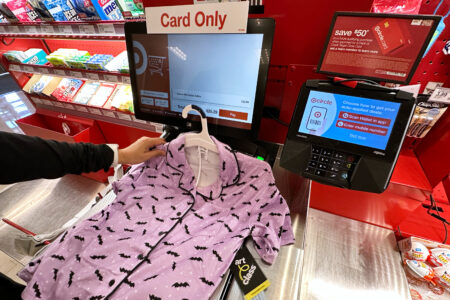
The bill (A.11501) was introduced late in the legislative session by Assemblywoman Nikki Lucas, D-Brooklyn. It didn't move out of committee before the end of the session. Lucas said the legislation is designed to promote consumer fairness by requiring retail stores and supermarkets that utilize self-checkout systems to provide customers with a discount for performing tasks traditionally completed by paid employees, including scanning, bagging, and processing purchases. She said there are labor and cost savings generated through self checkout kiosks that should be passed on to customers.
"Retail businesses increasingly rely on self-checkout systems to reduce staffing and operational costs by shifting responsibilities traditionally performed by employees onto consumers," Lucas wrote in her legislative justification. "Since customers are effectively completing portions of the checkout labor themselves without compensation, providing a mandatory discount helps ensure fairness, acknowledges consumer participation in store operations, and allows the public to share in the financial savings created by self-service technology."
Lucas isn't the only state lawmaker across the country suggesting such legislation. In Rhode Island, early drafts of legislation suggested a 10% discount for the use of self checkout kiosks before being amended focusing on limiting the number of self-checkout lanes and mandating increased human staff. Legislation proposed in Ohio and Connecticut emphasize suggesting requiring one employee for every two or three kiosks and item count limits rather than customer discounts.
Some states – including New York – have floated legislation that would place limits on self checkout kiosks in efforts to curb shoplifting. Such legislation has been discussed in California, Connecticut, Massachusetts, New York, Ohio, Rhode Island and Washington.
In February, California Sen. Lola Smallwood-Cuevas introduced SB 442, which would have, if passed, required retailers with self-checkouts to have at least one manual checkout station staffed by an employee who is available at any given time to help a customer at a station. The bill also would have established a policy limiting self-checkouts to purchases of no more than 15 items. Smallwood-Cuevas told USA Today in April she is no longer pushing the bill forward. A trio of Connecticut lawmakers recently introduced Senate Bill 438, which, if passed, would require grocery stores with self-checkout stations to have one employee-manned checkout station for every two self-checkouts. The bill also would prohibit grocery stores from operating more than eight self-checkouts at one time. A similar bill (House Bill 7290) has been introduced in Rhode Island by Rep. Megan Cotter.
Earlier this year, New York City Council member Amanda Farías introduced an amendment to the city code that would require pharmacies and food retailers to impose a 15-item maximum on self-checkout stations. The code also would require stores to have one employee for every three self-checkouts.
On April 1, Ohio Sen. Thomas F. Patton introduced SB 415, which would, if passed, require grocery stores with self-checkouts to operate at least one staff-manned checkout, assign one employee per three self-checkout stations and limit self-checkout purchases to 15 items. SB 415 also would prohibit the sale of alcohol, tobacco and items with theft-deterrent devices affixed to them at self-checkout stations.