
Capturing A Crisis
Documentary photographer to begin housing insecurity project in Jamestown next week By John Whittaker

Karen Lippowiths, pictured, will begin a 7,000-mile, 30-city project documenting housing insecurity that will begin Monday in Jamestown.
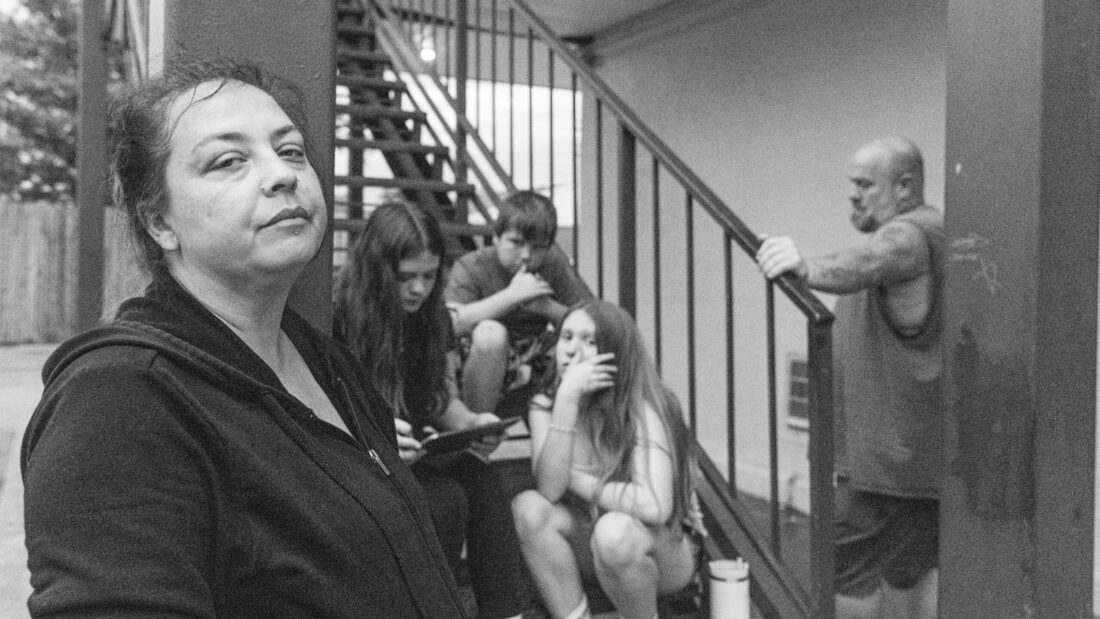
Pictured is one of the images Karen Lippowiths captured in Louisville as part of Extended Stay, a project Lippowiths is expanding to include 30 cities along a 7,000 mile route that will include Jamestown. Submitted photo by Karen Lippowiths
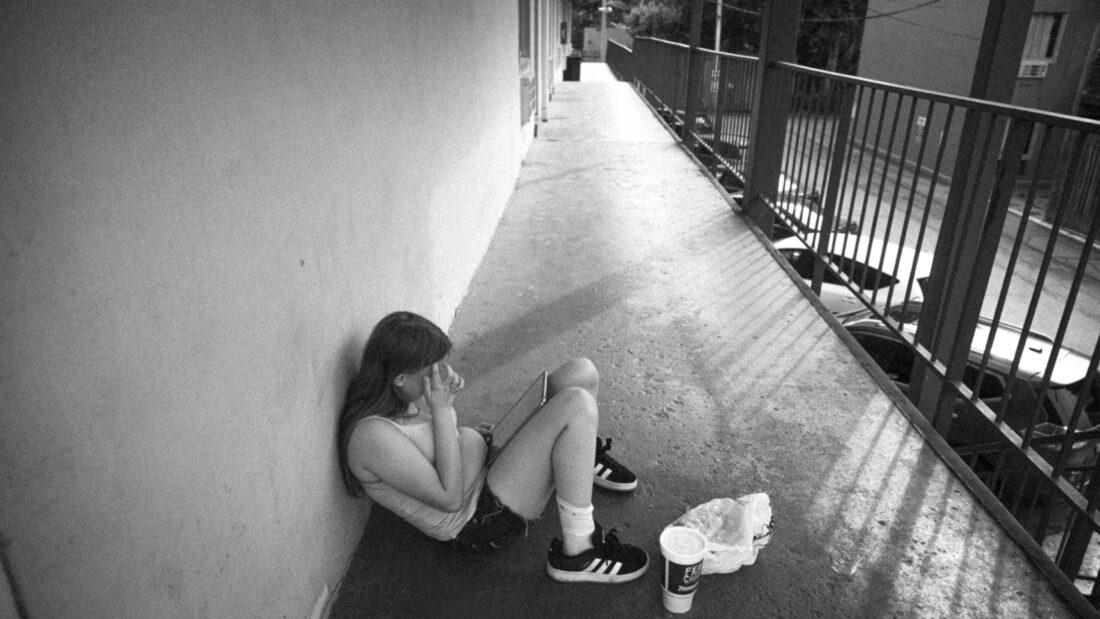
Pictured is another one of the images Karen Lippowiths captured in Louisville as part of Extended Stay.
Karen Lippowiths, pictured, will begin a 7,000-mile, 30-city project documenting housing insecurity that will begin Monday in Jamestown.
Pictured is one of the images Karen Lippowiths captured in Louisville as part of Extended Stay, a project Lippowiths is expanding to include 30 cities along a 7,000 mile route that will include Jamestown. Submitted photo by Karen Lippowiths
Pictured is another one of the images Karen Lippowiths captured in Louisville as part of Extended Stay.
Trending
A documentary photographer's 7,000-mile, 30-city project documenting housing insecurity will begin Monday in Jamestown.
Karen Lippowiths is in the midst of her newest project, Extended Stay, an exhibit that will cross 13 states and 30 cities across Appalachia, from New York to Mississippi. As part of the work, Lippowiths will live and work in low-budget motels and hotels, documenting what Lippowiths described as America's shadow housing system and the people relying on temporary rooms, long-term stays, shelters, and other unstable arrangements as permanent housing costs continue to increase.
Lippowiths told The Post-Journal she selected Jamestown and Chautauqua County because it is among the Appalachian Regional Commission's group of communities defined as "at risk" and facing economic distress.
"I chose Jamestown and Chautauqua County because they sit within the Appalachian Regional Commission's designated county of “distress” while also reflecting many pressures I'm seeing across post-industrial communities like my home of Detroit: limited affordable housing, poverty, aging infrastructure, temporary shelter systems, and people living in arrangements never meant to become permanent," Lippowiths said Thursday. "I also have a personal connection to the Southern Tier, having lived in Ithaca, where I will travel after Jamestown. I'm interested in how housing insecurity appears in smaller cities and former industrial communities, not only in the places people traditionally associate with 'Appalachia.' Jamestown will be my first official stop along my 7,000-mile, 30-city route."
The project will culminate in a large-scale immersive exhibition in Huntington, West Virginia, planned for October 2027. The exhibition is supported by Coalfield Development Corporation, West Edge and Recreate Appalachia. It will combine photography, oral history, sound, recreated motel-room environments, and interactive elements. Lippowiths began Extended Stay in 2025 while documenting housing insecurity in Santa Fe, New Mexico, and later in greater depth in her home region of Detroit. Over six months, she closely documented the forced evacuation of the historic Detroit Leland Hotel, where hundreds of residents were displaced and denied access to personal property, pets, and essential items for months. She continues to support the Detroit Tenants Union and document the stories of those affected.
"What moved me to expand Extended Stay was the realization that motel living and temporary housing are not isolated emergencies," the photographer said. "They are part of a much larger shadow housing system. I began documenting housing insecurity in 2025, including work in Santa Fe and Detroit, and quickly understood that the crisis was not about one city or one building. It was about the systems people enter when stable housing disappears.
What I have learned so far is that housing insecurity rarely looks like one thing. Many unhoused people work, often multiple jobs. Many are displaced from “somewhere else” for one reason or another. I met Michael Spencer in a Days Inn in Huntington, W.V. He is a disabled amputee veteran living in the Philippines but has been in the Days Inn since November awaiting VA medical care. Motels, shelters, and weekly rooms are often treated as invisible places But for too many people, they have become a permanent way of life. This project is about making those hidden lives visible."
The cost of housing has been a recurring theme in Jamestown in recent years. Those who have found themselves homeless, a population that has exploded in recent years, have found themselves housed in hotels throughout the county. Two of those hotels have been either fully or partially closed this year due to uninhabitable conditions, while the condition of hundreds of houses in Jamestown over the past two decades has led to their demolition. Rents for remaining rental properties have increased exponentially over the past decade, with incomes or programs meant to help those struggling to afford housing not keeping pace.
During her travels, Lippowiths seeks to connect with residents willing to share their stories, as well as housing advocates, tenant organizers, service providers, motel owners, outreach workers, journalists, and community members who understand the local housing landscape.
"Hotel rent is almost always unaffordable, creating a subterfuge effect that traps people," Lippowiths told The Post-Journal on Thursday. "I met a couple, Natalie and Chris, who spend $4,000 a month in a Wyndham in Santa Fe, N.M., leaving almost nothing for food, transportation, or daily expenses, let alone savings to get ahead. I also have learned that when I try to book low-budget hotels, many are already full. Some are full with voucher placements; others are full with long-term residents. That pushes people up the price chain into more expensive rooms, making transition even harder."
Lippowith's time in Jamestown will include visits to voucher hotels, working with Bruce Beahr at the UCAN City Mission and a meeting with Scott Linden at Chautauqua Opportunities Inc., the organization which houses the Chautauqua County Homeless Coalition. Lippowith said she is also interested in meeting and hearing the personal stories of city residents. Those interested can email karen@karenlippowiths.com or call 248-320-1943.
While the exhibit will begin in Huntington, W.V., in October 2027, Lippowiths said those who are interested can follow her journey online at www.karenlippowiths.com or www/extendedstayproject.com.and, potentially, see the exhibition if it becomes a traveling piece.
"I also hope there will be opportunities to exhibit the work and bring the installation to other locations," Lippowiths said. "People can follow the journey through Room Service, a subscriber-based part of the project that provides exclusive access to field notes, images, dispatches, and a more complete art experience as the work unfolds. The project is ambitious, and funding will be essential to complete the travel, production, installation, and public programming at the level the stories deserve."
ABOUT KAREN LIPPOWITHS.
Karen Lippowiths is a Southeast Michigan-based documentary photographer with 21 years of PPofA award-winning professional photography experience. Her long-term projects focus on American social and civil rights issues, including housing insecurity, labor, mental health, addiction, and the precarity of the American dream.
For interviews, community contacts, pitch deck, and project inquiries:
Karen Lippowiths
248 320 1943
karen@karenlippowiths.com
karenlippowiths.com/extended-stay-appalachia