
Study finds C/S/P merger benefits districts, is feasible
Trending
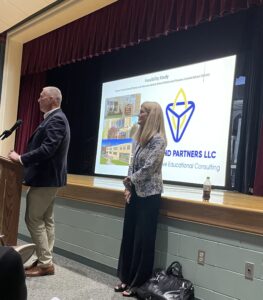
PANAMA -- The Clymer, Sherman and Panama communities were given their first opportunity to hear about the findings and recommendations from the merger study Tuesday night during a joint school board meeting between the three school boards held in Panama Central School's auditorium.
Dan White and Lynda Quick from White and Partners, the consulting team that did the study for the three school districts, began with presenting some information that was also shared during the previously held community forums, including facts such as the planned timeline, purpose of the study and enrollment trends. For the 2024-2025 school year enrollment in Clymer was 317 students, Panama had 382 and Sherman had 390. Total enrollment for all three districts has dropped 52% over the past 30 years. The projected enrollment of the merged district would be about 1,030 to 1,050 students, though it is still projected to drop as the years go on and by the 2030-2031 school year combined enrollment is projected to be closer to 920 to 980.
Other familiar information discussed before the findings included the projected $71,478,395 in merger aid that would be given to the district over the next 14 years.
The merger study itself is 150 pages long, and White and Quick presented on 19 of the key findings and recommendations, beginning with what they said was the fundamental finding that a merged district between the three schools is feasible and benefits all districts.
Some findings and recommendations surrounding enrollment include that a merged district is still expected to see a decline over the next five years, and the merged district should annually renew their enrollment patterns. It was also found that all three schools have nearly identical grade configurations.
The recommendation is that the newly formed school district should operate a kindergarten through sixth grade and seventh through 12th grade middle/high school grade configuration, and that a kindergarten through sixth grade configuration should be maintained into the future at all three facilities until it is deemed no longer feasible. The recommendation is also that the seven through 12 grade middle/high school be housed at Panama's campus.
"We've been asked before about why a seven through 12 program, because a seven through 12 program allows for the most efficient use of staff and maximizing student programing, which with the survey results when we dove down into the results of the survey maximizing student opportunities was the highest priority consistently across all three districts," Quick said.
Other findings and recommendations touched on include more academic opportunities and student offerings in a merged district, the curricular differences between the three schools and how to address those, and the merging of athletic teams and extracurriculars. It was noted that the three districts began sharing athletic teams about 10 years ago, and a merged district could offer more athletic opportunities.
"We heard from the students, they want soccer, they want wrestling, they want more opportunities," Quick said. "In a merged district we would recommend the new board look at how they can do so, once you move all of your seven through 12 programming to Panama."
For clubs and non-athletic extracurriculars, Quick said the recommendation is to continue all that are currently offered initially, adding that the students expressed wanting for more opportunities here as well, and those can be adjusted with time as needed.
White then addressed findings when it comes to facilities, discussing the building aid ratio and capital reserve funds, and housing for grades seven through 12 in one facility, and keeping kindergarten through sixth grade in each respective facility at least initially. Moving seventh through 12th grades into one facility will need to occur no later than the second year of the merger. The recommendation that Panama's campus be considered for the middle/high school is due to Panama having two full-sized gymnasiums, a natatorium, full sized auditorium, the school's classroom configuration, locker capacity, and the fact that the facility once housed more than 1,000 students.
Other facility recommendations included considering using all three facilities to house kindergarten through sixth grade, along with "podding" certain seventh through 12th grade programs to continue to take advantage of the opportunities provided by each individual campus. Transportation wise, a merged district would have to decide on one facility to house all transportation services, and plan for other aspects such as the potential for electric buses. It was also noted that students should not expect a bus ride of longer than an hour, with the longest bus ride currently in the districts being 50 minutes, and that more buses and bus drivers could be hired and purchased to help with that as well.
Other items touched on in the presented findings and recommendations included food services, teacher and staff salaries, administration, staffing sizes, and incentive aid. It was also noted that each district's tax rate is expected to decrease in the short term with the use of Reorganizational Incentive Aid.
Following some questions from the board, BOCES Superintendent David O'Rourke spoke briefly on next steps. Individually, all three boards will hold a meeting on July 13 with an official resolution saying that they want to continue forward with the merger process, and what method they would choose for the next required step to gauge community support. Public meetings will then follow, with the first happening in Sherman on August 18, followed by Panama on September 16 and Clymer September 24. The official statutory vote will be held in December.
The full 150 page study along with Tuesday night's presentation can be viewed on CSPhub.org. Questions can continue to be emailed as well to CSPstudy@e2ccb.org.