
‘Back To Being Me’: Columbus doctor’s treatment helps relieve city woman post-accident symptoms
Columbus doctor’s treatment helps relieve city woman post-accident symptoms
Trending
Seven years ago, Anne Dolce's life took a turn after a car accident on her way home from work.
Since then, Dolce has faced multiple difficult symptoms from a major head injury, and has dealt with debilitating symptoms until recently.
Seven years ago on May 8 Dolce was on her way home from work as Panama Central School's band director on the I-86 exit ramp, when another car came down the ramp at full speed and crashed into her. The other driver admitted to being distracted, and in the accident Dolce hit her head hard on the head rest resulting in a severe concussion. During the healing process, Dolce developed post concussive disorder in which her brain made different neural pathways rather than using the ones she was born with. Because of this, Dolce said she felt like she was living in someone else's body. At times, Dolce told The Post-Journal recently, she thought, "I wish I could find my way back to being me."
"I had a very difficult time with my vision," Dolce said. "I had a difficult time remembering things. I had trouble talking. I couldn't move certain parts of my body on command."
Dolce went through several different types of intense therapy, including cognitive therapy, vision therapy, vestibular therapy and occipital therapy. After three years, and although Dolce made significant progress, these therapies ended as there was nothing else that could be done to get her back to where she was before the accident.
During this time she also had to retire as Panama's band director because of the symptoms.
"I was the band director at Panama for 30 years," Dolce said. "It was a program I was truly passionate about, and it was heartbreaking to have to retire when I wasn't ready."
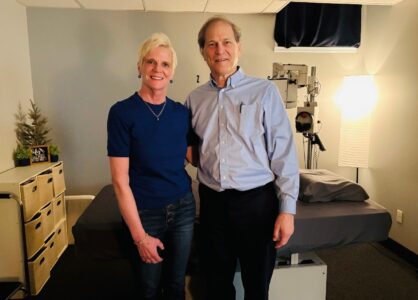
Last summer, Dolce had a major setback and was sent to Dr. Douglas Villella for vision therapy in Erie, Pa.. Villella later referred Dolce to Dr. Steven Curtis, a neuro-optometrist in Columbus, Ohio. Curtis works to bring people with concussions and post concussive disorder back to how they were before.
The treatment is a 12-day program known as MST, or Multi-Sensory Training. For more information on Curtis's multi-sensory training visit mst4brains.com.
"Multi-sensory stimulation is a term that means we're using different stimuli to address pathways in the brain, but we're using those stimuli simultaneously, not individually," Curtis said. "That's what we start to learn as babies, as infants, with child development. You have to learn how to be in the world with all of this stimulation going on and that's difficult for some kids. That's difficult for patients who've had brain injuries."
Different types of brain injuries can result in problems with multi-sensory processing, Curtis said. This type of therapy helps the concussed brain return to doing its job, thinking and directing actions. It involves using different colors of lights, music and motion to help the brain return to its original neuro pathways. MST also works with patients with ADHD as well, something that Dolce developed as a result of her head injury.
"Before the treatment I was dependent on prism glasses for vision and balance,” Dolce said. "Now I am back to how I was before. My balance is back, my vision is back, my memory is back and I do not have ADHD. I am truly blessed that I had the opportunity to participate in this treatment."
Dolce added that there are many out there who have suffered from a head injury or who have ADHD. Without her regression back in August, she said she would not have known this treatment existed.
Now, Dolce said, she is working to be an advocate for this treatment and to help others in similar situations. When she returned from Columbus, people who knew Dolce before going through the MST therapy, said they were "blown away" by how much better and calmer she was. Dolce is back to 100% after her treatment, and she noted Curtis "wrote the book" for this type of therapy.
"This was a life-changing opportunity and I've had people reach out to me for more information," Dolce said. "I really just want to help other people and let them know that if they have ADHD, suffered a head injury, that there is help so that they can once again lead a healthy, normal life."
MST helps guide the brain to relearn how to use the multisensory neuro pathways that have been compromised by the brain injury. There are now 32 locations providing MST across the United States and more are coming. For more information on Curtis's Optometric multi-sensory training visit visit mst4brains.com. Curtis can be contacted directly at eyeluxintegrations@gmail.com.