UPMC Chautauqua Hosts Trainings For Rare Birth Emergencies
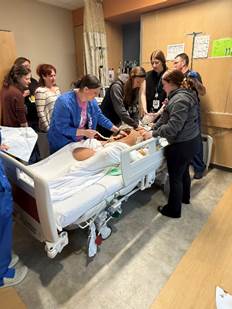
Members of the UPMC Chautauqua Women’s and Maternity Care Center are pictured after taking part in Amniotic Fluid Embolism (AFE) simulation training sessions. Submitted photo
With maternity care access changing across rural communities in the region, UPMC Chautauqua is working to strengthen its Women’s and Maternity Care Center through advanced training designed to prepare teams for the most complex and rare obstetric emergencies.
UPMC Chautauqua hosted two Amniotic Fluid Embolism (AFE) simulation training sessions recently in collaboration with UPMC Hamot’s Anesthesia team. The hands-on simulations are designed to mirror a real-life event and allow teams to practice rapid recognition, coordination, and response in a controlled environment.
Amniotic Fluid Embolism (AFE) Awareness Day was held March 27. Although Amniotic Fluid Embolism is rare, it is often fatal and remains a leading cause of maternal morbidity and mortality in the United States, with reported mortality rates ranging from 20% to 40%. It impacts one out of 40,000 births, where an acute and rapid collapse of the mother happens around the time of birth due to an anaphylactic-like reaction to amniotic fluid in the maternal circulation.
“For events that are high-acuity but low-frequency, simulation is how we build muscle memory as a team,” said Amanda Hagg, unit director, maternity, at UPMC Chautauqua. “These trainings sharpen our clinical response and strengthen communication under pressure–so we can deliver seamless, coordinated care for moms and babies when every second counts.”
The simulations will train participating staff to quickly recognize signs and symptoms of intrapartum crisis, assist with an emergent bedside Cesarean section, implement evidence-based ACLS guidelines, and demonstrate competency with resuscitation medication administration and management.
“As access to maternity services changes across rural communities, it’s essential that families know they can rely on experienced teams who are prepared for both routine births and the most critical situations,” said Tracy Gates, president, UPMC Chautauqua. “Our focus is on being ready, coordinated, and responsive — every hour of every day.”
This year, UPMC Chautauqua has worked closely with neighboring providers to help ensure continuity of obstetric care for families navigating the closure of labor and delivery services at Warren General Hospital. More than 75 patients have transitioned their care to UPMC.
To help with the transition, UPMC Chautauqua partnered with Warren General Hospital leadership to support patients through coordinated referrals, medical record sharing, and accessing care seamlessly.
“Working closely with leaders at Warren General underscores how interconnected our communities are,” Gates said. “This isn’t about one organization stepping in. It’s about health care providers working together to make sure patients do not feel the impact of system changes during one of the most important moments of their lives.”
Top stories

Chautauqua’s Got Talent Opens 16th Season At Spire Theater
Legislator Wants Elected Officials’ Salaries Disclosed
MAYVILLE — In 2024, the Chautauqua County Legislature, without any Democratic support, approved significant pay ...
UPMC Chautauqua Hosts Trainings For Rare Birth Emergencies

Scott Forster Appointed Police Chief At Voting Session

City Woman Faces 17 Charges Of Child Welfare