Regulations Annulled: CLPOA, CLP Win Freshwater Wetlands Act Lawsuits
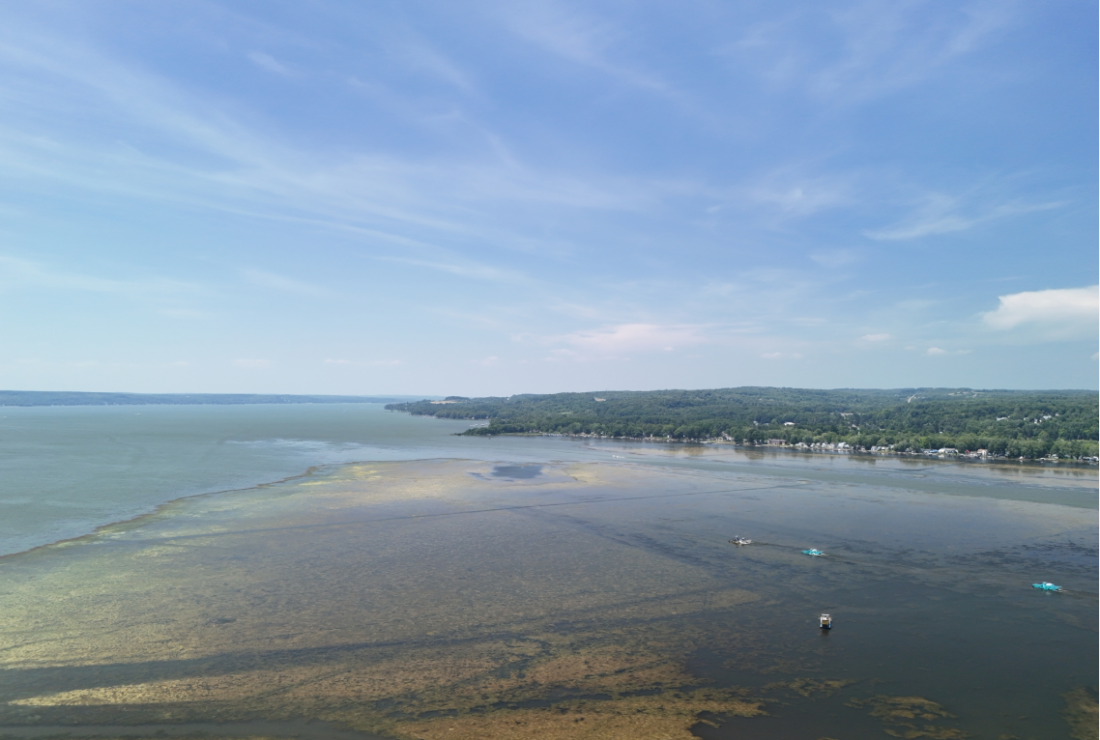
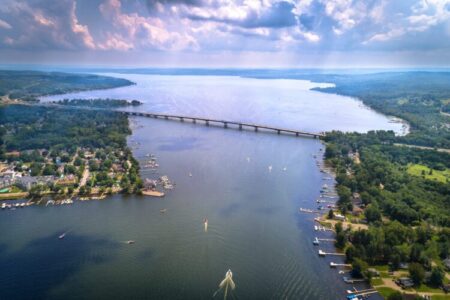
The south basin of Chautauqua Lake is pictured last summer. P-J file photo by Sara Holthouse
A lawsuit filed by the Chautauqua Lake Property Owners Association has resulted in the annulment of the state DEC’s Freshwater Wetlands Act regulations.
Of all the arguments made by the local organization, State Supreme Court Justice Richard Platkin said the DEC did not do its due diligence on issues raised by organizations like the CLPOA. There are four total lawsuits that were part of a consolidated oral argument on Jan. 30. The first lawsuit was filed by the Chautauqua Lake Property Owners Association, followed by the Chautauqua Lake Partnership. Lawsuits were also filed by the village of Kiryas Joel and the town of Palm Tree as well as the Business Council of New York state with seven co-plaintiffs. The suits raised many of the same issues, though the two Chautauqua County lawsuits raised issues specific to Chautauqua Lake.
“Having concluded that DEC did not adequately identify the relevant areas of environmental concern, did not take a ‘hard look’ at them and did not make a reasoned elaboration of the basis for its determination of non-significance, the court concludes that the subject action – the promulgation of the new Part 664 regulations – must be annulled for noncompliance with (the State Environmental Quality Review Act),” Platkin wrote in his decision, which was released Tuesday to parties in the lawsuit but not uploaded to the state court website until Wednesday afternoon.
Platkin’s decision doesn’t annul the 2022 Freshwater Wetlands Act, only the DEC’s Part 664 regulations that implement the 2022 law. Part 663 is how the DEC established the procedural requirements and standards for the use of regulated wetlands and issuance of permits. Part 664 established standards and procedures for classifying wetlands.
Platkin said the DEC’s completion of a short-form Environmental Assessment Form indicated there would be no impact, or a small impact, across 11 different dimensions that included whether the new regulations would result in a change in the use or intensity of the use of land. DEC officials had said the new Part 664 regulations would increase the amount of regulated wetlands that would lead to a reduction in adverse impacts on the wetlands as more projects were required to avoid, minimize or mitigate impacts on wetlands. Platkin said the DEC received public comments identifying specific areas of potential environmental concern with the new part 664 regulations in the Freshwater Wetlands Act update, including the prospect of urban sprawl and other growth-inducing impacts; impact to aquatic ecosystems, algae blooms and invasive species; effects on urban communities that included sprawl; and growth-inducing impacts.
“Part 664 affects millions of acres of freshwater wetlands, and DEC’s discretionary regulatory choices – including the blanket Class II designation for urban wetlands, the categorical 100-foot buffer zones and extended adjacent wetlands of variable size – have the potential to work significant changes through alteration of development patterns, land-use intensity and/or the capacity of affected lands to support existing uses,” Platkin wrote. “Nothing in the Short EAF indicates that DEC identified any of these potential environmental concerns as relevant areas warranting a hard look. The Short EAF’s analysis rests entirely on the narrow premise that expanded wetland protection is inherently beneficial to wetlands, and there is no indication that DEC considered anything other than that objective when it determined that Part 664 had no potential for adverse impacts.”
The DEC had argued that the “speculative environmental consequences” raised by the CLPOA, Chautauqua Lake Partnership and the other two plaintiffs weren’t sufficient to establish a SEQRA violation because courts had previously held that an agency doesn’t need to investigate every conceivable environmental problem. Instead, the DEC argued, agencies can use discretion selecting which environmental issues are relevant. Platkin disagreed with the DEC’s interpretation, saying the DEC was obligated to identify and examine the foreseeable consequences of its discretionary regulatory choices when expanding oversight over millions of acres of land. The DEC also argued that freshwater wetlands permits remain subject to the State Environmental Quality Review Act, so site-specific adverse impacts arising from the permits can be more meaningfully examined than if they were handled under a broad-scale assessment of the new Part 664 regulations.
“But permit-stage review is limited to assessing whether a particular project will have significant impacts on particular wetlands,” Platkin wrote. “Review on a project-by-project basis will not, and cannot, assess the cumulative effects of the new regulatory framework on development patterns, land-use intensity and community character throughout the state. And some of the potential adverse impacts may be felt on non-wetlands, which are not subject to Part 663.”
While Platkin did not find that the DEC usurped state legislative authority, Platkin said the DEC’s Part 664 regulations did make regulatory judgements that should have fallen under SEQRA review. These areas include the 100-foot buffer zone around all freshwater wetlands, the numeric criteria to implement the wetlands of unusual importance categories and extension of a Class 2 designation on all urban wetlands without regard to individual characteristics.
Platkin ruled petitions in cases filed by the Chautauqua Lake Partnership, village of Kiryas Joel and Business Council of New York State were also granted on SEQRA violations – though other contentions raised by the plaintiffs were denied. The Chautauqua Lake Property Owners Association, town of Ellery, landowners and two business associations raised five challenges: that the Part 664 regulations were adopted in violation of the State Administrative Procedure Act, that the 2022 Amendments and Part 664 regulations violate the due process rights of landowners; that the Part 664 regulations are arbitrary and capricious; that Part 664 improperly delegates regulatory authority to private actors; and that the 2022 Amendments and Part 664 violate Home Rule principles.
The Business Council of New York State lawsuit as well as the Kiryas Joel lawsuit alleged that the Part 664 regulations were not adopted in compliance with the State Environmental Quality Review Act (“SEQRA”);
that the Part 664 regulations were not adopted in compliance with SAPA; that the 2022 Amendments and Part 664 regulations are unconstitutionally vague; and the Part 664 regulations are arbitrary and capricious.
The fourth case, brought by the Chautauqua Lake Partnership and three local landowners, alleged the Part 664 regulations are arbitrary and capricious; the regulations were adopted in violation of SAPA; the 2022 Amendments and Part 664 are void for vagueness; certain aspects of the 2022 Amendments and Part 664 regulations constitute an improper delegation of authority to DEC; and (v) the Part 664 regulations were adopted in violation of SEQRA.
Platkin ruled in favor of only the SEQRA violations when annulling the Part 664 regulations while dismissing the other challenges.
Top stories
Regulations Annulled: CLPOA, CLP Win Freshwater Wetlands Act Lawsuits
Department Of Public Works Uses Strategic Approach For Equipment, Infrastructure Needs
In both the 2025 and 2026 budgets, the city of Jamestown made the decision to limit new capital projects and ...
Community Helping Hands Looks Toward Future
Celebrating Again: Historical Series Commemorating Lucille Ball Movie, Homecoming
CLPOA Lawsuit Results In Annulment Of Freshwater Wetlands Act Regulations