
Local Lawmakers Back Rural Suicide Prevention Council
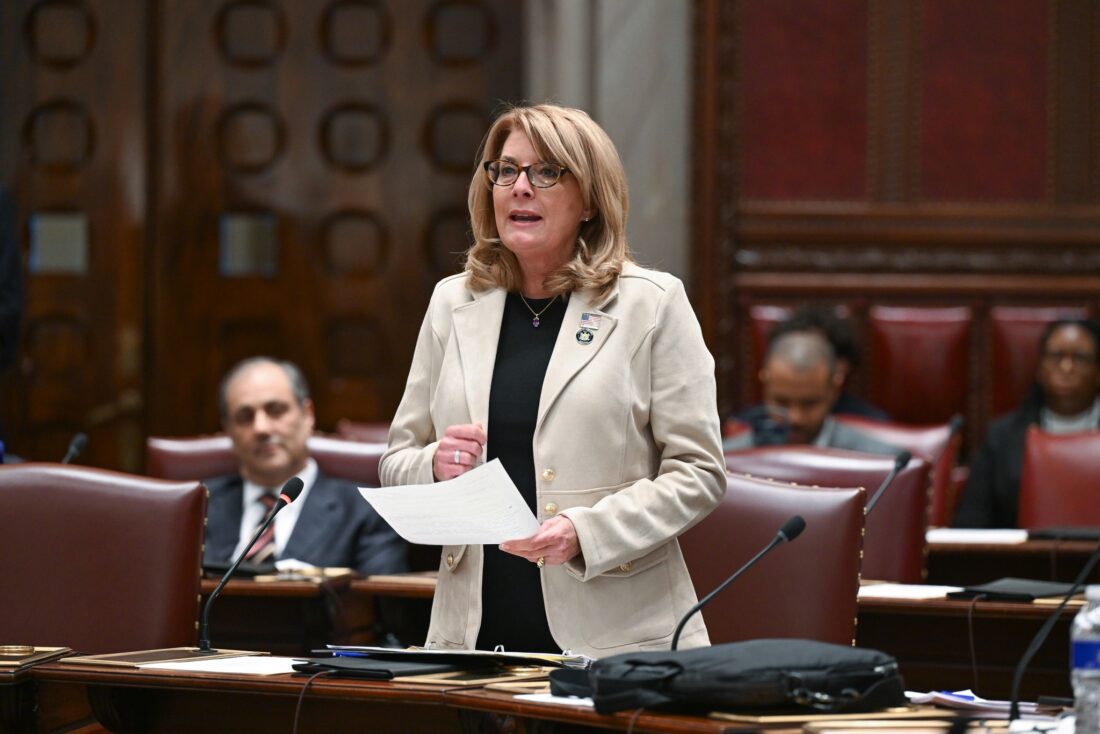
Senator Pamela Helming, R-Canandaigua, who introduced the bill in the State Senate.
For multiple years now, state lawmakers have pushed the idea to create a rural suicide prevention council to address increasing rates of suicide in rural counties.
While the bill has previously been vetoed by Gov. Kathy Hochul, who cited fiscal and duplication concerns as the reason, advocates for the bill have once again argued the importance of advancing these protections and resources in rural areas.
The bill was initially introduced this year on Jan. 29, by Senator Pamela Helming, R-Canandaigua. Alongside Helming, 12 other Senators from across the state co-sponsored the legislation, including Sen. George Borrello, R-Sunset Bay. The legislation is proposing the creation of a council that would include the state commissioner of mental hygiene or a designee, the state health commissioner or a designee, the state commissioner of agriculture and markets or a designee. Of the remaining 12 people, four will be appointed by the governor, three will be appointed by the Speaker of the Assembly, three will be appointed by the Temporary President of the Senate, and one will be appointed by the minority leaders from the Senate and Assembly.
“In 2017, the Centers for Disease Control released data from 2001-2005 which showed that rural counties had higher rates of suicide than metropolitan counties. Presently, suicide is the tenth leading cause of death among Americans with over half a million suicides occurring during the survey period,” Helming wrote in the legislative justification. “The rise in suicide rates is not attributable to one factor but instead to a number of factors. Increasing rural suicide may be the result of economic insecurity, social isolation, a dearth of mental health professionals, higher levels of alcohol and substance abuse, weakened social support, and many other factors.”
Chautauqua County has been no exception to the high suicides rates that are present in many rural communities. According to the 2026 COI Community Needs Assessment, the age-adjusted rate of hospitalization for self-inflicted wounds is 8.5 per 10,000 people in the county, in comparison to the statewide rate of 5.6 per 10,000. The hospitalization rate for self-inflicted injuries is even greater for those aged 15-19 in the county, with that rate being 24.4 per 10,000 in comparison to the statewide rate of 13.7 per 10,000. Finally, the assessment stated that the mortality rate for suicides in the county is 12.9 per 100,000 individuals, compared to 9.7 per 100,000 for the state.
The assessment found the county not only has a higher rate of suicides and attempts, but also a higher rate of mental and behavioral health problems as a whole.
“According to the Disparity Impact Statement report for 2022-2026 released by the Chautauqua County Department of Mental Hygiene, there are an estimated 19,000 county residents (18.9% of adults) who have a serious mental illness (SMI), substance use disorder (SUD), or both. Chautauqua County markedly surpasses regional and state rates for adult behavioral health hospitalizations (88.4 per 10,000 population vs. 52.7 and 60.6, respectively) and youth behavioral health hospitalizations (70 vs. 24.3 and 25.5 respectively) (Chautauqua County Department of Health and Human Services, 2023),” according to the assessment.
These factors, while not necessarily leading to suicidal thoughts or actions, may be a heavily contributing factor to a heighten suicide rate in this rural area. Regardless of seriousness of the problem the task force that would be created by this legislation would do the same for all rural communities, examine the epidemic of suicide in rural New York and then create a comprehensive plan to address the problem.
“A rural suicide prevention council is a laudable idea that has previously passed the state legislature only to be vetoed by the Governor,” stated Assemblyman Andrew Molitor, R-Westfield. “This bill would work to identify rural suicide causes and implement policies and programs to prevent suicide. Of course, one can’t help but notice the obvious hypocrisy with our state, that we spend money and time trying to prevent suicide while assisting suicide to our most vulnerable citizens, the terminally ill. Rather, our position should be consistent. We should do all we can to prevent suicide. This bill supports that position.”
The legislation has a long history in the state legislature, having been introduced every year back to 2021. Though the legislation would pass both the Assembly and the Senate in 2024, Gov. Kathy Hochul would veto the bill in November of that year. Hochul stated that the decision to veto the bill came from concerns over the fiscal burdens that could come along with the legislation, while also having cited that existing programs may cause redundancy. After the most recent reintroduction during this current session, the bill would be referred to the Assembly Committee on Mental Health. On Feb. 25, the committee unanimously voted in favor of the bill, with Assemblyman Joe Sempolinski, R-Canisteo, being one of these members in favor. Currently, the bill is being reviewed by members of the Senate Mental Health Committee.
“Rural Americans, including those here in New York State, are nearly 50 percent more likely to die by suicide than residents living in more urban areas. What is even more shocking is that young people growing up in rural areas like Chautauqua County are 74 percent more likely to die by suicide than their urban peers. This is unacceptable and something must be done before more lives are lost,” said Jeff Winton of Mayville, founder and chairman of Rural Minds, an organization dedicated to improving mental health in rural areas. “The formation of this committee will allow New York State to further focus and advance suicide prevention and improved mental health services for all residents of this state. A similar bill has been passed in Maryland that is helping to provide insights and greater understanding of this growing epidemic we have in America, where every 11 minutes someone dies from suicide.”
Top stories
City Man Faces Second Child Porn Charge
John Peterson, 42, of Jamestown was arrested and charged by criminal complaint with distribution and possession of ...
Local Lawmakers Back Rural Suicide Prevention Council
Fighting Weeds: CLP Reviews Herbicide Treatment Program
Luv Kia Of Jamestown To Close Its Doors On April 10
A Kia car dealership in Jamestown will be closing its doors by the end of next week. Luv Kia of Jamestown ...
Jamestown Taking Over Parcels With Homeless Squatters
A dozen parcels in the city of Jamestown that are currently owned by Chautauqua County are being transferred to the ...
Former Dunkirk Treasurer Makes Court Appearance
MAYVILLE – A former Dunkirk treasurer who is accused of stealing more than $100,000 from city coffers made an ...