
Fighting Weeds: CLP Reviews Herbicide Treatment Program
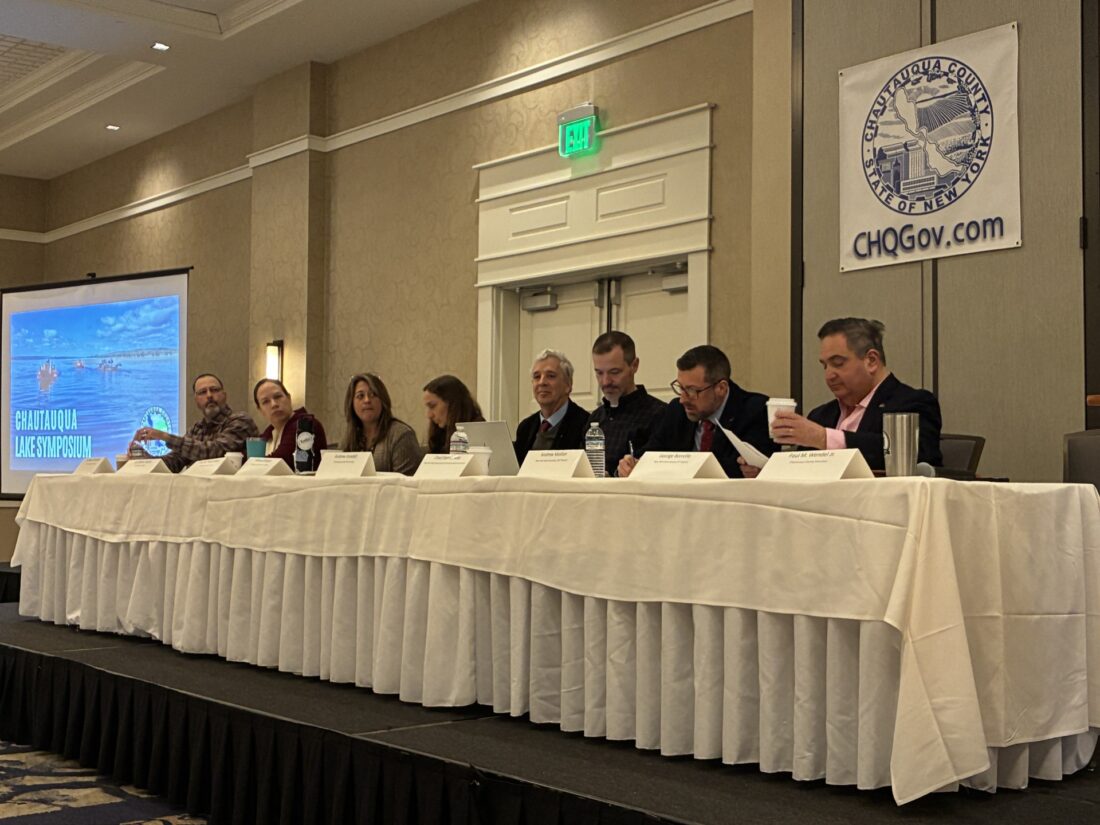
The table of speakers present at the Chautauqua Lake Symposium. P-J photos by Owen Reed
-

- The table of speakers present at the Chautauqua Lake Symposium. P-J photos by Owen Reed
-
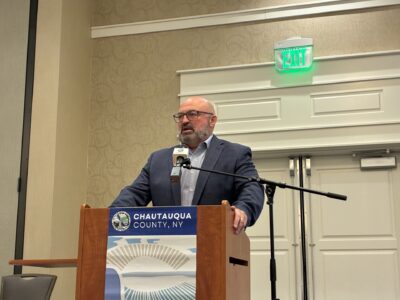
- County Executive Paul “PJ” Wendell introducing CLP Director Andy Goodell.
Andy Goodell, Chautauqua Lake Partnership board member, presented during the recent Chautauqua Lake Symposium hosted by Chautauqua County. The ultimate goal for the organization is to maximize the beneficial use of the lake. Though an incredibly broad goal, it encapsulates numerous aspects of lake management that Goodell said are crucial for the organization to oversee. One of the biggest points to help reach this goal is the continuation of herbicide treatments and management. Goodell stated that the herbicide treatments from the CLP began in 2018 as a way of adding additional management tools. Though managed by the CLA since the 1990s, the increase of invasive species and deterioration of conditions lead to this shift in oversight. Since then, the group has focused on implementing changes to the applications to better fight the macrophytes based on scientific research.
“We don’t just hop in a boat someday and say it’s time to treat herbicides. The process starts actually with a long-term plan. We’ve been working very closely with North Carolina (State University). We do a macrophyte survey every year. um both before we apply and after we apply so we can monitor the impact,” said Goodell. “We work closely with the DEC and other partners to identify what species of macroes we should be focusing on and as was mentioned earlier uh just recently we’ve started focusing more on curly leaf pondweed.”
Goodell then noted the extensive permitting process that the organization is required to go through. This first involves the DEC performing an analysis, and gathering data as well. Once this is done the DEC will grant the group approval for the herbicide treatment permits. Lastly is the application process, though this will be one of the aspects experiencing some changes based on the organization’s growth.
“We focus on changing the way we approach lake management from our perspective and we’ve moved from a very rigid regulatory framework where we were given a very limited time frame and a very specific location to what we refer to as adaptive management,” said Goodell.
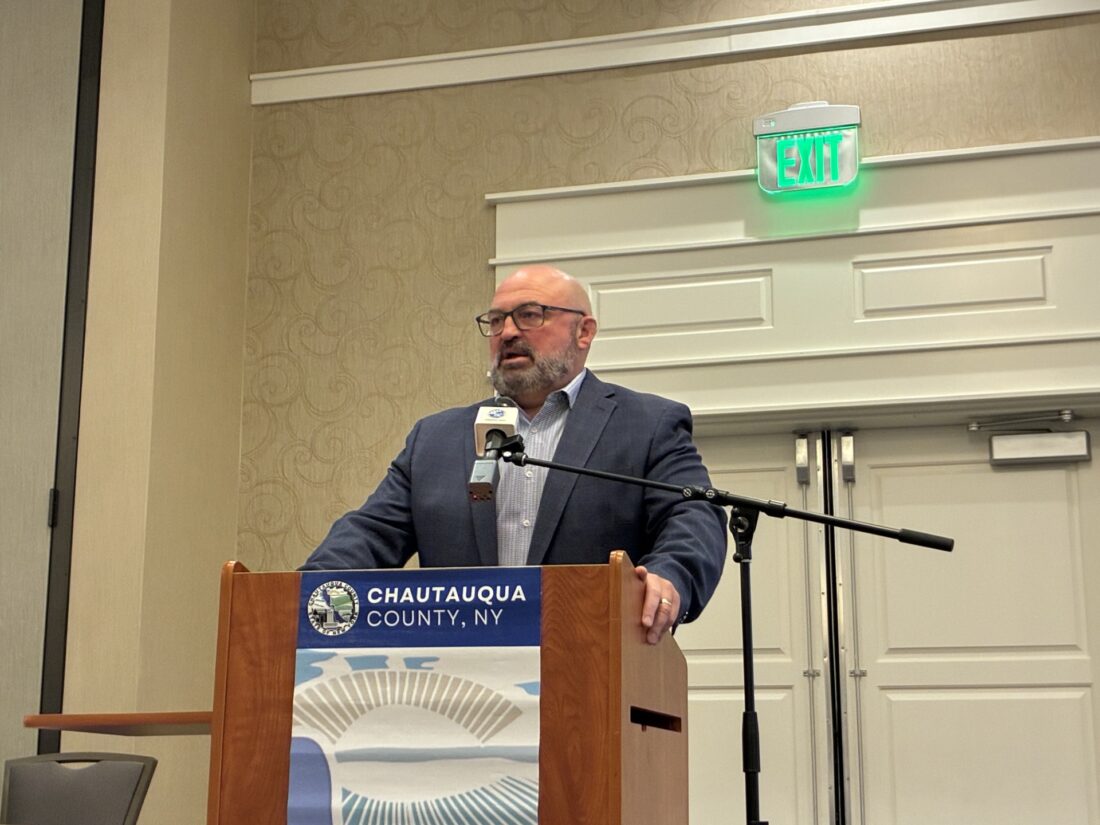
County Executive Paul “PJ” Wendell introducing CLP Director Andy Goodell.
Goodell discussed a situation that the group encountered in 2025 while treating Starry Stonewart. Goodell said that the organization had a very specific timeframe and location for the herbicide treatment in this case. However, the Starry Stonewart was not where the organization had predicted the prior year, being outside of the permitted location by a matter of feet.
“So we moved to adaptive management and what that means is we identify in the fall the most likely areas where we’re going to need treatment. We then meet with the DEEC onsite just before we apply any herbicides and we jointly evaluate whether they need to be applied at that time at that location. And by doing that, we are much more cost-effective and efficient,” said Goodell. “So we’re looking at working cooperatively and in partnership with the CLA to put in herbicides for navigation channels just to take some of the pressure off CLA. They do a phenomenal job with what they have. But we want to be part of a cooperative integrated partnership approach to lake management.”
Top stories
City Man Faces Second Child Porn Charge
John Peterson, 42, of Jamestown was arrested and charged by criminal complaint with distribution and possession of ...
Local Lawmakers Back Rural Suicide Prevention Council
Fighting Weeds: CLP Reviews Herbicide Treatment Program
Luv Kia Of Jamestown To Close Its Doors On April 10
A Kia car dealership in Jamestown will be closing its doors by the end of next week. Luv Kia of Jamestown ...
Jamestown Taking Over Parcels With Homeless Squatters
A dozen parcels in the city of Jamestown that are currently owned by Chautauqua County are being transferred to the ...
Former Dunkirk Treasurer Makes Court Appearance
MAYVILLE – A former Dunkirk treasurer who is accused of stealing more than $100,000 from city coffers made an ...