CLP Receives DEC Grant For Lake
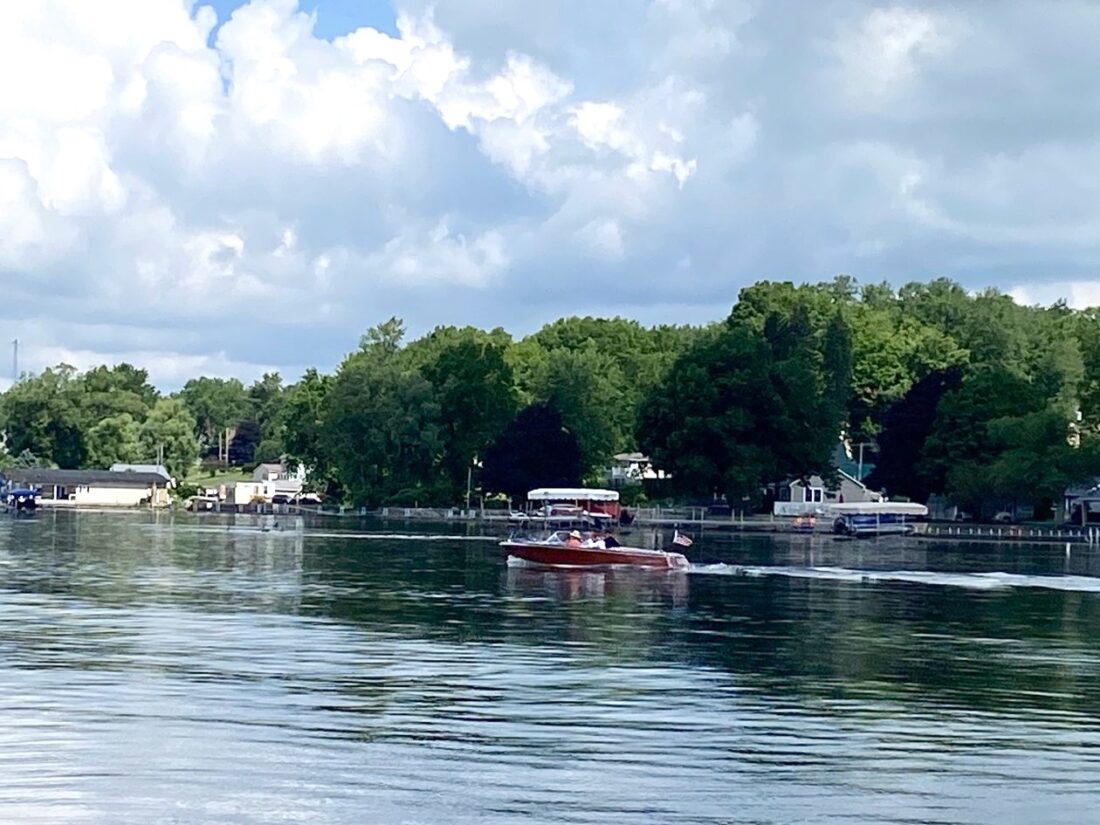
Boats are pictured on Chautauqua Lake. Photo courtesy Chautauqua Lake Partnership
The Chautauqua Lake Partnership, in collaboration with North Carolina State University, has received a state grant the organization says will boost lake management efforts.
The CLP received $42,813 from the state DEC for a project that will focus on evaluating potential ecological trends and thresholds to inform optimized management strategies for invasive species at Chautauqua Lake. The funding is through the DEC’s Invasive Species Grant Program. The CLP’s application was the only one funded in Chautauqua County during this funding cycle.
“This project is not “just another study” but a focused science-to-action roadmap designed to ensure our management efforts are backed by the highest level of scientific rigor,” CLP officials said in a news release.
The project will include new controlled experiments that include:
– Optimizing the timing and precision of harvesting and herbicide treatments to maximize their impact on invasive Eurasian watermilfoil and curly-leaf pondweed.
– Investigate how aquatic plant management and nutrient cycling interact to better understand and prevent the conditions that lead to toxic algal blooms.
– Move beyond simple maintenance to actively shift the lake’s community composition back toward healthy, native-dominant plant communities.
– Transform years of data into a sustainable, science-backed management plan for the lake’s littoral zone.
CHANGE IN APPROACH
That integrated approach also means changes to the way the organization is approaching its 2026 work. The CLP recently announced updates to the 2026 wetlands and herbicide permitting approach, developed in collaboration with the state Department of Environmental Conservation.
“These updates reinforce our commitment to responsible environmental management, public safety, and the long-term health of Chautauqua Lake,” the CLP said in a Facebook update.
A central feature of the updated approach is a move towards adaptive management, a widely accepted lake management practice. While planning remains largely the same, final decisions on where, when, and how treatments occur will be adjusted based on field observations, plant growth, weather, and water conditions. CLP officials said adaptive management will help treatments be more effective, environmentally responsible, protective of native species and responsive to public safety and lake usability needs.
In past years, highly specific permit boundaries limited the ability to treat invasive plants that appeared just outside approved areas or timeframes. The 2026 approach expands potential treatment areas and extends cutoff dates to better respond to natural variations in plant growth, weather and site conditions. This does not mean all areas shown on the treatment planning maps for permit applications will actually be treated in 2026. The larger areas provide the flexibility to treat the highest priority areas after final DEC field verification and approval.
There will also be a greater focus on navigation channels in the lake, a particular problem in 2025. Unsafe navigation conditions in 2025 highlighted the need for proactive planning, the CLP said, and starting this summer herbicide treatments will prioritize maintaining navigation channels and access to commercial areas, reduce pressure on mechanical harvesting, and support safe, reliable waterway use. That work is expected to take place in concert with the Chautauqua Lake Association.
“So we’re looking at working cooperatively and in partnership with the CLA to put in herbicides for navigation channels just to take some of the pressure off CLA. They do a phenomenal job with what they have. But we want to be part of a cooperative integrated partnership approach to lake management,” said Andy Goodell, CLP board member, during the Chautauqua Lake Symposium.
Wetlands-related lawsuits remain pending. Until outcomes are known, CLP will continue to operate under current permitting requirements. The updated approach is compliant and can be adapted to future decisions. The CLP’s new approach also supports the long-term macrophyte management plan, promoting coordinated, adaptive, and sustainable aquatic plant management and efficient use of resources.
Also for the first time this year, participating towns and villages will operate under a single consolidated permit entity. This reduces administrative complexity, improves DEC review and compliance tracking, and keeps municipalities informed about work in their areas.
INVASIVE SPECIES GRANTS STATEWIDE
The CLP’s grant from the DEC is one of a few dozen announced around the state, including:
– $467,810 for six aquatic invasive species (AIS) spread prevention or boat decontamination projects that will use boat stewards and/or decontamination equipment at boat launches and along travel corridors to educate boaters and intercept AIS before watercraft are launched into new waterbodies.
– $1,664,197 for 18 invasive species early detection/rapid response and control (terrestrial and aquatic) projects to support the removal of invasive species through physical and mechanical removal, chemical treatments, and biocontrol release.
– $699,142 for eight invasive species research projects to help improve invasive species control methodologies.
– $2,286,727 for 19 invasive species restoration and resiliency projects to facilitate native plant recovery, restore habitat structure, and implement measures to enhance ecosystem resiliency.
“Managing invasive species and mitigating their negative impacts to our lands and waters is essential to the environment, public health, and quality of life,” said DEC Commissioner Amanda Lefton. “Investing in science-based management and strong local partnerships is strengthening New York’s efforts to combat invasive species, protect biodiversity, build more resilient ecosystems, and protect our forests, waters, farms, and communities.”
Top stories
City Files Response To Firefighters’ Lawsuit
The city of Jamestown has filed an official response to the lawsuit by the Jamestown Professional Firefighters ...

Local Leader: New RTPI CEO Settling Into Role
CLP Receives DEC Grant For Lake

Maple Grove AP Class Makes Trip To D.C.

Honing Her Routine: Erinn Sluga Readies For State Competition