CLP Assessing Impact Of Court Ruling
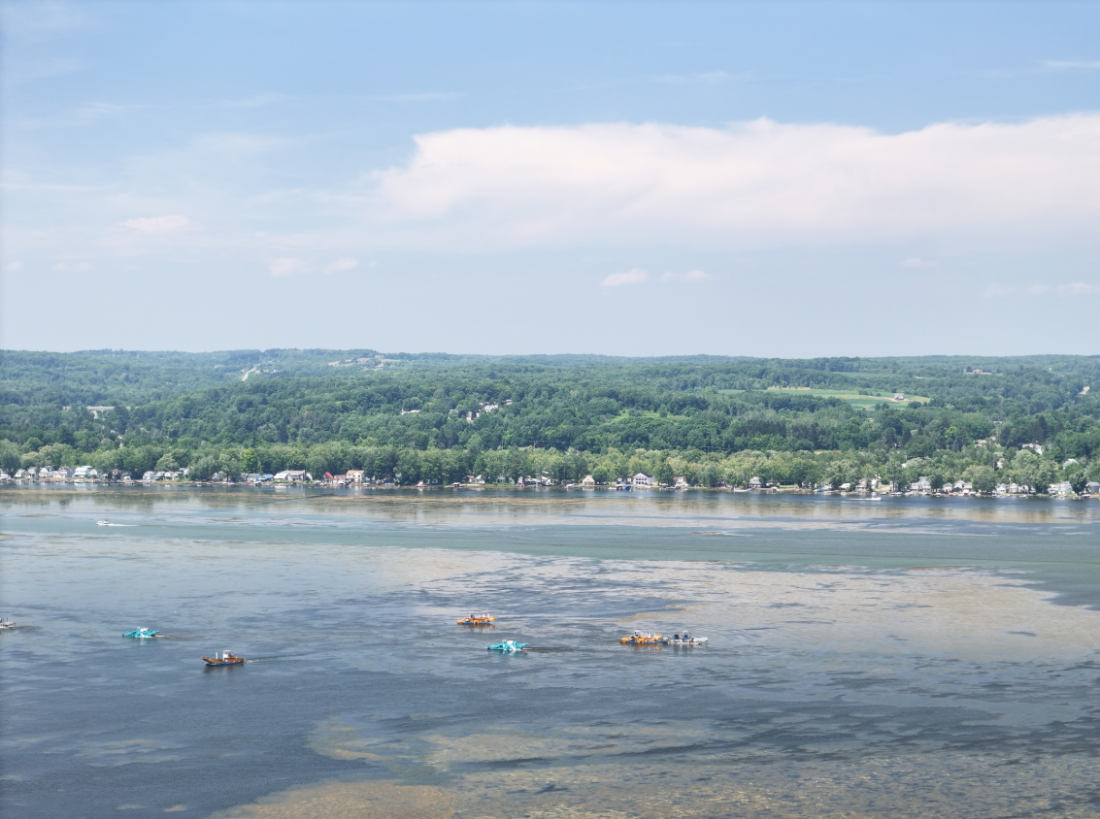
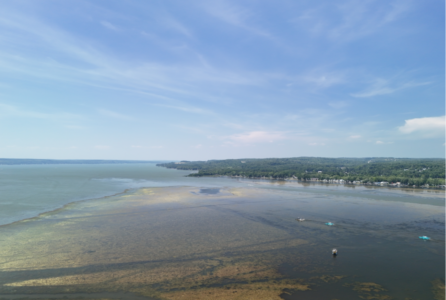
Boats are pictured on Chautauqua Lake near a weed mass earlier this summer. Photo courtesy Chautauqua Lake Partnership newsletter
The Chautauqua Lake Partnership is assessing what impacts the ruling to annul New York state’s Department of Environmental Conservation’s Freshwater Wetlands Act regulations will have on the lake’s stakeholders.
A lawsuit had been filed by the Chautauqua Lake Property Owners Association, the CLP, and three landowners.
“We are pleased with the recent ruling and it should be highlighted that the CLP case was pivotal, having demonstrated uncontested legal standing for the basis of the ruling. But – this is tempered by the recognition that this is not necessarily a permanent victory and that the DEC is our partner – not our enemy – and this outcome will unfortunately result in some amount of chaos and send them ‘back to the drawing board’ to revise the regulations. CLP is also still assessing the impacts to Chautauqua Lake stakeholders,” the CLP said in an email.
Of all the arguments made by the local organization, State Supreme Court Justice Richard Platkin said the DEC did not do its due diligence on issues raised by organizations like the CLPOA. There are four total lawsuits that were part of a consolidated oral argument on Jan. 30. The first lawsuit was filed by the Chautauqua Lake Property Owners Association, followed by the Chautauqua Lake Partnership. Lawsuits were also filed by the village of Kiryas Joel and the town of Palm Tree as well as the Business Council of New York state with seven co-plaintiffs. The suits raised many of the same issues, though the two Chautauqua County lawsuits raised issues specific to Chautauqua Lake.
Platkin’s decision doesn’t annul the 2022 Freshwater Wetlands Act, only the DEC’s Part 664 regulations that implement the 2022 law. Part 663 is how the DEC established the procedural requirements and standards for the use of regulated wetlands and issuance of permits. Part 664 established standards and procedures for classifying wetlands.
The fourth case, brought by the CLP and three local landowners, alleged the Part 664 regulations are arbitrary and capricious; the regulations were adopted in violation of SAPA; the 2022 Amendments and Part 664 are void for vagueness; certain aspects of the 2022 Amendments and Part 664 regulations constitute an improper delegation of authority to DEC; and (v) the Part 664 regulations were adopted in violation of SEQRA. Platkin ruled in favor of only the SEQRA violations when annulling the Part 664 regulations while dismissing the other challenges.
Platkin ruled petitions in cases filed by the CLP, village of Kiryas Joel and Business Council of New York State were also granted on SEQRA violations – though other contentions raised by the plaintiffs were denied. The Chautauqua Lake Property Owners Association, town of Ellery, landowners and two business associations raised five challenges: that the Part 664 regulations were adopted in violation of the State Administrative Procedure Act, that the 2022 Amendments and Part 664 regulations violate the due process rights of landowners; that the Part 664 regulations are arbitrary and capricious; that Part 664 improperly delegates regulatory authority to private actors; and that the 2022 Amendments and Part 664 violate Home Rule principles.
The CLP noted that there are still some areas of concern noting that the law is still on the books, but the rules for its implementation have been thrown out. The implications of this are unclear at the moment for both the DEC in terms of how it operates now, and for the regulated community.
“We are working to develop short term clarity on the implications of the ruling, and we are hopeful that this ruling will encourage the DEC to assert less regulatory overreach going forward since it would not be in either party’s best interest to continue litigation as a means to achieve what are essentially common goals in regard to Chautauqua Lake,” the email continued.
Top stories
CLP Assessing Impact Of Court Ruling
Area Leaders Call For State Action On Homeless Crisis
Regulations Annulled: CLPOA, CLP Win Freshwater Wetlands Act Lawsuits
Department Of Public Works Uses Strategic Approach For Equipment, Infrastructure Needs
In both the 2025 and 2026 budgets, the city of Jamestown made the decision to limit new capital projects and ...
Community Helping Hands Looks Toward Future