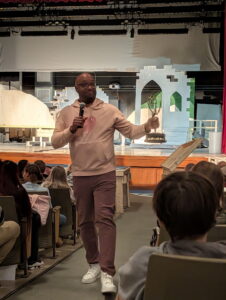
Young Playwrights Bringing Youth Visions To Life
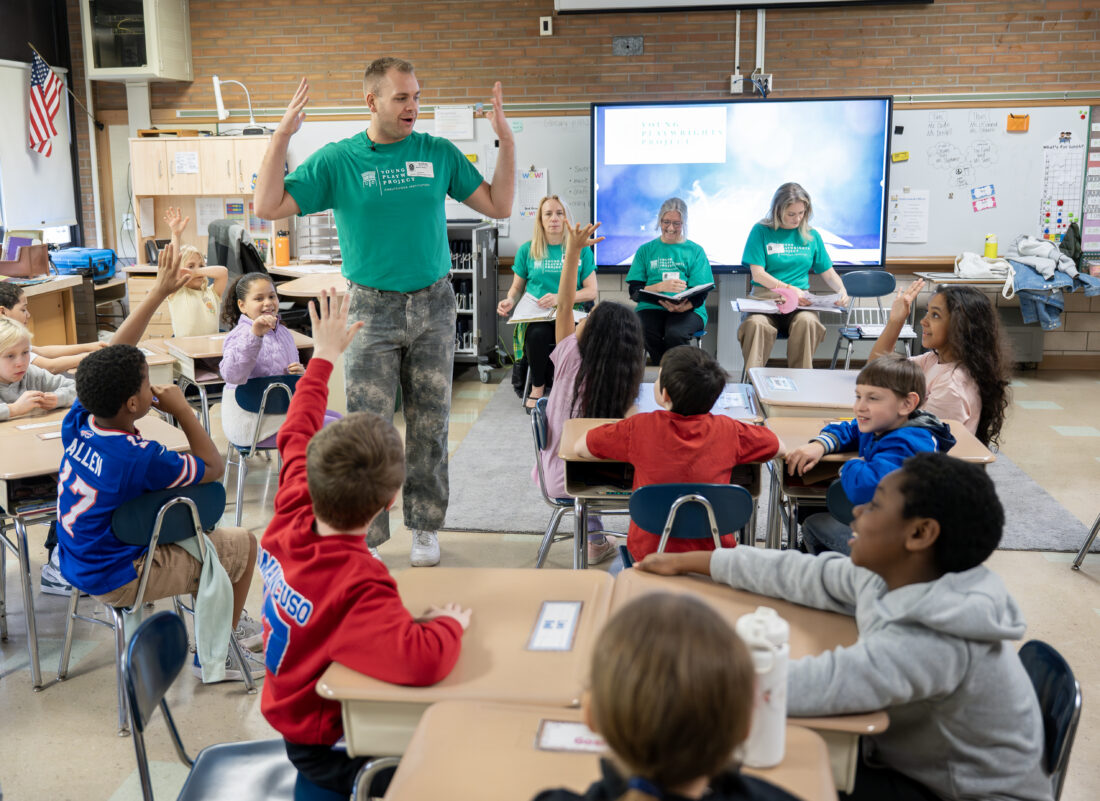
The class getting excited to ask questions during the volunteer’s presentation. Submitted photo
-
- The class getting excited to ask questions during the volunteer’s presentation. Submitted photo
-
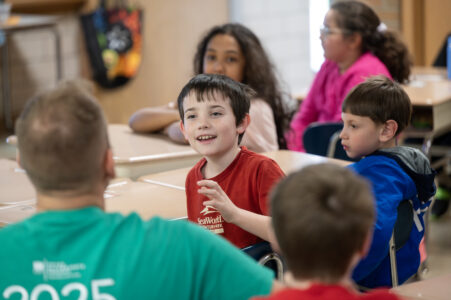
- Students listen on as volunteers discuss playwriting.
-
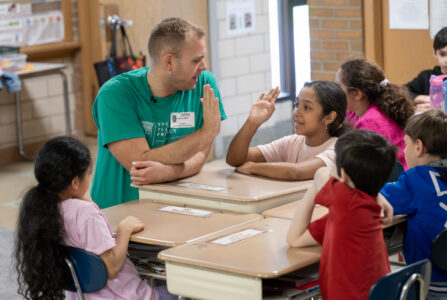
- A student giving a volunteer a high-five.
For the past 12 years, the program has brought together teams of volunteers to help to bring children’s imaginative writings to life. Through a series of readings and performances, the team helps to bring a deeper love and immersion to the art of theater and plays for young students. With the program having already begun for this season, coordinators are now preparing as the program enters into the early portions of the second out of three phases.
Arts Education Director Suzanne Fassett Wright stated that, though the summer season is typically where much of the Chautauqua Institution’s offerings are, much of the work from Chautauqua Arts Education comes about during this program that operates throughout the school year. Since the beginning of the school year Wright stated that the group has been in phase one, which has included sending volunteers around to various elementary schools in the county. These schools have included Lincoln Elementary, Ring Elementary, Bush Elementary, Fletcher Elementary, Love Elementary, Clymer Elementary, Panama Elementary, Chautauqua Lake Elementary, and the E2CCB Hewes Educational Center.
“These folks are all better in teaching artists with other arts theater programs,” said Wright. “We bring them in to work with our third and fourth graders to teach them how to write plays. Then we leave behind materials for their teachers to integrate into their classroom to support their English language arts learning and theater learning skills. The kids write plays, and we had over 470 plays submitted this year from students.”
Phase two, which started on March 26, will send the volunteers back into the schools with a slightly different intention than before, according to Wright. Wright stated that these people will actually be reading the plays back to the groups of children, allowing the kids to hear the productions that they worked so hard on. This will be even further expanded upon later in June, when phase three of the program will officially begin. This is when the group will select ten of the plays written by students to become full produced performances. Each participating student will travel to the institution where these ten plays are to be performed for all to see.
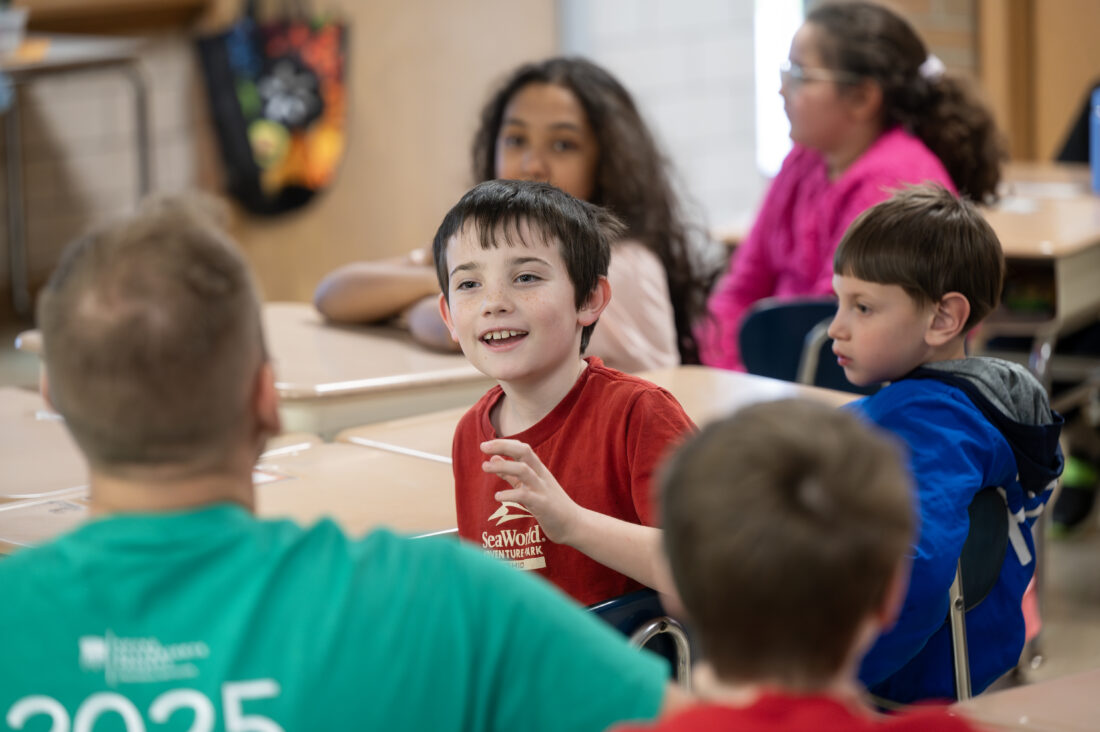
Students listen on as volunteers discuss playwriting.
“It really is an honor and a privilege to get to work with teachers, students, administrators, schools, personnel across the county,” said Wright. “But you know what? Very important conversations are with our kids and hearing what they need, what they want, and what’ s important to them. So we’re convening those important conversations through Chautauqua Arts Education, and we learn as much from our kids as I think they learn from us.”
Wright stated that this program now dates back to 2015, with the idea having initially been brought to Deborah Sunya Moore early in her tenure. Moore had already been searching for a way to give students further access to fine arts learning while also supporting the existing arts learning throughout the county, according to Wright. Wright stated that once Georgia Court, an active citizen, brought the idea forth the institution would partner with the Florida Studio Theater to begin the project and connect with schools. Though the influence of the FST continues to be present in the program today, Wright noted that the program in now entirely run by the institutions.
“They often say that music gives voice to what language can’t. And so we get to see that come to life with students,” said Wright. “As we move forward, we are always happy to have conversations with schools who say, you know, we think this would be a really good connection with our school. Let’s see how we can make it happen, and then we can have the conversations to see what we can do.”
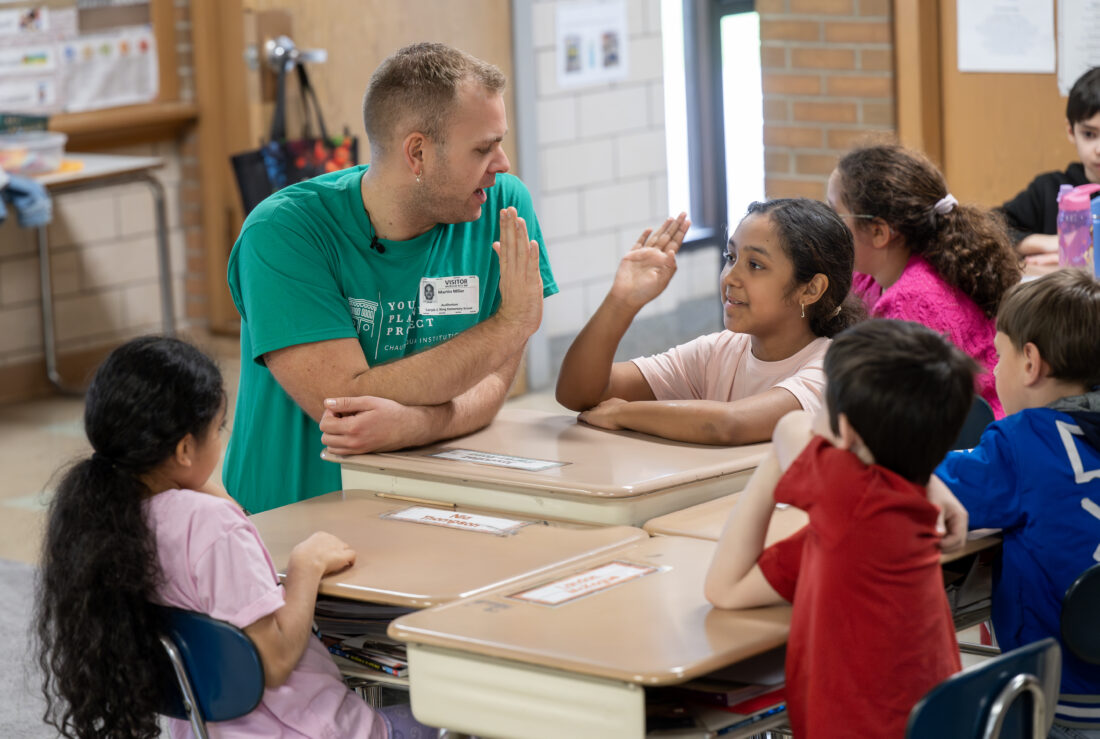
A student giving a volunteer a high-five.
Top stories

Life’s Journey: Cheronis Sings His Way ‘Back Home’
New Cherry Creek Dairy Farm Proposed
A new dairy farm is being proposed in Cherry Creek that could produce tens of thousands of gallons of milk daily ...
City Proposes Delay In Firefighter Lawsuit Arguments
Jamestown officials are asking state Supreme Court Justice Stephen Cass to delay the first oral arguments in a ...
Young Playwrights Bringing Youth Visions To Life
Forgetting Everything? Well, Join The Club.
My mother had a saying that I heard all too often during my childhood: “You’d forget your head if it wasn’t ...