Concerns Grow In State Over ‘Raise The Age’ Changes

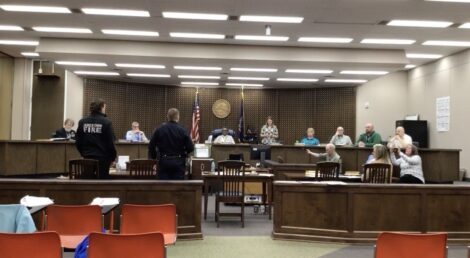
Senator George Borrello, R-Sunset Bay, speaking in Ellicottville in November, 2025.
New York Legislative officials have had recent discussions on potential changes to the funding for the “Raise The Age” bill that went into effect in 2017.
While arguments are being heard on providing funding through direct grants, some are arguing for expansions of the law to cover younger age groups.
The “Raise the Age” bill saw 16 and 17 year-old’s court cases transferred into the Family Court system. This not only prevents these youths from being tried as adults but also gives greater protections to case information.
At caucus weekend in Albany, beginning Feb. 13, some officials discussed making changes to the funding mechanisms in the program. Currently, counties are responsible for implementing the law at a local level. However, the state has appropriated $1.71 billion, $658.8 million of which has been spent to reimburse counties for the costs of implementing Raise the Age. At the caucus, Assembly Member Michaelle Solages, D-Valley Stream, said funding conversations have been going on for a very long time. With discussions still ongoing, Solages believed that it would be of the most stability for this funding to be worked into the budget.
A similar idea was discussed by Assembly Member Latrice Walker, D-Brooklyn, who gave the recommendation of having the funding allocated through grants rather than reimbursements.
Not everybody is on board with such a change in the funding though. State Sen. George Borrello, R-Sunset Bay, said Raise the Age laws have created very real and growing problems throughout the state. Borrello noted that the law has allowed for repeat offenders to cycle through the system without meaningful accountability and for gangs to exploit the law by recruiting minors they know will avoid serious consequences. Borrello was also displeased by the refusal of Governor Kathy Hochul to implement any funding changes or RTA restructuring in the recent executive spending plan.
“Governor Hochul’s refusal to pursue meaningful reforms sends the wrong message to victims, law enforcement, and even to the young perpetrators committing crimes. We need common-sense changes that restore accountability, close loopholes that are being exploited, and ensure that violent offenders face appropriate consequences.”
Walker also proposed other changes that would expand the number of people that RTA covers at the caucus. One such example is the proposal to create a new “New Young Adult Offender” status, which would cover individuals between the ages of 19 and 25.
“Based on the neuroscience, the brain development stages that we apply to 16- and 17-year-olds still exist in that particular age group,” stated Walker.
Walker stated that this age range is still undergoing development in the brain. As a result, Walker argued that this would not only give more discretion to judges, but also keep records privatized. Borrello stated that, while enacted with seemingly good intentions, the RTA bill already has numerous flaws in its current form. Borrello noted that the way in which the legislation is written makes it nearly impossible for some District Attorney’s to keep 16 and 17 year-old offenders in adult court, even in cases of serious threat of harm. About 83% of these youth cases are eventually transferred to Family Court, according to Borrello. With these outcomes being far better protected and sealed, Borrello stated that it shows a lack of accountability that has cast doubt for many in the justice system.
“The proposal by Assembly Member Walker to expand these policies to older age groups would only worsen the problem. Instead of extending a flawed framework, we should be focused on fixing it,” said Borrello. “Similarly, simply changing how the funding for intervention programs is distributed will not resolve the core problems that District Attorneys and law enforcement have identified, including barriers to information sharing, inconsistent judicial standards, and the inability to hold repeat violent offenders accountable.”
Top stories

Chautauqua’s Got Talent Opens 16th Season At Spire Theater
Legislator Wants Elected Officials’ Salaries Disclosed
MAYVILLE — In 2024, the Chautauqua County Legislature, without any Democratic support, approved significant pay ...

UPMC Chautauqua Hosts Trainings For Rare Birth Emergencies
Scott Forster Appointed Police Chief At Voting Session

City Woman Faces 17 Charges Of Child Welfare